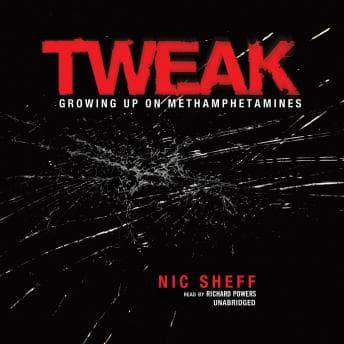

Look, I'm going to be honest with you. I almost didn't finish this one. Not because it's bad—it's actually brutally effective—but because listening to Nic Sheff's twelve-hour spiral into meth addiction while reviewing quarterly projections for a fintech startup felt like some kind of cosmic joke. Here I am, optimizing someone's burn rate, while this kid is literally burning his life down. The juxtaposition was... a lot.
But I pushed through. And I'm glad I did, even if "glad" isn't quite the right word.
The Business Case for Rock Bottom
Here's what struck me as a consultant who's seen companies implode: addiction operates exactly like a failing startup that refuses to pivot. Sheff keeps making the same bet over and over—thinking this time he can control it, this time the outcome will be different. It's the sunk cost fallacy applied to your own nervous system. My parents would've called it stubbornness. Becoming explores a different kind of stubbornness—the kind that builds something instead of burning it down. The business books call it "escalation of commitment." Sheff just calls it Tuesday.
The writing is raw in a way that most memoirs claim to be but aren't. No polish. No redemption arc carefully constructed for maximum inspirational impact. Just a kid—and yeah, he was basically a kid—making catastrophically bad decisions and documenting them with uncomfortable precision. He spares nothing. The stealing from family, the degrading situations, the physical deterioration. It's all there.
Some listeners complained the book "glamorizes addiction." I don't see it. What I see is a case study in how smart people rationalize self-destruction. Sheff isn't stupid. That's what makes it so hard to listen to. He knows exactly what he's doing, articulates it clearly, and does it anyway. That's not glamour. That's horror.
Richard Powers Gets the Assignment
The narrator, Richard Powers, has this commanding quality that works surprisingly well here. I wasn't sure it would—addiction memoirs can go sideways fast with the wrong voice. Too dramatic and it feels exploitative. Too flat and you lose the stakes. Powers finds this middle ground where he's present but not performative. He lets Sheff's words carry the weight.
Is he the best narrator I've ever heard? No. Some folks online preferred Paul Michael Garcia's version, and I get that. Powers can feel a bit detached at moments when you want more heat. But honestly? The slight distance might be intentional. It keeps the content from becoming pure misery tourism. You're observing, not drowning.
At 2.0x speed, the pacing held up fine. Clean production, no weird audio artifacts. The 12 hours went by faster than I expected, which—given the subject matter—is either a compliment or a condemnation. I'll let you decide.
Who Should Listen (And Who Should Skip)
Bottom line: This isn't a business book, but it taught me more about human decision-making under pressure than half the behavioral economics titles in my library. If you work with people—and if you're in consulting, you do—understanding how someone can see the cliff, know it's a cliff, and run toward it anyway is genuinely useful information.
My parents dealt with addicts in Koreatown. Customers who couldn't pay. Employees who disappeared. They didn't have language for it, but they understood the pattern. Sheff gives you the language. He gives you the inside view.
But let's be real for a second. If you're sensitive to drug content—and I mean really sensitive, not just "prefer to avoid"—skip it. There's sexual content, violence, abuse. It's heavy. Jenny wouldn't make it through chapter three, and that's fine. Different strokes. Also probably not the right listen for a founder already in the middle of a rough patch—timing matters.
For long commutes though? Actually ideal. The chapters are discrete enough that you can process in chunks. I did most of my listening during a three-day trip to Seattle, and the gray weather matched the vibe perfectly.
Would I recommend it to someone trying to understand why their brilliant co-founder just self-destructed? Absolutely. Sometimes the most valuable business education comes from watching someone fail at the most personal level possible.
Sheff went on to write for "13 Reasons Why," which tracks. The guy knows how to document pain. Whether that's a gift or a curse, I genuinely can't tell.