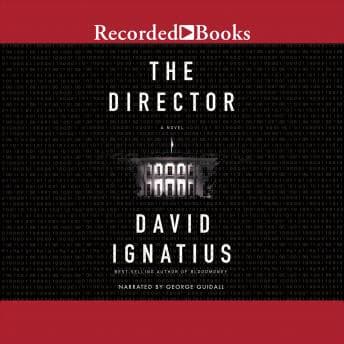

David Ignatius knows things. That's the first thing you need to understand about The Director. The man has spent over 25 years covering the CIA and the Middle East for the Washington Post, and when he writes about a newly appointed CIA director getting blindsided by a hacker walking into a consulate in Hamburg with a list of compromised agents - you believe it. You believe it because the procedural details feel lived-in, not Googled.
I was shelving returns at the library on a slow Tuesday afternoon, earbuds in, when the Hamburg scene hit and I actually stopped mid-Dewey-Decimal to just... stand there. Holding a copy of something forgettable, completely locked into Graham Weber's dawning horror that his agency has been gutted from the inside before he's even unpacked his office.
The Spy Novel That Reads Like a Washington Post Deep Dive
Here's the thing about Ignatius - he writes spy thrillers the way a journalist writes longform investigations. The intelligence community details aren't decoration. They're structural. When Weber starts working with James Morris, this charismatic, half-unhinged internet operations guy who runs the CIA's hacker division, the tension doesn't come from car chases or gunfights. It comes from not knowing who's lying. From zeroes and ones that can be rewritten. From the nauseating realization that in a world of cyber-espionage, the mole hunt itself might be compromised.
This understands that horror isn't about gore - it's about dread. And yeah, I know this isn't technically horror, but the paranoia here? The way trust dissolves like sugar in water? That's psychological dread, and Ignatius builds it with the patience of someone who knows exactly how intelligence communities actually eat themselves alive. That slow-burn erosion of certainty is something I kept coming back to when I reviewed Notes on an Execution - different context entirely, but the same suffocating feeling of watching someone trapped inside a system that has already decided their fate.
But - and this is where I have to be honest - the middle sags. There's a stretch somewhere around hours five through seven where the exposition gets dense enough to lose you. Ignatius loves his foreign policy context, his detailed breakdowns of how cyber operations work within bureaucratic structures, and sometimes that love turns into a lecture. I caught myself rewinding twice because my attention had drifted. If you're someone who needs constant momentum, you'll feel this.
There's also a quality that some listeners have called a "boomer mentality" in the writing, and I can see it. The way certain younger characters - Morris especially - are rendered feels like an older writer's approximation of tech-native culture. Morris is fascinating as a concept (the unstable genius who might save or destroy everything), but his dialogue occasionally lands like someone's dad trying to explain 4chan. It's not fatal. But it's noticeable.
George Guidall Is Doing the Heavy Lifting and He Knows It
The narrator commits. That's rare. George Guidall has won more AudioFile awards than I've had panic attacks listening to horror at 2 AM, and you can hear why. His voice has this warm, authoritative quality that's perfect for Weber - a man who's supposed to project competence while quietly falling apart. When Guidall shifts to Morris, there's a subtle edge that creeps in, something a little manic under the surface, and it works beautifully to keep you uncertain about where Morris's loyalties actually land.
Where Guidall occasionally stumbles is pacing. There are moments - particularly during those heavier expository stretches - where his delivery slows to a deliberate, almost precious cadence. "Prissy" is the word one listener used, and while I wouldn't go that far, I understand the impulse. At 13 and a half hours, a narrator who occasionally downshifts into first gear during already slow passages can compound the drag. I'd genuinely recommend 1.25x speed for those middle hours. It tightens things up without losing Guidall's vocal texture.
But when the tension ratchets up? When Weber realizes the scope of what he's dealing with, when the European hacker underground sequences kick in? Guidall is locked in. His emotional delivery during the betrayal reveals is the kind of controlled devastation that makes you forget you're listening to one person performing an entire cast.
Who Gets the Most Out of This
If you're a le Carré fan, if you loved Tinker Tailor Soldier Spy for the bureaucratic dread more than any action set piece, this is your lane. If you want espionage that feels like it could be ripped from actual classified briefings, Ignatius delivers that. If you need your thrillers to move at Jason Bourne speed - skip it. This is a thinker's spy novel, and it's proud of that.
My podcast listeners are going to love this - specifically the ones who keep asking me for thrillers that create sustained unease rather than jump scares. The cyber-espionage angle feels uncomfortably prescient for a book published in 2014. Everything is written in zeroes and ones and nothing can be trusted. Sound familiar?
Shelve Under: Smart Paranoia, Occasional Patience Required
Solid spy thriller with a narrator who elevates the material, weighed down slightly by its own ambition in the midsection. Worth your time if you're willing to sit with it. Shirley (my cat) was unimpressed. I was unsettled for the right reasons.