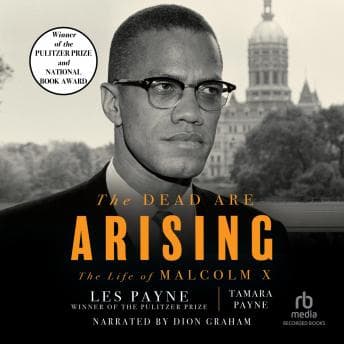

Eighteen hours. Let me say that again. Eighteen hours of audiobook. That's roughly the time I bill for a full strategic assessment. And I listened to every minute of this at 1.5x - couldn't go faster because Dion Graham's delivery demanded I actually pay attention. This is not a complaint. This is me saying Les Payne wrote something that made me slow down, and I don't slow down for anyone.
Here's the thing about most biographies of major historical figures: they're lazy. They rehash the same sources, hit the expected beats, and call it a day. Payne spent thirty years doing actual journalism. Thirty years. My parents built a dry cleaning empire in less time. The man interviewed everyone who ever breathed near Malcolm X - siblings, cellmates, FBI informants, Nation of Islam insiders. The result is a book that makes everything I thought I knew feel like a Wikipedia summary.
When Research Becomes Revelation
I've read case studies on organizational transformation. I've seen companies pivot from dysfunction to dominance. But I've never encountered a more compelling case study in personal reinvention than Malcolm X's trajectory from street hustler to international revolutionary. Payne doesn't just tell you Malcolm changed - he shows you the mechanisms. The prison reading. The letter-writing campaigns. The systematic dismantling of his old identity and construction of a new one.
The chapter on Malcolm's parents hit different. His father Earl, a Garveyite preacher, gets run over by a streetcar in 1929. His mother Louise keeps instilling black pride in her children while the system tries to break her family apart. This is what my parents did instinctively - that immigrant hustle, that refusal to let circumstances define your children's ceiling. Now it has historical context and investigative journalism behind it.
And that KKK meeting in 1961? I had to pause the audiobook. Malcolm X and Minister Jeremiah sitting down with Klansmen, both sides trying to figure out if they could use each other. The strategic calculus involved is genuinely fascinating from a negotiation standpoint. Payne reconstructs it minute by minute. This isn't history as mythology - it's history as strategy.
Dion Graham Earned His Check
Look, I listen to a lot of business audiobooks with narrators who sound like they're reading a user manual. Graham does something completely different. He brings warmth to the Depression-era childhood scenes, shifts to something harder and more urgent during the hustler years, then finds this measured gravity for Malcolm's political awakening.
The man has range. He's not doing impressions or theatrical voices - he's doing emotional truth. He brings that same caliber of performance to The Lincoln Highway, where his ability to inhabit multiple perspectives across decades is just as impressive. When the narrative gets to the Audubon Ballroom, Graham's pacing tightens. You feel the tension building. I was on a client call and had to mute myself because I couldn't stop listening.
Yes, It's Dense. That's the Point.
Okay, honesty time. Some listeners complain this book drags. They're not entirely wrong. Payne's commitment to detail means you get deep dives into genealogy, into the mysterious origins of Fard Muhammad, into organizational politics that might feel like minutiae. If you want a brisk 6-hour overview, this isn't it.
But here's my counterargument: the depth is the point. Every business leader I've worked with who actually understood their market got there through obsessive attention to detail. That same obsessive detail work drives Friday Night Lights, where Bissinger spent a year embedded in Odessa documenting every practice, every game, every family dinner. Payne applies investigative journalism rigor to biography. Yes, it's dense. Yes, it requires commitment. But the payoff is understanding Malcolm X as a human being operating within systems - religious, political, racial - rather than as an icon.
I listened during a two-week stretch of early morning runs and late-night flights. The length worked for me because I wasn't trying to consume it like content. I was studying it.
Who Gets the ROI
This is for listeners who want the definitive account - not the highlight reel. If you're willing to invest eighteen hours in understanding how a man rebuilt himself from the ground up, how organizations shape and betray their leaders, how history actually happens in meeting rooms and prison cells, you'll get more than your time's worth. Skip it if you need something you can half-listen to during email triage.
The Legacy Factor
Tamara Payne finished this book after her father died. That context matters. This isn't just a biography - it's the culmination of a family's work. It won the Pulitzer. It won the National Book Award. Those aren't participation trophies.
Park's Bottom Line
If you want to understand one of the twentieth century's most significant political figures beyond the soundbites and the mythology, this is the definitive work. It respects your intelligence. It rewards your time investment. It's the kind of book that changes how you think about history, about leadership, about what's possible when someone refuses to accept the narrative they've been handed.
Jenny would say I'm being dramatic. Jenny didn't listen to eighteen hours of Dion Graham making her reconsider everything she thought she knew about the civil rights movement.








![Steve Jobs [unabridged audiobook] audiobook cover](/_next/image?url=https%3A%2F%2Fcovers.audiobooks.com%2Fimages%2Fcovers%2Ffull%2F9788499923406.jpg&w=1920&q=75)