
I'm sitting here with Frida (my cat, not the artist, though she has the attitude) asleep on my keyboard, staring at a blank InDesign canvas, and I'm just... wrecked. In the best possible way.
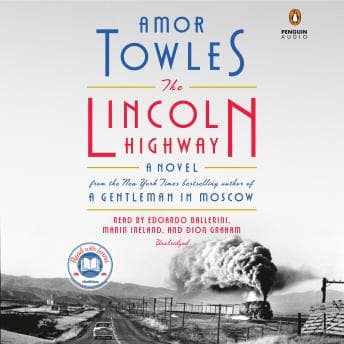
I picked up The Lincoln Highway because I needed something long to get me through a massive branding project for a local coffee shop. 16 hours? Perfect. Or so I thought. I didn't expect to lose an entire weekend staring at the wall while Edoardo Ballerini and the crew absolutely dismantled my emotional stability.
Let's be real for a second—road trip stories are usually cliché. Boy meets road, boy learns lesson, the end. But this? This is something else entirely.
The Holy Trinity of Narration
Okay, can we talk about this lineup? Because it feels illegal to have this much talent in one audiobook. You've got Edoardo Ballerini, Marin Ireland, and Dion Graham. It's like the Avengers of audio.
I couldn't find a ton of behind-the-scenes info on how they directed this, but the result is flawless. Ballerini does the heavy lifting here, and honestly? The man is a chameleon. He voices eight-year-old Billy with this specific kind of innocence and wonder that doesn't sound annoying (which is hard to do—kid voices usually make me cringe). There's a vulnerability there that just... ugh. My heart.
Then you have Marin Ireland. If you've listened to her before, you know she does "brassy and brittle" better than anyone. She voices Sally, and she brings this sharp, frantic energy that cuts right through the boys' nonsense. And Dion Graham? His voice is like velvet and gravel mixed together. He plays Ulysses, and every time he spoke, I felt my blood pressure drop. The dignity he gives that character—Abuela would have loved him. She would've said he has a "soul of gold."
(Side note: I listened at 1.0x speed the whole time. Speeding this up would feel disrespectful, like chugging a vintage wine.)
A Detour That Breaks Your Heart
Here's the thing about the plot—it's frustrating. Intentionally. Emmett just wants to take his little brother Billy to California to start over. Simple, right? But then Duchess and Woolly (the friends from juvie who stowed away in the trunk—because of course they did) hijack the plan and the car. Instead of heading west, they're heading east to New York City.
I wanted to scream. I literally yelled "NO!" while washing dishes when they realized the car was gone.
But that frustration is the point. It's a picaresque novel (fancy word for "one damn thing after another"), and it meanders. If you're the type of listener who needs a tight, fast-paced plot, you might want to bail. It loops, it drags a little in the middle, and it goes on tangents about history and heroes.
But for me? The vibes are immaculate. It feels like 1954. It feels like dust and diners and the specific anxiety of being young and having no idea where you fit in the world. The chemistry between the characters—especially the protective bond Emmett has for Billy—is chef's kiss. I found myself caring less about where they were going and more about who they were becoming.
Who Should Listen (And Who Should Skip)
This is for you if you love character studies and don't mind a story that takes the scenic route—literally. Skip it if you need tight pacing and can't handle a plot that loops and meanders; you'll be frustrated by hour 8.
The Feels
Look, I ugly-cried. Obviously. (I checked my spreadsheet, this is cry #32 for the year).
It's not perfect. There were moments around hour 11 where I was like, "Okay, Amor, let's wrap it up." Some of the side quests felt a bit too convenient. But the ending? It had that same devastating precision I found in Count of Monte Cristo—everything clicks into place and you just have to sit with it. I won't spoil it, but I sat on my floor for ten minutes after the credits rolled just processing.
It's a rainy Sunday book. It's a book for when you want to get lost in a world that feels softer and sharper at the same time. Just maybe keep a box of tissues nearby. For the dust, obviously.