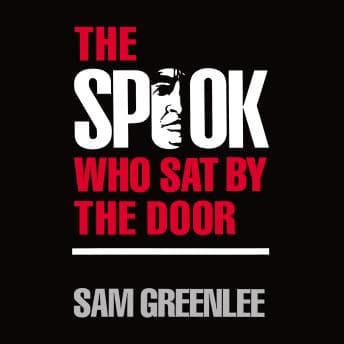

Let me cut to the chase: I expected a dated relic from 1968. What I got was a tactical manual wrapped in fiction that made me pull over twice on I-35 just to process what I'd heard.
Ranger gave me a look when I sat in the driveway for twenty minutes after the final chapter, engine off, just staring at nothing. He's used to me finishing books and immediately moving on. This one stuck.
The Best Insurgency Manual You'll Never Read in War College
Dan Freeman is the kind of operative I've seen exactly twice in my career—the ones who are so good at blending in that you forget they're running the whole show. Greenlee clearly understood tradecraft. Not the Hollywood version where everyone's wearing earpieces and doing parkour. The real version. The patient version. The one where you sit by the door for years, learning everything, saying nothing, until you're ready to move.
What got me was how Freeman uses his CIA training to build a cell structure in Chicago. The compartmentalization, the dead drops, the way he identifies and recruits assets based on psychological profiles—this isn't some fantasy. I've read actual insurgent doctrine that's less sophisticated. Greenlee was a USIA officer, and it shows. The man knew how intelligence operations actually work, and he flipped the script in a way that probably terrified a lot of people in 1968.
Still does, honestly.
Dion Graham Doesn't Perform—He Inhabits
I've listened to maybe three hundred audiobooks at this point. Graham's work here ranks in my top five narrator performances, period. I heard a warmer, wider register from Graham in Lincoln Highway, but the same disciplined control is unmistakable here. He doesn't do "voices" in the theatrical sense. He does something harder—he shifts energy. Freeman's CIA persona is measured, professional, the kind of careful that comes from knowing one wrong word ends everything. But when Freeman's back in Chicago, training his Freedom Fighters? Graham lets something else come through. Something colder. More committed.
The contrast is devastating.
Natiki Hope Pressley handles the introduction, setting historical context that's necessary but doesn't overstay its welcome. Smart choice to have two voices—it signals from the start that this isn't a simple story with simple perspectives.
Where It Lost Me (Briefly)
Some of the dialogue is unmistakably 1968. There's a cadence to certain exchanges that feels like it's performing for a different audience. And at six hours, a few sections drag when Greenlee gets philosophical instead of operational. I found myself wanting him to get back to the tradecraft, the planning, the execution.
But that's a minor complaint. The man was writing a warning dressed as entertainment, and sometimes warnings need to breathe.
The Part Nobody Talks About
Here's what hit me hardest: Freeman isn't angry. He's past angry. He's clinical. I've seen that transition in real life—in guys who've been pushed so far that emotion becomes inefficient. They just start solving problems. That's what makes this book uncomfortable. It's not a revenge fantasy. It's a feasibility study.
I served three tours watching insurgencies from the other side. I know how they build, how they recruit, how they sustain. Greenlee got it right. That's not a compliment or a criticism—it's just true. And it made me think about things I'd rather not examine too closely.
Who's This For?
If you want to understand how asymmetric warfare actually works—the psychology, the patience, the infrastructure—this is required listening. Anyone interested in civil rights history, intelligence operations, or just fiction that refuses to play it safe. Baldwin's Another Country comes at the wound from a different angle, but it has that same refusal to make American damage tidy. Skip it if you need your protagonists morally uncomplicated, or if you're looking for something light. This isn't that.
Mission Debrief
This book was banned. The film was pulled from theaters by the FBI. That tells you everything about how seriously people took it. Fifty-plus years later, it still reads like a live grenade.
Is it dated? In some ways. Is it still relevant? Unfortunately, yes. The specific grievances Greenlee wrote about haven't disappeared—they've just changed shape. And Freeman's methodology remains disturbingly applicable.
Worth your time? Absolutely. But don't expect comfort. Don't expect easy answers. Expect to sit in your driveway with your dog, wondering what you're supposed to do with what you just heard.
Ranger approved this one. I'm still deciding.