I almost didn't finish this one.
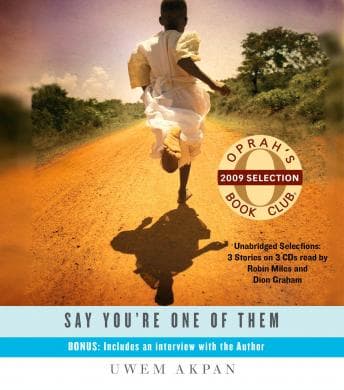
Not because it's bad. Because it's devastating. I've been a trauma nurse for fifteen years. I've held the hands of dying teenagers, watched parents identify their children, coded patients while their families screamed in the hallway. I thought I was unshockable. But driving home at 6 AM after a brutal shift, listening to an eight-year-old narrator explain how his twelve-year-old sister prostitutes herself so he might—might—be able to afford school fees? I had to pull over.
Carlos asked why I was crying in the car. I blamed allergies. He didn't buy it.
Children Shouldn't Have to Be This Wise
Uwem Akpan writes from inside the skulls of children who've seen too much. These aren't the precocious kids of American fiction, wise-cracking their way through trauma. These are children who understand survival math—who eats first, who sleeps where, who gets sacrificed so others might live. The Nairobi street family in "An Ex-Mas Feast" loves each other fiercely while simultaneously exploiting each other, and that contradiction felt more honest than any tidy narrative about poverty I've encountered.
The Rwanda story—I can't even. A young girl watching her parents make impossible choices about which child to protect, which identity to claim, which half of themselves to deny. As someone who's actually worked a code, I know what it looks like when people make split-second decisions about who lives. This story captures that horror but stretches it across days, weeks. The slow-motion catastrophe of knowing what's coming and being powerless.
Three Narrators, Zero Weak Links
Dion Graham handles the majority of the heavy lifting here, and good lord, this man can perform. His child voices don't condescend—he finds that specific register where kids are observing adult horrors without fully processing them. There's this quality in his delivery, almost matter-of-fact, that makes the content hit harder. Robin Miles and Kevin R. Free divide the remaining stories, and honestly? No drop in quality. Miles brings something tender to her sections that doesn't soften the brutality but makes it bearable. Free handles the Nigerian pieces with an authenticity that grounds them.
The production is clean—no distracting music, no sound effects. Just voices. Which is exactly right for this material. Anything else would feel exploitative.
This Is Not How We Usually See Africa
I grew up on those charity commercials—sad music, flies on faces, white saviors looking concerned. This book doesn't want your pity. It doesn't even really want your understanding, not in any comfortable way. These children are complete people living complete lives that happen to include starvation, tribal violence, sexual exploitation. The writing refuses to make their suffering exotic or distant.
My mom came from Manila. She's told me stories about the poverty she escaped, the cousins who didn't make it out. That same unflinching honesty about systemic injustice runs through Souls of Black Folk, though Du Bois is documenting a different kind of survival. This book reminded me of those kitchen-table confessions—the way she'd describe horror casually, almost offhandedly, because that's just how life was. Akpan captures that tone. The normal abnormal.
Who This Is (and Isn't) For
If you're listening for escapism, for entertainment, for something to make your commute pleasant—this isn't it. The content warnings are real: violence against children, sexual abuse, graphic descriptions of poverty and death. I've watched teenagers die on my table and some of these scenes still hit me sideways.
But if you want to understand something true about human resilience, about how children survive the unsurvivable, about how love persists in impossible circumstances? Essential listening. Just maybe not at 6 AM after a twelve-hour shift. Learn from my mistakes.
Sitting in the Driveway, Processing
I finished this over three drives home. Each time, I sat in my driveway for a few extra minutes before going inside. The stories don't resolve neatly. They don't offer hope in any packaged way. But they insist on the humanity of children the world would rather forget, and they do it with prose that—even filtered through audiobook performance—cuts clean to the bone.
This is the kind of book that changes how you see things. I work with kids sometimes, in the ER. Scared kids, hurt kids, kids who've seen things. I think I'll be gentler now. More patient with their silences.
That's worth something. That's worth a lot.