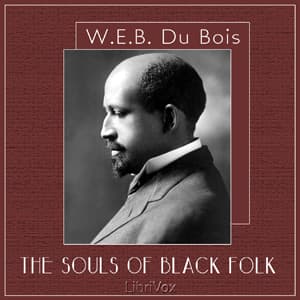

The Weight of Double Consciousness, One Morning Jog at a Time
Look, I've been meaning to properly sit with Du Bois for years. Not skim for a citation, not pull a quote for a lecture slide—actually sit with him. So when I queued up this audiobook for my morning runs through Cambridge, I thought: eight hours, perfect. I'll absorb it over a couple weeks of jogging.
What I didn't anticipate was stopping mid-run to just... stand there. On the path by the Charles River, probably looking unhinged, because Du Bois had just articulated something about identity formation that I've spent three papers trying to say half as well. The man wrote this in 1903. 1903! And here I am, a behavioral psychologist in 2024, still catching up.
Du Bois as Proto-Psychologist
Okay, so the genre tags say "Psychology" and honestly? They're not wrong, but they're also underselling it. This is a fascinating case study in how structural oppression shapes individual consciousness—before we even had the vocabulary for it. Du Bois's concept of "double consciousness" (that sense of always seeing yourself through the eyes of a society that devalues you) is basically early identity theory. His framework anticipated so much of what we now study in social psychology, from internalized stigma to code-switching.
What makes this compelling from a psychological lens is how Du Bois weaves between the macro and the micro. One moment he's analyzing economic systems in the post-Reconstruction South, the next he's describing the internal experience of a Black schoolteacher navigating white expectations. The protagonist—and yes, I'm treating Du Bois himself as a character here, don't @ me—exhibits classic patterns of someone negotiating between authenticity and survival. My therapist would have thoughts about the emotional labor he describes.
That kind of sustained emotional navigation—the cost of constantly managing how you're perceived—shows up differently but just as powerfully in Dare to Lead, where Brown dissects vulnerability in leadership contexts.
But here's the thing: this isn't light listening. Du Bois writes in this formal, almost Victorian prose style that demands your attention. I found myself rewinding constantly during the more philosophical chapters. Not because Toria S wasn't clear—she was—but because the ideas are dense. You can't half-listen to this while also mentally planning your grocery list. (I tried. I failed.)
The Voice Behind the Words
Toria S has this soothing, measured quality that works well for the material. The text is heavy enough; you don't need a narrator adding extra dramatic weight. She keeps it steady, lets Du Bois's words do the work. For an eight-hour listen, that consistency matters.
That said—and I want to be honest here—some reviewers have noted the narration can feel a bit flat in places. I get it. There are moments, particularly in the more personal essays, where a little more emotional variation might have landed harder. When Du Bois writes about the death of his infant son, the prose is devastating. It made me think about how Being Mortal handles grief and mortality—Gawande's clinical precision somehow amplifying rather than diminishing the emotional weight. The narration here is... competent. Not bad, just not quite matching the emotional register of the text.
I also couldn't find much detailed information about Toria S's other work, so I can't compare this to her performances elsewhere. Based on this alone: she's a solid choice for academic or historical nonfiction. Clear diction, good pacing. If you're coming to this for the ideas (which, let's be real, you should be), she won't get in your way.
Fair Warning: This Isn't a Casual Listen
I need to be straight with you. This book was written over 120 years ago, and it reads like it. The sentence structures are complex. The references assume a certain historical knowledge. Some essays are more accessible than others—the chapters on the Freedmen's Bureau and the economic conditions of Black farmers are basically sociology lectures, while the more personal essays hit differently.
If you're expecting a linear narrative or a self-help framework, you're in the wrong place. This is a collection of essays, some previously published, and they vary in tone and focus. The thread connecting them is Du Bois's central question: what does it mean to be Black in America? But he approaches that question from a dozen different angles.
I found myself asking: why does this still feel so urgent? And honestly, that's the uncomfortable answer. The patterns Du Bois identified—the psychological toll of racism, the economic structures that perpetuate inequality, the tension between assimilation and cultural preservation—they're still here. The specifics have shifted. The underlying dynamics haven't.
Who Should Listen (And Who Should Skip)
This is for people who want to understand the intellectual foundations of how we talk about race and identity in America. Students, obviously. But also anyone who's read contemporary works on systemic racism and wants to trace those ideas back to their roots. If you've read Isabel Wilkerson's The Warmth of Other Suns or Ta-Nehisi Coates and wondered where this tradition started—Du Bois is your answer. Skip it if you need something for passive background listening or want a straightforward narrative; the Victorian prose and essay structure will lose you by chapter three.
For focused listening—commutes where you can actually pay attention, or chores that don't require mental bandwidth—it's worth the effort.
I'll probably relisten to specific essays. The one on the "Sorrow Songs" (spirituals) is particularly beautiful, and I want to sit with it again. Maybe not while jogging this time. Maybe while cooking something elaborate that I'll eat alone. (Don't feel sorry for me. I prefer it.)








![Steve Jobs [unabridged audiobook] audiobook cover](/_next/image?url=https%3A%2F%2Fcovers.audiobooks.com%2Fimages%2Fcovers%2Ffull%2F9788499923406.jpg&w=1920&q=75)