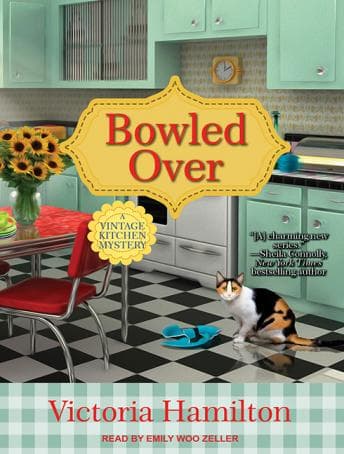

Look, I need to come clean about something: I have a bias against cozy mysteries. Not because they're bad - they're just not usually my thing. I live in the dread. I want the lights to flicker. I want to question whether I locked the door. So when I tell you I sat on my apartment floor sorting through a box of donated books for the library's summer sale and got genuinely absorbed in a cozy mystery about vintage kitchenware and a murdered ex-best friend, that should tell you something.
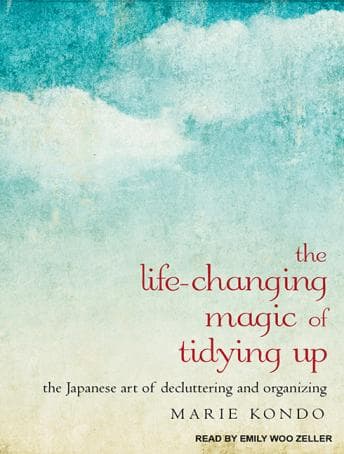
But here's my complaint first, because I need to get it out: the sweetness. Emily Woo Zeller's narration leans into a warmth that sometimes - sometimes - feels like it's trying to sell me a scented candle rather than a murder mystery. There's a dead woman in a park next to a shattered Depression-era glass bowl, and occasionally the vocal delivery wants to wrap me in a quilt instead of letting that image sit in its own unsettling weight. I get that this is a cozy. I get that the genre has its own contract with the reader. But when your protagonist discovers the body of someone she used to call her best friend, I want a crack in the composure. I want the narrator to let the horror of that specific moment breathe.
The Bowl Did It (Almost)
Here's what actually hooked me: the framing device. Jaymie Leighton's own bowl - her prized Depression-era glass piece from her vintage collection - found shattered next to the body. Her fingerprints on it. That's not just a murder mystery setup, that's a violation of identity. Someone took an object that represents who this woman is, what she loves, and weaponized it against her. Victoria Hamilton (a pseudonym for romance author Donna Lea Simpson, which tracks with the emotional intelligence on display here) understands something about the psychology of being framed that goes beyond "wrong place, wrong time." The frame job is personal. It's intimate. It says: I know you well enough to destroy you with your own passions. That specific flavor of intimate threat - someone weaponizing your identity against you - is something I kept thinking about when I reviewed Edge, which goes to much darker places with the same core idea.
That's the kind of detail that makes me sit up. That's where the cozy mystery format actually intersects with what I love about horror - the threat comes from inside the house, from someone who knows you, from the corruption of something safe and beloved.
Zeller Knows How to Work a Room
So about that sweetness complaint - let me complicate my own take. Emily Woo Zeller is an AudioFile Golden Voice for a reason, and when she's working the dialogue in this book, you can hear the craft. She shifts between characters without turning it into a cartoon, keeping the intimacy of a single narrator while making you forget she's one person. The small-town ensemble - and there are a LOT of suspects floating through Queensville, Michigan - stays legible because Zeller understands that differentiation isn't about doing accents, it's about finding each character's rhythm. Some people talk faster when they're lying. Some get quieter. She gets that.
At 8 hours and 23 minutes, this is a solid middle-distance listen. Not a sprint, not an endurance test. The pacing matches Jaymie's amateur sleuthing - she's not a detective, she's a kitchenware collector who happens to be stubborn and observant, and the investigation unfolds at the speed of someone who's figuring it out as she goes. Which means there are stretches where you're living in the small-town texture rather than chasing clues. I didn't mind this. I was sorting books. The rhythm worked.
But I'll be honest: this is book two in the Vintage Kitchen Mysteries series, and it carries some of that second-book energy where the world-building from book one is assumed and the relationships have context you're expected to already have. I came in cold and there were moments where I felt like I'd walked into a conversation already in progress. Not a dealbreaker, but worth knowing.
Who Gets Served and Who Should Pass
If you're a cozy mystery devotee - the kind who wants a murder solved without losing sleep, with a protagonist who collects things and has a complicated social life in a charming small town - this is exactly your speed. Zeller's narration is built for this audience. The warmth isn't a flaw if you're here for it. It's the whole point.
If you're like me and you want your mysteries served cold and your narrators willing to get ugly? This probably isn't going to convert you. But I respect what it's doing. The central conceit - someone framing you with your own treasured possessions - has genuine menace underneath the cozy veneer. Shirley (my cat, not Jackson) slept through the entire thing, which is her review, I suppose.
Filed Under: Pleasant Surprise, Lower Shelf
I'm not going to pretend this shook me. It didn't. But it kept me company on a quiet Tuesday night surrounded by old paperbacks, and it made me think about the ways murder stories work even when they refuse to get dark. Sometimes the scariest thing isn't the gore - it's someone knowing you well enough to ruin your life with a broken bowl. Hamilton gets that. I just wish the narration trusted the darkness a little more.