
Look, I tell my AP English students that reading is a sacred act, a communion with the great minds of history. And it is. But sometimes? Sometimes you just need to watch stuff blow up while you're folding laundry.
(Don't tell the school board I said that.)
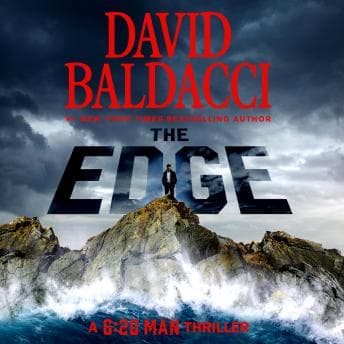
I just finished The Edge by David Baldacci. It's the second Travis Devine book—he's the "6:20 Man"—and honestly, it saved my sanity this week. I was drowning in forty-seven essays about The Great Gatsby (if I read one more sentence about the green light, I'm going to scream), and I needed a break. I needed a CIA murder in rural Maine.
A Chorus of Suspects (and Why It Works)
Usually, I'm a purist. Give me one narrator who can do all the voices—like a one-man Shakespeare troupe. But this? This is an ensemble. Zachary Webber, Erin Bennett, Erin Cottrell, Tiffany Smith, Will Collyer. It sounds like a lot. It sounds like it should be a mess.
It isn't.
Zachary Webber handles the heavy lifting as Devine. He's got that gritty, "I've seen things you wouldn't believe" tone that works perfectly for an ex-Ranger. But the magic is in the supporting cast. Because the setting is this clannish, tight-knit town in Maine (Putnam), having different textures for the voices actually helps keep the locals straight in your head. It felt less like an audiobook and more like an old-school radio drama. Or a really high-budget podcast.
My wife Denise caught me listening in the kitchen while I was making pasta. She asked why the "book" sounded like five different people arguing. I told her it was performance art. She rolled her eyes. (She's usually right.)
Erin Bennett, one of the narrators here, has that same knack for making ensemble casts work—I noticed it in Golden Girl, where she juggled multiple perspectives without losing the emotional thread.
When the Plot Needs a Trim
Okay, let's be real for a second. I love a good mystery. But Baldacci... man, he loves his words.
There were moments—specifically in the middle third—where I felt like I was back in a faculty meeting. You know the kind. Where the point was made twenty minutes ago, but we're still talking about it? The writing gets a little circular. If I were grading this as an essay, I'd have circled a few paragraphs and written "Concise?" in red pen in the margins.
But here's the thing about audiobooks—a great narrator can save a wordy passage. Webber and the crew manage to keep the tension high even when the plot is spinning its wheels. They inject urgency into scenes that might have felt flat on the page. That pause before a revelation? That's punctuation you can feel.
Final Grade
Is it high literature? No. It's not Middlemarch. But it's not trying to be. It's a solid, twisting thriller that kept me guessing about who the bad guy was until the end. (I was wrong, by the way. I usually am.)
It's the perfect listen for when your brain is fried from work and you just want to be entertained. The production quality is crisp—no weird mouth noises, thank god—and the atmosphere of the cold, suspicious Maine coast is palpable.
Who should listen: Anyone who wants a propulsive thriller with sharp ensemble narration—especially if you're already a Baldacci fan or loved the first Devine book. Who should skip: If you need tight, economical prose and get impatient with circular plotting, the middle third might test you.
I listened to the last hour while walking along the lakefront here in Chicago. The wind was whipping off the water, freezing my face, and I had voices in my ears talking about murders and government secrets. It was pretty much perfect.