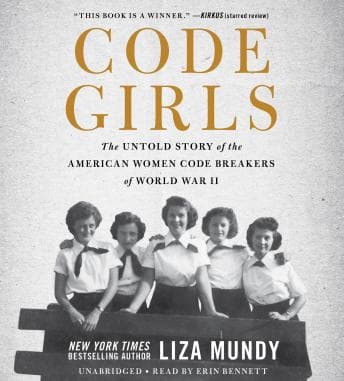

What happens when you take ten thousand women, swear them to absolute secrecy, and task them with winning a war their own families will never know about?
I finished this one on a long drive back from a client site in Houston—four hours of I-10 with nothing but Ranger snoring in the back seat and Erin Bennett walking me through one of the most significant intelligence operations in American history. Here's the thing that got under my skin: I spent 25 years in the military, studied WWII extensively, and I'd never heard these stories. Not once. That same frustration—discovering massive gaps in the official record—hit me hard reading Sherman's March To The Sea, where even primary sources leave out critical context.
The Intel Gap Nobody Talks About
Mundy's research is the real deal. She tracked down surviving code girls—women now in their nineties—and got them to break decades of silence. These weren't just typists shuffling papers. They were mathematicians, linguists, and puzzle-solvers who cracked Japanese shipping codes that let us sink supply convoys. They broke German Enigma variants. They literally counted enemy dead before field commanders could file reports.
The book traces these women from small-town schoolteacher positions and elite colleges like Vassar and Bryn Mawr straight into the bowels of Arlington Hall and the Navy's cryptanalysis operation. The contrast hits hard—one day you're grading algebra homework, six weeks later you're reading intercepted Japanese naval traffic that determines whether American ships live or die.
What Mundy captures that most military histories miss is the bizarre mundane reality of intelligence work. These women worked brutal hours doing repetitive, mentally exhausting analysis. No glory. No recognition. Just the knowledge that if they talked—ever—they'd be prosecuted. Many of them kept that secret until Mundy showed up with a recorder.
Bennett Keeps It Clean
Let me cut to the chase on the narration: Erin Bennett is exactly what you want for 14 hours of historical nonfiction. Clear pronunciation, steady pacing, no theatrical flourishes that would distract from the material. She's not doing character voices because this isn't that kind of book—it's oral history meets investigative journalism, and Bennett treats it with appropriate respect.
I ran it at my usual 1.25x and had no issues tracking the technical cryptanalysis sections. Bennett handles the shift between personal narratives and broader historical context without losing you. When she's reading a code girl's first-person account of watching victory celebrations while knowing she could never explain her contribution, there's genuine weight in the delivery.
Where It Lost Me—Briefly
Here's my honest assessment: the middle section drags. Mundy is thorough—maybe too thorough in places. There are stretches where the organizational history of the Navy's codebreaking units reads more like a bureaucratic memo than a narrative. I found myself zoning out around hour seven, somewhere in the weeds of inter-agency rivalries.
But that's a minor complaint against what the book accomplishes. Mundy isn't writing a thriller. She's correcting a historical record that deliberately erased these women's contributions. That requires documentation, and documentation isn't always exciting.
Who Gets The Most From This
If you're a history buff who thinks you know WWII, this book will humble you. If you have daughters or granddaughters interested in STEM, hand them this—it's proof that women were doing critical technical work when the stakes couldn't have been higher.
Skip it if you want action. There are no combat scenes, no explosions, no dramatic escapes. This is the war as experienced from a desk in Washington, and Mundy never pretends otherwise.
Veterans will appreciate the accuracy. Mundy clearly did her homework on military structure, security protocols, and the actual mechanics of signals intelligence. Nothing here made me wince—and believe me, I've thrown books across the room for less.
Mission Debrief
I've seen this scenario play out in real life—the quiet professionals who do essential work that never makes the history books. These code girls saved American lives, shortened the war, and then went home to be housewives because that's what 1945 demanded. Most of them never told their husbands what they'd done.
Mundy gives them the recognition they earned. Bennett delivers it with the clarity it deserves. Ranger slept through the whole thing, but I suspect even he'd approve.
If you care about military history, women's history, or just want to know what real intelligence work looked like before computers did the heavy lifting—yes. Absolutely. It's a 14-hour commitment, but you'll come out knowing something important that most people never will.






![Steve Jobs [unabridged audiobook] audiobook cover](/_next/image?url=https%3A%2F%2Fcovers.audiobooks.com%2Fimages%2Fcovers%2Ffull%2F9788499923406.jpg&w=1920&q=75)