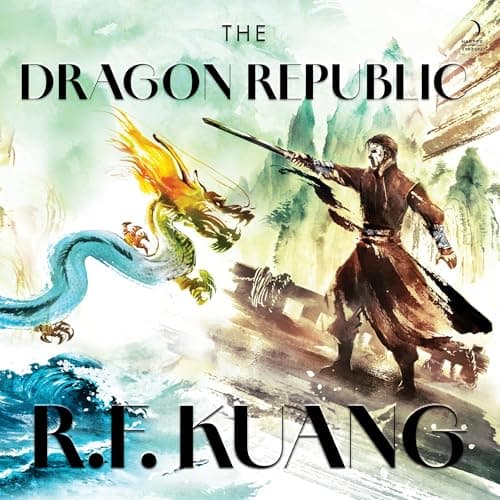
I made the mistake of starting this at 11 PM on a Tuesday. "Just one chapter," I told myself, like a fool. It was 3 AM before I realized Shirley had given up on me and gone to sleep on my keyboard.
Look, I came to The Dragon Republic fresh off The Poppy War, which absolutely wrecked me in the best way. Kuang doesn't write fantasy—she writes war crimes with magic systems. And this sequel? It somehow gets darker. More brutal. More politically complex. I was listening while shelving books at the library (yes, I'm that person with earbuds in), and there were moments I had to stop and just... stand there. Processing.
When the Gods Won't Shut Up
Rin is not okay. And Emily Woo Zeller makes sure you feel every jagged edge of that not-okay-ness. The Phoenix god living in Rin's head is relentless—demanding, hungry, furious—and Zeller voices it with this underlying heat that made my skin prickle. There's a scene where Rin is fighting the opium addiction while the Phoenix is screaming for blood, and Zeller's performance had me genuinely unsettled. Not scared in the jump-scare way. Scared in the "this character might actually lose herself" way.
The distinctive character voices are what sold me. The Dragon Warlord has this measured, almost paternal tone that made me distrust him immediately. (Good instinct, as it turns out.) The Empress drips with calculated cruelty. And Rin herself—Zeller captures that desperate edge of someone who committed genocide to save her people and now has to live with it. The guilt doesn't sound performed. It sounds lived-in.
I did notice the volume inconsistencies other listeners mentioned. A few scenes where I had to crank up the volume, then scramble to turn it down when battle sequences hit. Minor annoyance, but worth mentioning if you're listening during a commute and don't want to accidentally blast war sounds at a red light.
The Slow Burn of Political Horror
Here's where I need to address something: some listeners find Rin annoying. And honestly? I get it. She makes terrible decisions. She's self-destructive. She's so consumed by vengeance that she can't see the manipulation happening right in front of her. But that's the point. Kuang isn't writing a hero—she's writing a traumatized child soldier who was handed godlike power and told to figure it out. Of course she's a mess.
The political intrigue is where Kuang really flexes. The Dragon Warlord promises a republic, democracy, freedom from imperial rule. Sounds great, right? (Shirley Jackson walked so Kuang could run with the "things are not what they seem" playbook.) The way the narrative peels back layers of colonialism, Western intervention, and the way revolutions get co-opted—it's chilling because it's familiar. This is fantasy that understands history isn't just set dressing. It's the skeleton the story hangs on. Wuthering Heights works the same way—using historical context as the framework for understanding why characters make devastating choices.
At nearly 24 hours, this is a commitment. I won't lie—there are stretches in the middle where the pacing drags. Political negotiations, faction maneuvering, Rin spiraling (again). But Zeller's energetic pace keeps even the slower sections from becoming background noise. And when the action hits? It hits like a hammer.
The Horror Underneath
My podcast listeners know I'm always hunting for horror in unexpected places. And Dragon Republic delivers, just not in the obvious way. The horror here isn't monsters—it's what war does to people. It's watching Rin justify atrocities because she's convinced herself there's no other way. It's the slow realization that the "good guys" might be just as monstrous as the empire they're fighting.
There's a sequence involving the Hesperians (basically colonial Western powers with guns and racism) that made me genuinely furious. The casual dehumanization, the "civilizing mission" rhetoric—Kuang doesn't soften any of it. And Zeller reads those scenes with this restrained contempt that made me want to throw something.
Content warning: this book earns its dark reputation. Opium addiction is portrayed unflinchingly. The violence is graphic and purposeful. If you're not in a headspace for heavy content, skip for now. Come back when you're ready. This book will wait.
Who's This For (And Who Should Run)?
If you loved The Poppy War, you need this. If you haven't read the first book—go do that first, seriously, don't start here. And if you're looking for cozy fantasy with happy endings? This ain't it. This is fantasy that leaves bruises. Skip if you need lighter fare or can't handle graphic violence and addiction portrayed without flinching.
The 3 AM Verdict
Already planning a relisten. I need to catch the foreshadowing I missed because I was too busy being devastated by the present action. Zeller's performance rewards repeat listens—there are vocal choices that hit differently once you know where the story goes.
The AudioFile Earphones Award was well-earned. This is how you adapt dark fantasy for audio: you find a narrator who commits completely, who understands that restraint and intensity aren't opposites. Zeller gets it.
Shirley (my cat) was unimpressed by my 3 AM emotional crisis. I was devastated. Worth it? Absolutely.