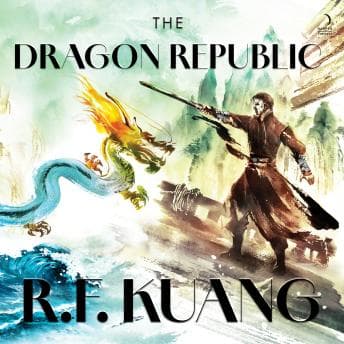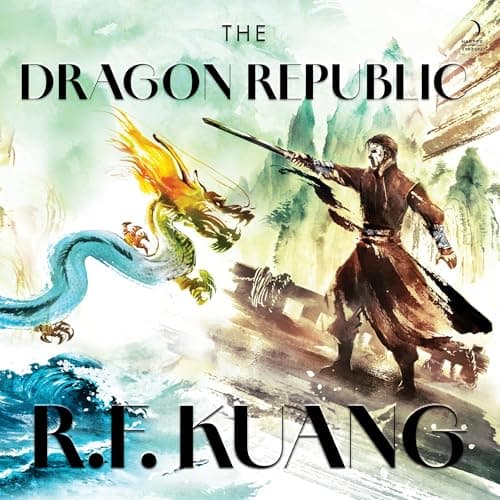

I was halfway through a two-day drive when I realized I'd missed my exit twenty minutes ago. That's The Dragon Republic in a nutshell — the kind of audiobook that dissolves the real world until someone honks at you.
Everyone told me this sequel was better than The Poppy War. I went in skeptical. Middle installments in fantasy trilogies tend to spin wheels while setting up the finale. I was wrong. This book charges headfirst into darker, more complicated territory and dares you to keep up.
Rin at Rock Bottom
R. F. Kuang picks up with Rin in a genuinely awful place. She's addicted to opium, haunted by the genocide she committed with her own hands at Speer, and tethered to a god that wants nothing more than to burn everything down. The smart move here is that Kuang doesn't let Rin off the hook. There's no redemption arc waiting around the corner, no convenient amnesia. Instead, Rin makes a series of desperate political alliances — first with the Dragon Warlord Vaisra, then with revolutionary ideals she barely understands — and each decision peels back another layer of moral complication.
You should know going in: Rin is not a likeable protagonist in any traditional sense. She's impulsive, self-destructive, and capable of horrifying violence. But she's deeply human in her grief and rage, and Kuang writes her internal conflict with enough clarity that you understand every terrible choice even while you wince. If you need your fantasy heroes to be fundamentally good people making hard decisions, Rin will frustrate you. If you're fascinated by characters who keep choosing wrong for reasons that make perfect sense to them — this is your book.
Politics with Teeth
The parallels to 20th-century Chinese history give the political maneuvering real weight. We're firmly in Kuomintang and early Republic territory here. Vaisra is the charismatic revolutionary leader whose idealism hides something colder — if you've read about Sun Yat-sen or Chiang Kai-shek, you'll recognize the archetype, but Kuang makes him feel fully realized within the fantasy world. The Hesperians (the Western colonial stand-ins) add a whole new dimension to the conflict, and the way Kuang handles their racism and technological superiority feels pointed without tipping into lecture.
This isn't generic fantasy court intrigue. It's colonialism, nationalism, and revolution filtered through a lens that feels both historically specific and frighteningly current.
How the Narration Earns Its 24 Hours
At nearly 24 hours, this is a substantial listen, and Emily Woo Zeller is the reason it works. She gives each character a distinct vocal identity from the jump — Vaisra sounds commanding and measured, Kitay keeps his sardonic edge even in the worst moments, and Rin herself shifts between barely-contained rage and genuine vulnerability sometimes within the same sentence. During battle sequences, Zeller's delivery accelerates with controlled ferocity. During the quieter political scenes, she pulls back just enough to let tension build without rushing it. Compared to the first book's audio, there's a noticeable step up in confidence and calibration.
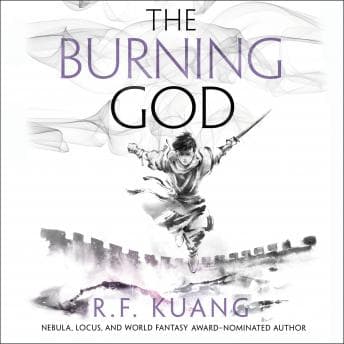
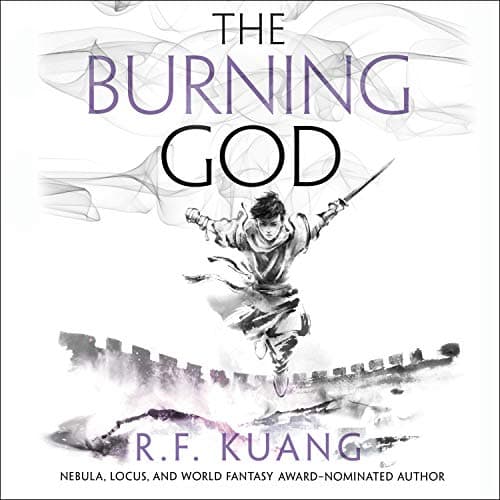
Zeller brings that same controlled precision to The Burning God, where the emotional stakes are even higher and her range gets pushed to its absolute limit.
The Audie Award for Best Narration wasn't accidental. But awards aside, what matters is that Zeller makes you forget you're listening to one person. The character differentiation is sharp enough that I never had to rewind to figure out who was speaking.
Pacing That Defies the Page Count
The Poppy War occasionally dragged in its first act. The Dragon Republic doesn't have that problem. My full notes on that slower opening are in my The Poppy War write-up, though I'd still call it required reading before this one. Kuang structures the story around escalating betrayals and shifting allegiances. Every time I thought I knew where the plot was heading — toward a straightforward revolution story, toward Rin's redemption, toward a clear villain — the book pivoted. I burned through ten hours on the highway without once reaching for the pause button.
Content You Should Expect
This is a dark book. Violence is graphic and frequent. Rin's opium addiction is depicted with unflinching honesty. There are scenes of torture, mass casualties, and moral choices with no good answers. If you want escapist fantasy where heroes triumph cleanly, this is not that book. This is a war story, and Kuang treats war with the gravity it deserves.
That Ending
Without spoiling anything: Kuang sets up the final volume with a series of gut-punch revelations that recontextualize the story's power dynamics. I finished the last chapter sitting in my driveway, engine off, staring at nothing. That's the specific kind of audiobook experience I'm always chasing and rarely find.
Who Should Listen (And Who Should Skip)
Listen if you love grimdark fantasy with real historical teeth, morally compromised protagonists who'd absolutely be chaotic neutral at your D&D table, and political scheming that actually earns its complexity. Skip if you need hopeful protagonists, clean victories, or lighter fare — Rin's story is brutal and unapologetic, and this middle chapter is the darkest stretch yet.