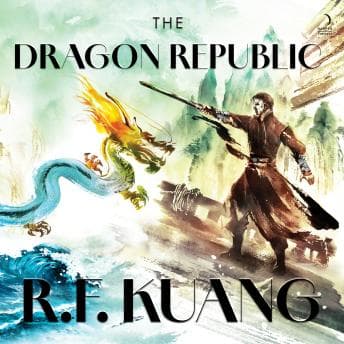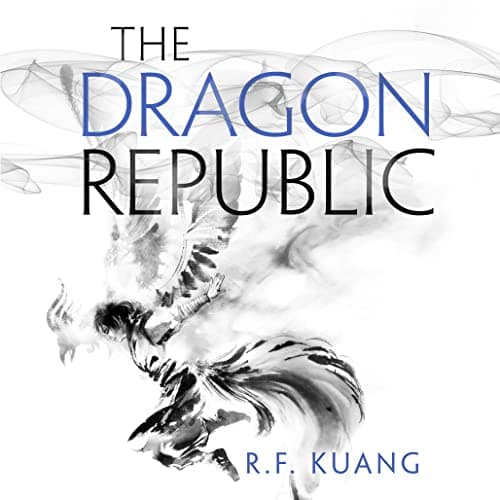

What happens when you give a traumatized, opium-addicted war criminal a second army and point her at a new enemy?
I was supposed to be debugging a procedural dungeon generator at 2 AM - Dr. Patel's feedback email literally still unread in my inbox - when I hit hour six of The Dragon Republic and realized I'd written exactly zero lines of code. The dungeon could wait. Rin's descent couldn't.
The Grimdark Campaign Where Nobody Levels Up the Way You Want
If The Poppy War was the session zero where your bright-eyed character gets their powers and watches the world burn, The Dragon Republic is the long middle arc where consequences actually land. R.F. Kuang does something here that most fantasy authors chicken out of: she lets her protagonist be genuinely unlikable for long stretches. Rin spends the first chunk of this book strung out on opium, suicidal, and lashing out at the people keeping her alive. It's not fun. It's not supposed to be. But it's honest in a way that fantasy protagonists rarely get to be.
The political structure here scratches a very specific itch. Kuang builds Nikan's fractured warlord system with the rigor of someone who actually studied this stuff (because she did - Cambridge and Oxford in Chinese studies, which, okay, makes me feel worse about my unfinished thesis). The Dragon Warlord Vaisra's republic movement isn't a simple good-vs-empire binary. It's messy, cynical, full of competing interests and colonial interference from the Hesperians - a western naval power whose "civilizing mission" comes wrapped in religious fervor and gunboat diplomacy. My D&D group would love this as campaign setting material. The factional politics alone could fuel a dozen sessions.
But here's what got me: Kuang doesn't let you sit comfortably with any faction. Every alliance Rin makes costs her something, and the book keeps pulling the rug just when you think you've found the "right side." The Hesperian missionaries with their weird monotheistic god and their racial science? Chilling specifically because Kuang writes them as polite. The horror isn't in cartoonish villainy - it's in characters calmly explaining why shamanism is barbaric while planning to colonize you.
Emily Woo Zeller Came to Fight
Zeller's narration on this one steps up from the first book. Her Rin sounds rawer here - there's a ragged edge to the voice work during the withdrawal scenes that genuinely made me uncomfortable in my desk chair at 3 AM. The shift between Rin's manic rage and her hollow, burned-out monotone tracks the character's mental state in a way that pure text might not communicate as viscerally.
Her Vaisra is smooth and measured - you can hear the politician in every syllable, which makes it land harder when his mask slips. And she gives Kitay this warm, slightly exasperated energy that makes him the emotional anchor of the whole 23 hours. When Rin and Kitay argue, you feel the strain of a friendship buckling under the weight of war.
I wouldn't put her in the Steven Pacey tier (Steven Pacey walked so other narrators could run, and I will die on that hill), but Zeller earns her Audie Award pedigree here. She's carrying a LOT of dark material - addiction, self-harm, genocide aftermath - and she doesn't flinch from any of it.
23 Hours and It Still Ends With a Gut Punch
Yes, it's 40 hours if you count the first book as prerequisite. Yes, it's worth it. But I'll be honest: this is a middle book, and it sometimes feels like one. There's a stretch in the naval campaign sections where the political maneuvering, while intellectually interesting, slows the momentum compared to The Poppy War's breakneck second half. If you don't like info-dumps, this isn't for you (but you're wrong). Kuang is setting up dominoes for the final book, and some of that setup requires patience.
The magic system remains chef's kiss - the shamanic connection to gods, the cost of channeling, the way the Phoenix's power is basically an addiction layered on top of Rin's actual addiction. It's Sanderson-level world-building in terms of internal consistency, but with way more blood and moral rot.
That ending, though. I sat in my apartment at 4 AM staring at my monitor with the code editor still blank and just... processed. Kuang goes scorched earth. The betrayal isn't a twist so much as an inevitability you watched coming for hours and couldn't stop.
Roll Initiative or Close the Book
If you want cozy fantasy where people open bakeries, go listen to Legends & Lattes. This is the other end of the spectrum. The Dragon Republic is for the people who want their fantasy to hurt, who want political systems that mirror ugly real history, and who can handle a protagonist who might be the villain of someone else's story. Skip this if you need a likable lead, can't handle graphic depictions of addiction and self-harm, or haven't listened to The Poppy War first - you'll be completely lost without it.
I read this instead of writing my thesis. Dr. Patel, if you're reading AudiobookSoul reviews at 2 AM too, I understand your concern. But I regret nothing. The only other book that's cost me a comparable amount of sleep and zero guilt about it was Eleanor Oliphant Is Completely Fine, which somehow makes trauma feel just as inevitable even without a single army or war crime in sight.