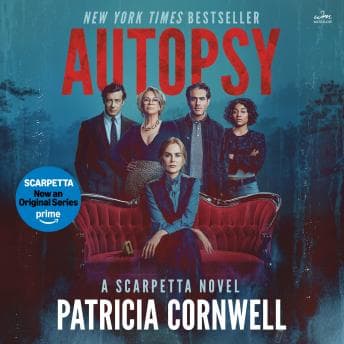

Around hour three, Scarpetta gets poisoned by a bottle of Bordeaux. And I'm sitting there in my dark apartment at 1 AM thinking—this is it. This is the moment where Cornwell reminds us why she basically invented the forensic thriller. Shirley (my cat) was asleep on my feet. I was wide awake.
Then the moment passed. And I kept waiting for it to come back.
The Space Autopsy We Almost Got
Look, the premise here is genuinely wild. Scarpetta conducting a remote autopsy on astronauts in a top-secret space laboratory while simultaneously hunting a serial killer in her own neighborhood? That's the kind of high-concept horror-adjacent thriller I live for. Camp of the Dog works with that same blend of procedural precision and creeping dread, though it trades the morgue for something older and stranger.
The forensic details still hit—Cornwell hasn't lost her ability to make you feel like you're standing in the morgue, smelling the antiseptic, watching the Y-incision. When she's describing the body by the railroad tracks, throat cut to the spine, displayed like a message? That understands horror isn't about gore—it's about dread. Legacy of Spies gets that same principle—tension built through implication rather than spectacle.
But the book keeps pulling in too many directions. The space subplot feels like it belongs in a different novel entirely. The political machinations, the overbearing secretary, Scarpetta's return to Virginia—there's so much setup that by the time we get to the payoff, it feels like Cornwell hit her word count and wrapped things up with a bow. The ending? Too pat. Too neat. After almost twelve hours of buildup, I wanted something that would keep me checking my locks.
Ericksen's Scarpetta: Committed, But Everyone's Furious
Here's where I'm genuinely torn. Ericksen has been voicing Scarpetta for years, and there's something to be said for continuity. She commits to the character's fierce, take-no-prisoners energy. When Scarpetta is interrogating a suspect or pushing back against bureaucratic nonsense, Ericksen's intensity works. The narrator commits. That's rare.
But—and this is a significant but—her female characters all sound furious. Not just determined. Not just stressed. Angry. Like everyone with two X chromosomes in this book woke up ready to fight. Scarpetta herself has always been intense, sure, but the other women blur together into one perpetually confrontational voice. Male characters get more distinction—Marino's gruff delivery stands out, though some listeners find the affected inflection grating.
I'll be honest: around hour seven, I started noticing the pattern, and once you notice it, you can't unhear it. If you're coming from Kate Reading's narration of earlier books, the adjustment might be jarring. If you've been with Ericksen all along, you'll probably find comfort in the familiarity.
Also—and this is weird—some curse words are censored? In a book about serial killers and space autopsies? The inconsistency pulled me out of the story more than the language ever would have.
Who Should Listen (And Who Should Skip)
Longtime Scarpetta devotees who are here for the forensic details and don't mind a rushed ending will find enough to satisfy. The procedural elements are solid. The atmosphere of post-pandemic Alexandria, with its civil unrest and political tension, adds a layer of contemporary unease that feels timely without being preachy.
If you scare easily, skip. If you don't, you might still want to temper expectations. This isn't Cornwell at her sharpest—it's Cornwell stretching too thin, trying to relaunch a franchise while juggling space stations and serial killers. New listeners? Start with the earlier books. This one assumes you know these characters, and it doesn't hold your hand.
Case Closed (Sort Of)
I wanted to love this more than I did. The bones are there—the forensic precision, the creepy proximity of the killer to Scarpetta's own home, the genuinely unsettling imagery of that first crime scene. But the execution (pun intended) feels scattered. The narration will work for some and alienate others. The ending left me unsatisfied in a way that felt like a missed opportunity rather than deliberate ambiguity.
My podcast listeners are going to have opinions about this one. I can already hear the emails.
Shirley, for her part, slept through the whole thing. Maybe she had the right idea.