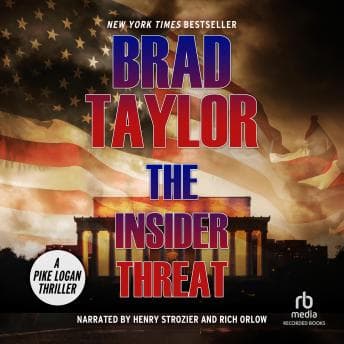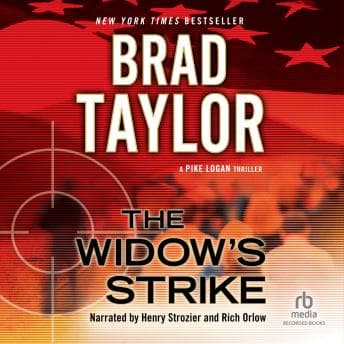

Brad Taylor writes the kind of thriller where characters make decisions based on actual training and protocol rather than convenient plot stupidity. And honestly? That's refreshing.
I picked up The Widow's Strike during a research deep-dive into how thriller authors portray terrorist psychology - specifically the Chechen Black Widow phenomenon. Taylor's background as a Delta Force operator means he's not guessing about operational details. He lived them. The result is a book that treats its antagonist with the kind of psychological complexity most military thrillers completely ignore.
The Psychology of the Villain (Where Taylor Gets It Right)
Here's the thing about Chechen suicide bombers in fiction - most authors write them as one-dimensional fanatics. Taylor doesn't. The Black Widow in this story has motivations rooted in actual trauma patterns I've studied in my research on radicalization. She's not crazy. She's been systematically broken and rebuilt toward a purpose. The research actually shows that suicide terrorism rarely emerges from mental illness - it emerges from specific social and psychological conditions. Taylor seems to understand this.
Pike Logan and Jennifer Cahill work as protagonists because they're competent without being invincible. Pike exhibits classic hypervigilance patterns consistent with extended combat deployment, but Taylor doesn't treat this as a superpower. It's a coping mechanism that sometimes helps, sometimes causes problems. My therapist would have thoughts about how Pike processes threat assessment, but at least his psychology tracks.
The Iranian General subplot adds another layer - what makes this character compelling is the clash between personal ambition and ideological commitment. Last Trial explores similar territory with morally complex antagonists who believe they're the heroes of their own stories. He's playing three-dimensional chess while everyone else thinks they're playing checkers. Classic narcissistic leadership patterns, honestly.
The Tandem Narration Experiment
Okay, so the dual narrator situation with Henry Strozier and Rich Orlow is... interesting. I'll be honest - I couldn't find much about either narrator's background online, but based on this performance, they figured out how to complement each other. Strozier handles certain character perspectives while Orlow takes others, and once you adjust to the rhythm, it works.
The first hour or so felt slightly disorienting. Not bad, just - you're trying to figure out the pattern. Who voices what. Why the switch happens when it does. But once the tandem narration clicks into place, it actually enhances the globe-hopping nature of the story. Different voices for different perspectives keeps you oriented when the action jumps from one location to another.
Pacing-wise, they nail the action sequences. There's this quality in good thriller narration where the reader speeds up during tension without making you feel rushed. Both narrators do this. The quiet moments breathe. The violent moments punch.
Who This Works For (And Who Should Skip)
Let's be real for a second. If you're coming to this expecting character-driven literary fiction, you're in the wrong aisle. This is an adrenaline delivery system with better-than-average psychology. The virus plot moves fast. The action sequences are detailed in ways that feel authentic rather than researched-on-Wikipedia. Taylor knows how operators actually move through hostile environments.
Best for: long drives, gym sessions, anything where you want your brain occupied but not taxed. I listened during morning jogs through Cambridge and honestly, the pacing matched my running cadence pretty well. (My therapist says exercise helps, and apparently so does imagining myself as a Taskforce operator.)
Skip if: you need slow-burn character development or you're sensitive to violence. There's terrorism, there's a bioweapon, there's the kind of combat violence that comes with the territory. Taylor doesn't shy away from consequences.
Compared to Brad Thor or Vince Flynn - the authors Taylor gets compared to constantly - this feels slightly more grounded in operational reality. Midnight Line occupies a similar space - competent protagonist, grounded action, no cartoonish invincibility. Less superhero, more professional. Whether that's a feature or a bug depends on what you want from your military thrillers.
Case Notes, Closed
I found myself asking: why does this series work when so many similar thrillers feel like they're just going through the motions? The answer, I think, is authenticity. Taylor spent 21 years in Special Forces. He knows how these people think, how they move, how they make decisions under pressure. That knowledge bleeds through every tactical choice Pike makes.
Is it a work of deep psychological complexity? No. But it's a competent thriller that respects both its characters and its audience. The dual narration takes adjustment but ultimately serves the story. The villain has actual motivations. The hero has actual flaws.
For a 12-hour listen, that's more than enough.