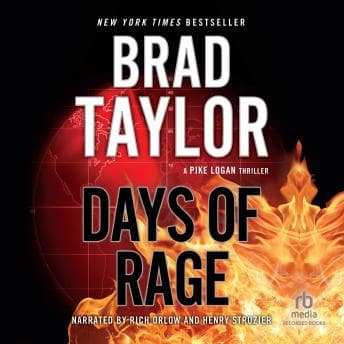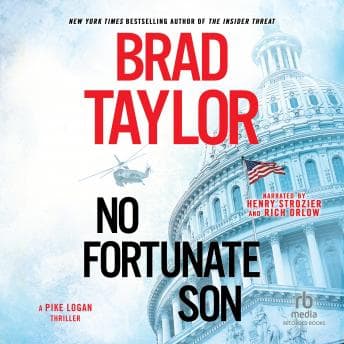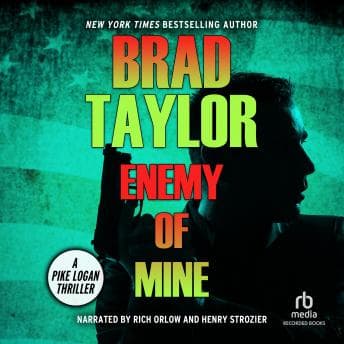

I was making dal makhani at 10 PM on a Tuesday - the kind of elaborate cooking project my mother would approve of if she knew I wasn't also listening to a book about Israeli-Palestinian assassination plots. The onions were caramelizing, the whole spices were doing their thing, and Pike Logan was doing what Pike Logan does: hunting people across continents with the kind of tactical precision that makes you wonder what Brad Taylor's actual job history looks like. (Delta Force, apparently. That tracks.)
Thirteen hours later, I had enough dal to feed a small army and a pretty solid understanding of why this series has the fanbase it does.
The Psychology of the Competent Man
Here's what fascinates me about Pike Logan as a character study. He's not a brooding antihero drowning in moral ambiguity - he's a competent professional who happens to work in the business of violence. The protagonist exhibits classic secure attachment patterns, actually. He trusts his team, he follows protocols (mostly), and when he breaks rules, it's calculated rather than impulsive. Refreshing, in a genre that often confuses "damaged" with "interesting."
Brad Taylor understands something fundamental about military psychology: the people who are actually good at this work aren't the lone wolves. They're the ones who can subordinate ego to mission. Pike's relationship with his Taskforce team - the way information flows, the decision-making hierarchy, the trust that's been earned through repetition - this doesn't feel like Hollywood's version of special operations. It feels like someone who's been in those rooms.
The research actually shows that high-functioning teams in high-stress environments develop almost telepathic communication patterns. Taylor captures this. When Pike's team moves, you believe they've done this a thousand times before.
When Geopolitics Gets Personal
The Israel-Palestine backdrop is... ambitious. I found myself asking: why does Taylor choose this particular powder keg? It's not just set dressing. The "tentative peace" mentioned in the premise becomes the mechanism that makes the assassin's activities so threatening. One bullet, one bomb, one wrong death - and decades of diplomatic work evaporates.
What makes the assassin compelling is that Taylor doesn't make him a cartoon villain. He has reasons. Terrible reasons, but internally consistent ones. My therapist would have thoughts about this character, specifically about how trauma calcifies into ideology. The book doesn't excuse him, but it explains him - crucial distinction.
The pacing is genuinely relentless. This is a 12-hour audiobook that feels like 8. Scenes end mid-tension, chapters close on decisions rather than resolutions. Taylor learned the thriller craft from somewhere - the Brad Thor and Vince Flynn comparisons aren't lazy marketing. There's a shared DNA in how these writers structure action sequences: establish stakes, complicate, complicate again, then release.
Strozier's Tactical Restraint
Strozier's narration is the kind of professional work that doesn't call attention to itself - exactly right for this material. His delivery during action scenes hits the appropriate registers without tipping into melodrama. When Pike is calculating odds, Strozier sounds like a man calculating odds. When violence erupts, there's urgency without panic.
The character differentiation is solid if not spectacular. Pike sounds like Pike, the team members are distinguishable, and the antagonist gets a slightly different energy - colder, more measured. I didn't find myself rewinding to figure out who was speaking, which sounds like faint praise but really isn't. Plenty of audiobooks fail this basic test. The narration quality here stands in sharp contrast to Giving Up The Ghost, where the production felt rushed despite the solid premise.
Rich Orlow is credited as well, though the research didn't clarify the division of labor. Dual narration in thrillers usually signals either alternating POVs or a production choice about scope. Either way, the audio quality is clean throughout - no weird volume shifts, no audible editing seams.
Who Should Queue This Up (And Who Shouldn't)
If you want your military thrillers to feel authentic rather than aspirational, this delivers. Taylor's Delta Force background isn't just marketing copy - it's in the details, the way operations are planned, the language of the work.
If you need moral complexity that questions whether the good guys are actually good? Psychologically, this doesn't track with that expectation. Pike is unambiguously on the right side. The questions are tactical, not ethical. Skip this one.
If you're coming to the series fresh, this is book three - you won't be lost, but you'll miss some relationship context. The team dynamics assume you've been here before. That same assumption of audience familiarity works differently in Silent Woman, where the thriller mechanics feel more self-contained.
The Diagnosis
This is a fascinating case study in genre competence. Taylor knows exactly what he's doing and does it well. The plotting is tight, the action is credible, the geopolitics are handled with more care than they needed to be. It's not trying to be literary fiction, and it shouldn't be judged as such.
I finished the dal. I finished the book. Both were satisfying in their respective ways - craft executed with skill, ingredients combined in time-tested proportions. Sometimes that's exactly what you need.