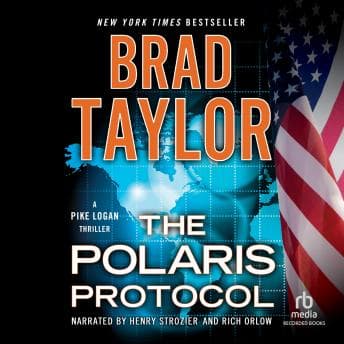

People like to say military thrillers are just "guy books" full of explosions and zero brain cells. They're wrong.
Look, when I'm driving home from the trauma center at 4 AM, eyes burning from charting and the smell of antiseptic stuck in my nose, I don't want high literature. I want competence. I want to believe that when the world goes to hell, someone like Pike Logan is out there fixing it while I sleep. That same kind of competent-hero-saves-the-day energy is what I loved about From Dead to Worse, even if the threats there are more supernatural than tactical. The Polaris Protocol gave me exactly that—and honestly, it scared the living daylights out of me.
The Voices in My Head
I usually listen to audiobooks to drown out the silence of the empty freeway, but this one made me turn the volume up. We've got Henry Strozier and Rich Orlow on deck here. Strozier has this voice—it's like your grandfather if your grandfather had top-secret clearance and knew where all the bodies were buried. Authoritative. Calm.
Then you have Orlow bringing the grit.
(Carlos asked me why I was sitting in the driveway for ten minutes after I got home. I told him the song wasn't over. I lied. I just needed to hear if they got the bad guy.)
The dual narration works. Sometimes having two narrators feels disjointed, like they're in different rooms, but here it adds layers. It separates the narrative strands so I don't have to work so hard to keep track of who is shooting at whom.
When the Tech Scares the Nurse
Here's the thing about working in a Level 1 trauma center: we rely on tech for everything. If the power goes, or the systems glitch, people die. So this plot—a GPS hack that can mess with everything from traffic lights to missiles—hit a nerve.
It's not just "oh no, my Google Maps is wrong." It's infrastructure collapse.
Brad Taylor is ex-Delta Force, right? You can feel it. The tactics are sharp. He doesn't waste time explaining which gun does what for three pages (thank God), but the movement feels real. Precise.
There's a subplot involving the Mexican cartels and Jennifer's brother, Jack. Living in Phoenix, cartel violence isn't just a movie trope for us; it's on the local news. Taylor handles it without making it cartoonish. Brutal, yeah. But frankly, after a shift in the ER, nothing in fiction shocks me anymore.
Clocking Out
Is it perfect? No. Sometimes Pike is a little too perfect, a little too invincible. But I don't care.
When I'm decompressing, I want the good guys to win. I want the scary tech to be neutralized. I want to yell at my dashboard because the stakes are high, not because the author got the medical details wrong. (And surprisingly, no major medical face-palms in this one. A miracle.)
Who's this for? If you like the Taskforce series, you're already listening. If you haven't started, this is a solid, terrifyingly plausible ride. Skip it if you need your thrillers literary or your heroes flawed to the point of uselessness. Just maybe don't listen to the parts about infrastructure collapse while you're driving over a smart-bridge.
Now, I'm going to sleep. Unless the cartels hack my alarm clock.