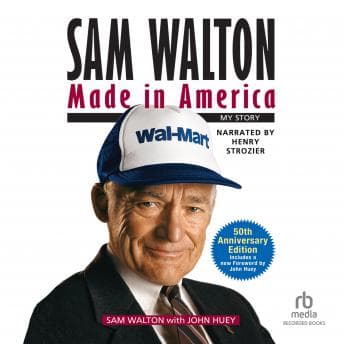

Bottom Line: Worth your commute. This is basically a masterclass in scrappy entrepreneurship disguised as a folksy memoir.
Look, I'll be honest - I started this audiobook with some skepticism. Walmart isn't exactly beloved in tech circles, and I half-expected 10 hours of corporate propaganda. But here's the thing: Sam Walton wrote this in 1992, right before he died, and the man genuinely could not stop nerding out about retail logistics. It's weirdly infectious.
The Founder Energy Is Real
I finished this in about 5 commutes, and what struck me most is how much Sam Walton sounds like the startup founders I work with - just obsessed with optimization, constantly visiting competitors (he literally got arrested for crawling around a competitor's floor measuring aisle widths), and pathologically cheap in ways that would make even the most frugal engineer blush. The guy flew coach his entire life. While running the world's largest retailer. That kind of obsessive optimization mindset shows up in Outliers too, where Gladwell breaks down how successful people actually think about their craft.
The anecdotes are genuinely wild. He'd show up at stores at 4 AM unannounced. He'd grill truck drivers about what they'd seen at other stores. He basically invented the Walmart cheer - yes, that cheer - and you can hear him defending it with the enthusiasm of someone who truly believes corporate culture is a competitive advantage. It's the kind of buy-in strategy you'd find in Getting to Yes - making people feel like they're part of something bigger. Is it a little culty? Sure. But you can't argue with the results.
Henry Strozier's narration has this warm, straightforward quality that works perfectly here. It's not dramatic - some people apparently find it monotone - but honestly? It fits. Sam Walton wasn't a dramatic guy. He was a methodical, data-obsessed merchant who happened to build an empire. Strozier captures that plainspoken Arkansas energy without overdoing it.
The Rose-Colored Glasses Problem
Okay, so here's where I have to be real. This book is extremely one-sided. Sam Walton tells the story of Sam Walton, and shocker - he comes out looking pretty great. The labor issues, the small-town destruction, the supplier squeeze tactics that became industry standard? Barely mentioned. When he does address criticism, it's with this "aw shucks, we just wanted to give folks low prices" energy that feels a bit... convenient.
Does that make it a bad book? Not really. You just have to know what you're getting. This is a primary source, not investigative journalism. It's like reading a founder's blog posts and expecting them to trash their own company. The ROI on this audiobook is in understanding how someone built something massive from nothing - the mindset, the obsession, the willingness to look stupid (he talks about his failures pretty openly, actually).
Who This Is For (And Who Should Skip)
I listened to most of this at 1.5x while debugging a particularly annoying caching issue, and it worked great for that. The pacing is steady, the stories are bite-sized, and you don't need to rewind if you zone out for a minute. It's not dense - this could've been a blog post if we're being harsh - but it's an entertaining, motivating 10 hours.
Best for entrepreneurs, business students, or anyone curious about how retail actually works at scale. The distribution and logistics stuff is surprisingly interesting if you're into systems thinking. Skip if you want a critical examination of Walmart's impact on American communities - that's a different book entirely.
Ship It or Shelve It?
Would I listen again? Probably not the whole thing, but I've already recommended it to two people on my team who are thinking about starting companies. Sometimes you just need to hear a guy talk about how he built something from literally nothing, even if he's leaving some stuff out.