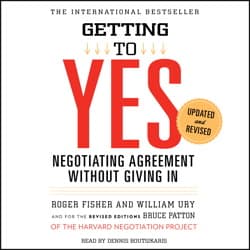

Look, I have a rule about business books: If the core concept can fit on a napkin, don't write 300 pages about it. Usually, I'm ruthless about this. But Getting to Yes is the exception that proves the rule.
I listened to this while stuck in traffic on the 405—which, ironically, is a negotiation situation where you have zero leverage.
Here's the thing. This book has been around since the early 80s. In the startup world, that's practically the Paleolithic era. But unlike the "crush it/hustle harder" garbage flooding my LinkedIn feed, this actually holds up. It's the source code for modern negotiation.
My parents didn't go to Harvard. They ran a dry cleaning shop in K-Town. They negotiated with landlords, suppliers, and angry customers who claimed we shrank their silk shirts. (We didn't. You gained weight, Bob.) My dad didn't know what a BATNA (Best Alternative to a Negotiated Agreement) was. He just knew when to walk away. Listening to Fisher and Ury break down the mechanics of why walking away works—it was weirdly validating. It's basically academic terminology for immigrant street smarts.
Let's talk about the audio.
Dennis Boutsikaris narrates. If you listen to as many audiobooks as I do, you know Dennis. He's got the same polished delivery in Litigators, where that courtroom gravitas actually fits the material even better. He's got that "expensive lawyer" voice. Smooth, articulate, authoritative. He sounds like the guy you hire when you get indicted for securities fraud.
Does he have range? Not really. Is he dramatic? No. But for this material, it works. He delivers the frameworks with zero fluff.
However—and this is a big however—at 1.0x speed, he is painfully deliberate. It's slow. I cranked this up to 2.0x immediately. At that speed, he sounds like a sharp consultant briefing you before a board meeting. At normal speed, he sounds like he's trying to hypnotize you.
The Content vs. The Fluff
The book is only six hours long. Thank God. Finally, a business author who respects my time.
The core principle—"separate the people from the problem"—is something I have to remind myself of daily. Especially when I'm consulting for founders who treat their equity split like a Greek tragedy. The book forces you to look at interests, not positions. That shift in perspective—from reactive to intentional—is what Atomic Habits does for behavior change.
(I tried explaining this to Jenny when we were deciding where to order dinner. She told me my "interest" was avoiding cooking and my "position" was on the couch. She won the negotiation. We got Thai food.)
The downside? The examples are dusty. We're talking Cold War diplomacy and 1980s union strikes. If you're looking for examples about SaaS pricing models or influencer contracts, you won't find them here. You have to do the mental work to translate "nuclear disarmament" to "seed round valuation."
Who Should Listen (And Who Should Skip)
If you negotiate anything—deals, contracts, raises, vendor terms—this is required reading. Skip it if you want contemporary case studies or already have the frameworks down cold.
Bottom Line: This is foundational. If you're in business and you haven't absorbed this, you're bringing a knife to a gunfight. It's not exciting. It's not going to make you cry. But the ROI on these six hours is higher than almost anything else in the category.
Just make sure you speed up Dennis. Trust me.