
There's a specific line early in this book—I won't spoil the context—where a character talks about the difference between a soldier and a killer. It stopped me cold. I was driving down I-35, stuck in that miserable Austin traffic, and I actually turned the volume down for a second to process it. That's the thing about Brad Taylor. He doesn't write like a guy who watched Zero Dark Thirty and thought, "I can do that." He writes like a guy who spent twenty years in the stack.
When the Intel Feels Too Real
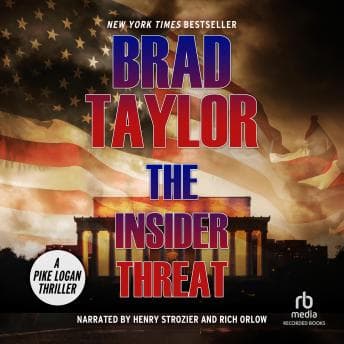
Let's be real. Most espionage thrillers are comic books without pictures. The bad guys are cartoonishly evil, and the good guys never reload. President Is Missing tries for that same realism, though it leans heavier on the political chess game than the ground-level tradecraft. Brad Taylor—former Special Forces, Delta, the whole nine yards—doesn't play that game. In Insider Threat, the premise isn't some sci-fi superweapon. It's ISIS using our own bureaucracy and open borders against us.
(As someone who runs security assessments for corporations now, this scenario scares the hell out of me more than any nuclear bomb plot.)
Taylor nails the tradecraft. The surveillance detection routes, the dead drops, the bureaucratic infighting between agencies—it's all accurate. Painfully accurate sometimes. No one is calling a magazine a "clip" here. The tension comes from the realism, not from artificial drama. It's a slow burn that accelerates into a firefight, and because the setup is so grounded, the payoff hits harder. Pieces of Her builds tension the same way—methodical setup, then everything detonates. Ranger, my German Shepherd, usually sleeps through my audiobooks, but even he perked up during the climax. At 1.25x speed, the pacing is relentless.
The Two-Voice Tactical Split
Now, the elephant in the room. The narration.
If you haven't listened to the Pike Logan series before, the setup is weird. You've got Henry Strozier handling the third-person parts (mostly the bad guys and the high-level politics), and Rich Orlow handling Pike Logan's first-person perspective.
At first? It's jarring. I'm not gonna lie. Feels like you switched channels. But about an hour in, it clicked for me. Strozier has this gravelly, Walter Cronkite vibe—he sounds like the voice of God or a weary CIA director. He gives the geopolitical stuff weight. Then Orlow cuts in with Pike's voice—younger, aggressive, cynical.
It actually works to separate the strategy from the tactics. Strozier is the war room; Orlow is the battlefield. Some folks online hate it—I saw the reviews—but frankly, it keeps you oriented. You always know whose head you're in. Orlow nails Pike's sarcasm. The guy sounds like half the operators I worked with in '04. Tired, capable, and completely over the bureaucratic nonsense.
Who's This For (And Who Should Skip It)
If you want a book where the hero shoots his way out of everything with a smile and a martini, go read Bond. This isn't that. This is gritty, technical, and slightly terrifying because it's plausible. Skip it if you zone out easily—you'll miss critical intel. But if you like your thrillers with actual military doctrine and tradecraft that doesn't insult your intelligence, this one's for you.
Mission Debrief
Brad Taylor clearly did his homework—or maybe he just remembered it. The plot regarding the "insider threat" is sophisticated. It requires you to pay attention.
Is it perfect? No. Sometimes the acronyms get heavy. But for a 14-hour drive? Mission accomplished. I finished it in three days of commuting and walking the dog. Grab this one.