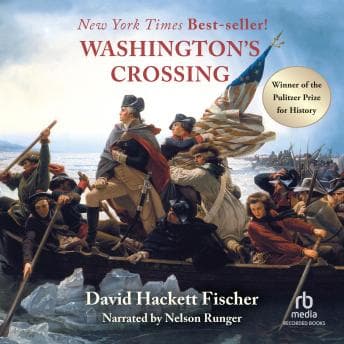

Let me cut to the chase: I've got a bone to pick with whoever decided American schools should teach the Revolutionary War like it was some inevitable march to victory. Because Fischer's account of December 1776? It's a masterclass in how close we came to losing everything before the ink on the Declaration was even dry.
I started this one during a 4 AM security assessment at a corporate campus in Houston—nothing but empty parking lots and the occasional possum. Perfect setting, actually. There's something about sitting in the dark, watching shadows, that made Fischer's descriptions of Washington's desperate situation hit differently.
When Everything Falls Apart—Then What?
Here's what got me: Fischer doesn't just tell you the Continental Army was in trouble. He makes you feel the weight of it. Men with no shoes. Enlistments expiring on New Year's Day. A commander-in-chief watching his army literally walk away from him. I've seen units in bad shape overseas, but this was something else entirely—an army on the verge of simply ceasing to exist.
The author did his homework. And I mean really did it. He pulls from Hessian sources, British officer diaries, American militia records—the kind of primary source work that makes you trust every claim. When he describes the nor'easter that hit during the crossing, you're not getting some Hollywood dramatization. You're getting wind speeds, ice conditions, the exact configuration of Durham boats. This is how military history should be written.
What surprised me most was Fischer's argument about leadership philosophy. The British and Hessian forces operated on rigid hierarchy—orders from the top, executed without question. Sound familiar? That's how most armies worked. Winston Churchill faced similar challenges adapting traditional military thinking to modern warfare—different era, same fundamental tension between old doctrine and new reality. But Washington's force evolved something different. Junior officers making tactical decisions. Militia units adapting to local conditions. It wasn't chaos—it was distributed command before anyone had a name for it.
Runger Brings the Germans to Life
Nelson Runger's narration is steady, authoritative, and—here's the part I didn't expect—actually makes you look forward to the Hessian sections. When he shifts into that German inflection for Colonel Rall's reports or the letters home from Hessian soldiers, it's not some cartoonish accent. It's subtle enough to remind you these were real men, far from home, fighting a war they didn't fully understand.
The pacing matches the material. This is 18 hours of detailed military history, and Runger never rushes through the tactical analysis or drags during the political context. I ran it at 1.25x—my standard—and it held up perfectly. Clear diction, proper emphasis on the German names (which, trust me, is harder than it sounds), and a reading style that reminded me of the best briefings I ever sat through. Controlled. Professional. No drama where drama doesn't belong.
The Decisions That Almost Weren't Made
Fischer's real contribution here is showing how many times this campaign could have gone sideways. Cornwallis almost trapped the entire American force after the second Trenton fight. Washington's plan to slip away at night and hit Princeton? It worked because of frozen roads and a few hours of luck. One thaw, one alert British sentry, and we're probably still singing "God Save the King."
(Ranger perked up during the battle descriptions. He's got good taste.)
The book also doesn't shy away from the brutality. Hessian soldiers bayoneted while trying to surrender. American prisoners dying in British prison ships. This wasn't a gentleman's war, whatever the paintings suggest. Fischer presents it straight, which I appreciate. War is ugly. Pretending otherwise dishonors everyone who fought.
Who Should Deploy This One
If you want Revolutionary War history that reads like a tactical after-action report rather than a patriotic bedtime story, this is your book. Military history buffs will appreciate the attention to logistics, weather, and command decisions. Anyone who's ever had to make hard calls with incomplete information will recognize Washington's situation.
Skip it if you want a quick overview or you're looking for entertainment over education. This is focused listening—not background material. Eighteen hours is a commitment, and Fischer expects you to pay attention. Disappearing Spoon demands the same kind of attention—different subject matter entirely, but that same commitment to getting the details right.
Ranger Approved
This won the Pulitzer for a reason. Fischer turned a story everyone thinks they know—Washington crossing the Delaware—into something far more complex and far more impressive. The American Revolution survived December 1776 because exhausted men made impossible choices and got just enough luck to pull it off.
Runger's narration is the right voice for this material. No theatrics, just competent delivery of exceptional scholarship. Worth your time? Absolutely. This is how you learn what actually happened, not what we wish had happened.





![Steve Jobs [unabridged audiobook] audiobook cover](/_next/image?url=https%3A%2F%2Fcovers.audiobooks.com%2Fimages%2Fcovers%2Ffull%2F9788499923406.jpg&w=1920&q=75)