
What does it cost a man to help build a nation?
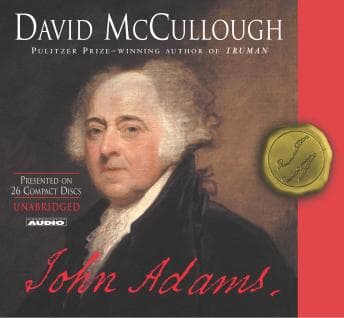
That question kept rattling around my head somewhere on I-10, about six hours into this beast of an audiobook. McCullough doesn't let you forget the price Adams paid—his law practice gutted, years away from Abigail and the kids, his reputation savaged by political enemies. And the man kept going anyway. Not because he was a saint. Because he was stubborn as hell and believed in something bigger than himself.
Thirty Hours in the Trenches
Let me cut to the chase: this is a commitment. Thirty hours. That's Austin to El Paso and back, plus change. But here's the thing—I've slogged through military histories half this length that felt twice as long. McCullough knows how to move. He's not just reciting dates and treaty provisions. He's showing you Adams arguing with Jefferson, worrying about Abigail during smallpox outbreaks, getting miserably seasick on diplomatic crossings to France.
The man was irascible. Vain. Brilliant. Honest to a fault when a little dishonesty would've made his life considerably easier. McCullough doesn't sand down those edges, and I respect that. Too many biographies of the Founders treat them like marble statues. Benjamin Franklin: Made in America does the same thing—shows you the man, not the monument. Adams comes across as deeply human, sometimes frustratingly so. His relationship with Abigail? Genuinely moving. These two wrote letters to each other for decades while an ocean sat between them, and the affection and intellectual partnership comes through even when McCullough is describing those letters rather than reading them directly.
What surprised me most was the diplomacy sections. Adams spending years in Europe, basically begging for recognition and loans while Congress back home couldn't get its act together. Reminded me of some interagency coordination nightmares I'd rather forget. The frustration of being in the field while leadership is disconnected from operational reality—that's universal. Some things never change.
Runger Behind the Mic
Nelson Runger. Here's where I have to be honest. His delivery is authoritative, clear, professional. The man sounds like he should be narrating History Channel documentaries—and I mean that as a compliment. When you're dealing with material this dense, you need someone who can guide you through without getting in the way.
But.
There are these pauses. Long ones. A few times I actually checked my phone thinking the Bluetooth had dropped or I'd accidentally hit pause. Nope. Just Runger taking a beat. And look, I get it—the book has natural section breaks, maybe he's marking them. But when you're listening at 1.25x (which I recommend), those pauses can feel like the narrator fell asleep at his post.
There's also some breathing. Some lip sounds. Minor stuff that most people won't notice, but once you hear it, you hear it. Ranger didn't seem to mind—he slept through most of the Revolution—but it pulled me out a couple times during quieter passages.
Does it ruin the experience? No. Runger's strengths outweigh the quirks. He handles the 18th-century language without making it sound stilted, and his pacing through the political maneuvering keeps things from bogging down. Just be prepared for the occasional weird silence.
Intel on the Competition
I've listened to McCullough's "1776" and "Truman" as well. This one's more intimate than "1776"—less battlefield, more drawing room. More personal letters, more family dynamics. If you're expecting a military history of the Revolution, you'll get some of that, but it's filtered through Adams' experience as a politician and diplomat rather than a soldier.
Compared to Chernow's Hamilton biography (which I also subjected Ranger to), McCullough is more accessible. Chernow is exhaustive—sometimes exhausting. McCullough knows when to summarize and when to dig deep. The HBO series was based on this book, and you can see why. It plays like good television: character-driven, with the history as backdrop rather than the other way around.
Mission Assessment
If you're interested in the Founding era, this is essential. Period. McCullough won the Pulitzer for this, and it's deserved. The research is impeccable—I caught myself fact-checking a few things out of habit, and he's solid. More importantly, he makes you care about Adams as a person, not just a historical figure.
The audiobook format works well for this material. It's the kind of book where you can zone out for a minute during a description of 18th-century Philadelphia and pick right back up without losing the thread. Perfect for long drives or regular commutes.
Who should listen: Anyone who wants the full picture of Adams and the early Republic, and doesn't mind investing the hours. Who should skip: If you need constant action or can't handle a slow burn, look elsewhere. If narrator breathing sounds drive you crazy, sample first. And if you want a quick overview of the period, find something shorter—this is the deep dive.
Me? I'm already planning to re-listen to the Adams-Jefferson sections. Those two... complicated doesn't begin to cover it. Rivals, friends, enemies, friends again. Both dying on the same day—July 4th, 1826, fifty years after the Declaration. You couldn't write that ending. It would seem too neat.
Ranger approved this one. Mission accomplished.







![Steve Jobs [unabridged audiobook] audiobook cover](/_next/image?url=https%3A%2F%2Fcovers.audiobooks.com%2Fimages%2Fcovers%2Ffull%2F9788499923406.jpg&w=1920&q=75)