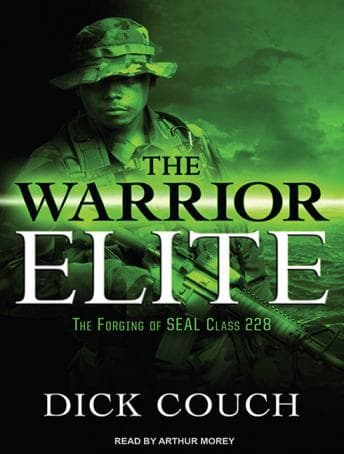

So last Tuesday I'm lying on my couch at 1AM, still wired from a gnarly incident review that ran until 10PM, and I figure - if I can't sleep, I might as well listen to someone else suffer. That's how I ended up starting The Warrior Elite at a time when most reasonable humans are unconscious.
Best accidental decision I've made since switching to Vim.
BUD/S Is Basically On-Call Rotation but They Can Drown You
Look, I know what you're thinking. Another Navy SEAL book. Another dude telling you about how cold the water was and how they rang the bell. And yeah, Dick Couch covers BUD/S - the legendary Basic Underwater Demolition/SEAL training - from front to back. But here's what makes this different from the Marcus Luttrell or Jocko Willinck stuff: Couch isn't writing his own hero story. He embedded with Class 228 as an observer, tracking specific candidates from day one through graduation. You're watching a cohort, not a protagonist.
This is basically a longitudinal study but for human endurance. The same obsessive documentation of how operators and their partners are actually built from scratch shows up in Trident K9 Warriors, though that one's more memoir than study and the rating reflects it.
Couch documents the training phases with the precision of someone who's been through it himself (he was a SEAL in Vietnam), and he doesn't romanticize it. He tracks which guys you'd expect to make it - the collegiate swimmers, the football players, the physically gifted specimens - and then shows you how many of them ring the bell anyway. The guys who survive are rarely the ones you'd pick from the lineup. The book keeps circling back to this idea that mental architecture matters more than physical spec, and Couch builds the case methodically through individual stories.
The section on Hell Week is - okay, I've pulled some brutal on-call weeks, like multiple-P0s-in-a-row brutal, and I felt genuinely embarrassed comparing my "hardship" to candidates standing in 58-degree surf at 3AM on day four of no sleep while instructors hose them down. There's a sequence where Couch describes trainees so sleep-deprived they're hallucinating during boat drills, and the instructors are watching for the ones who hallucinate but still paddle. That specific detail hit me harder than any motivational speech about grit ever has.
Arthur Morey Reads Like Your Favorite Professor Lectures
Arthur Morey is not Ray Porter. (I know, I know. I compare everyone to Ray Porter. Kevin says it's a problem.) But Morey does something really smart here - he reads this with the measured, informative cadence of a documentary narrator rather than trying to inject military thriller energy. Which is exactly right for this material. Couch wrote it almost like journalism, and Morey respects that tone.
His delivery is clear and steady, never melodramatic even when describing candidates collapsing from hypothermia or getting surf-tortured. The restraint works. When the content is already this intense, you don't need a narrator who's yelling at you. Morey lets the material breathe.
My one minor gripe: he doesn't differentiate much between the various candidates and instructors when quoting them directly. With a book that tracks dozens of individual trainees, a bit more vocal distinction would've helped me keep track of who was who during the packed-train morning commutes when my brain was operating at maybe 60% capacity. But honestly, Couch identifies speakers clearly enough in the text that it rarely became a real problem.
The Afghanistan Postscript Changes Everything
The book was originally published in 2001, right before 9/11. Then Couch added a postscript covering SEAL operations in Afghanistan, and suddenly all that training documentation has stakes. You've spent 10+ hours learning exactly how these men were forged, and then you see the product deployed. It's like spending months reading system architecture docs and then watching the system handle a massive traffic spike in production. The postscript is relatively short but it recontextualizes the entire preceding book.
Who Gets the Most ROI Here
Perfect for: commute, gym, road trip. The pacing is steady enough to follow at 6AM zombie-mode, intense enough to keep you locked in during a workout.
Skip for: bedtime. Unless you want dreams about being cold and wet while someone screams at you. (Or maybe that's just my on-call PTSD talking.)
If you've already read Goggins' Can't Hurt Me and want something less "personal brand" and more documentary - this is your book. If you liked Sebastian Junger's War, same energy but focused on the making rather than the deployment. If you're only interested in SEAL books for the combat stories, know that this is 85% training, 15% operational context.
I finished this in about 5 commutes at 1.5x, which felt right. Business books I'd crank to 1.75x, but this has enough specific physical and procedural detail that you want to actually absorb it.
TL;DR: Worth Your Commute
The ROI on this audiobook is high if you're genuinely curious about what separates people who quit from people who don't - and you want data instead of platitudes. Dick Couch did the work. Morey delivers it clean. Not flashy, not hype-driven, just a thorough, honest look at how ordinary-ish humans get pressure-tested into something extraordinary. Thirteen hours well spent.





![Steve Jobs [unabridged audiobook] audiobook cover](/_next/image?url=https%3A%2F%2Fcovers.audiobooks.com%2Fimages%2Fcovers%2Ffull%2F9788499923406.jpg&w=1920&q=75)