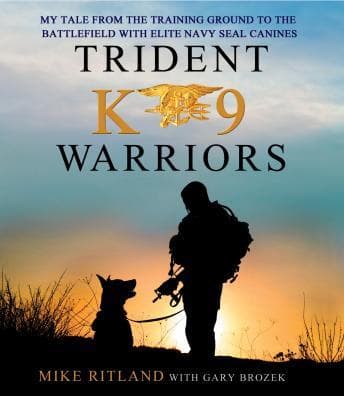

What makes a dog worth more than some soldiers I've served with?
I'm not being flippant. Ranger was sleeping at my feet when that question hit me about three hours into this audiobook, and I had to pause it. Mike Ritland describes the selection process for these elite K9s—fewer than 1 percent make the cut—and the standards are brutal. Aggression balanced with control. Athletic ability that would shame most humans. And an almost supernatural drive to work through pain, fear, and chaos. Sound familiar? It should. These dogs are the four-legged version of the operators they serve alongside.
When the Handler Becomes the Student
Ritland's journey from SEAL operator to K9 trainer isn't the story I expected. I figured this would be wall-to-wall action—dogs taking down tangos, explosive detection saves, that sort of thing. And there's some of that. But the meat of the book is actually about the training methodology, the psychology of working dogs, and the global search for animals with the right genetic makeup.
The historical research surprised me. Ritland (with Gary Brozek's help) traces military working dogs back through centuries of warfare, and it's clear they did their homework. That same depth shows up in Heart of Everything That Is, though Bob Drury and Tom Clavin are working with a much broader canvas. Not just Wikipedia-level stuff—we're talking about the evolution of breeding programs, the science behind scent detection, the biomechanics of a controlled bite. For a guy who spent his career kicking in doors, Ritland writes like someone who genuinely respects the complexity of what these animals can do.
But here's where it gets uneven. The book jumps from fascinating tactical detail—how handlers communicate with their dogs under fire, the specific commands used in different scenarios—to sections that read like a training manual nobody asked for. Data dumps about breeding statistics. Repetitive explanations of selection criteria. I found myself reaching for the skip-forward button more than once, which I almost never do.
Jeff Gurner Gets the Job Done
Gurner's narration is solid. Nothing flashy, nothing that pulls you out of the material. His pacing matches the content—measured during the technical sections, more urgent when Ritland describes actual operations. Clear delivery, no pronunciation issues that made me wince. (And believe me, nothing ruins a military book faster than a narrator who doesn't know how to say "Fallujah.")
At 7 hours and change, this isn't a massive time commitment. I knocked it out over two days of driving to client sites in Houston. The straightforward production—no music, no sound effects—works fine for nonfiction like this. You're here for information, not atmosphere.
The Editing That Wasn't
Let me cut to the chase on the book's biggest problem: it needed another pass from an editor with a machete. Some chapters feel rushed, others drag. The transitions between Ritland's personal narrative and the broader history of military dogs are clunky at best. You'll be deep in a compelling story about a specific dog's deployment, then suddenly you're reading what feels like a textbook chapter.
I've seen this pattern before in books that got fast-tracked to publication. The 60 Minutes feature probably accelerated the timeline, and it shows. The bones are good—Ritland clearly knows his subject, and his passion for these animals comes through even in the weaker sections. But the execution doesn't match the potential.
Who Should Gear Up (And Who Should Stand Down)
If you've got any experience with working dogs—military, police, even serious civilian training—you'll appreciate the technical depth here. Ritland doesn't dumb it down for a general audience, which I respect. Dog lovers will find plenty to enjoy, especially the individual stories of specific K9s and their bonds with handlers.
Looking for pure combat action? Temper your expectations. This is more "how the sausage gets made" than "war stories." Nothing wrong with that, but know what you're getting into. Skip this if uneven pacing drives you crazy or you want a tightly edited narrative. The structural problems are real.
Ranger's Assessment
I looked down at my German Shepherd when the audiobook ended. He'd slept through most of it—either a commentary on the pacing or just the fact that he's eleven years old now. But I thought about the dogs Ritland describes. The ones who work through injuries, who alert on explosives milliseconds before disaster, who take bullets meant for their handlers.
Ranger approved this one. With reservations. Worth your time if you're interested in the subject matter and can tolerate some rough patches. The best parts—the operational details, the handler-dog relationships, the glimpse into a world most civilians never see—those parts are genuinely good. Just don't expect a polished product.









![Steve Jobs [unabridged audiobook] audiobook cover](/_next/image?url=https%3A%2F%2Fcovers.audiobooks.com%2Fimages%2Fcovers%2Ffull%2F9788499923406.jpg&w=1920&q=75)