What makes a killer take the eyes?
I was asking myself this at 1 AM, lights off, Shirley curled against my feet like she knew something bad was coming through my headphones. She's usually unimpressed by my horror consumption. This time? She kept her ears flat the entire listen.
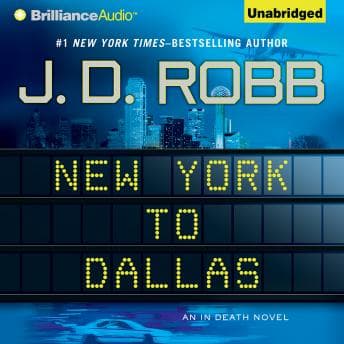
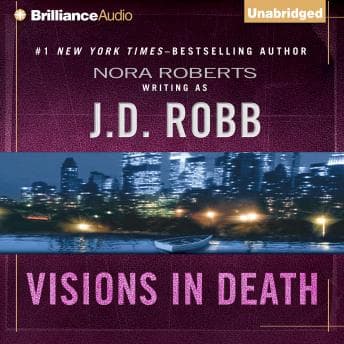
J.D. Robb's *Visions in Death* isn't horror in the traditional sense—it's a futuristic police procedural with romance woven through it—but that opening crime scene? The precision of the eye removal, the posed hands, the single red ribbon around the victim's throat? This understands that horror isn't about gore. It's about dread. About the careful, deliberate wrongness of a killer who treats murder like ritual.
The Psychic Problem (And Why It Works Anyway)
Look, I'm a skeptic. My podcast listeners know I roll my eyes at lazy supernatural shortcuts in crime fiction. So when Eve Dallas—our hard-edged, future-cop protagonist—reluctantly accepts help from a psychic, I braced for disappointment.
But Robb does something smart here. The visions aren't convenient plot devices. They're fragmented, unsettling, and Eve hates every second of relying on them. The ribbon vision scene with Selina had me genuinely unsettled—not because of what was shown, but because of Eve's visceral resistance to believing it. That tension between rational investigation and inexplicable accuracy? That's where the real unease lives.
And then Peabody gets attacked.
I actually paused the audiobook. Sat up in bed. Peabody is Eve's partner, her friend, and when she barely escapes her own encounter with this killer—I felt that shift. The case becomes personal in a way that transforms the entire investigation. Stakes aren't just raised; they're weaponized.
Susan Ericksen Commits
The narrator commits. That's rare.
I've listened to plenty of mystery audiobooks where the performer treats it like a reading assignment. Susan Ericksen brings that same level of commitment to Dark Hours, another crime thriller where the narrator's performance elevates the entire experience. Ericksen treats it like a performance. Her Eve Dallas has this clipped, no-nonsense delivery that softens—just slightly—when Roarke enters a scene. Her Peabody is warmer, more open. The differentiation isn't just about pitch changes; it's about personality living in the voice.
There's a party scene early on where Eve has to play corporate wife before a murder call pulls her back to reality. Ericksen nails that fish-out-of-water discomfort, then shifts into investigator mode so smoothly you feel the relief Eve feels at escaping small talk for a crime scene. (Relatable, honestly.)
I've been listening to this series for a while now, and I genuinely cannot imagine reading these books in print anymore. The voices are *the* voices. Roarke's Irish lilt, Eve's New York edge, the various suspects and witnesses who parade through—they're all distinct, all consistent. Twenty-plus books in, that's a feat.
The Romance Question
Okay, here's where I have to be honest with you.
Some of the romantic interludes feel... slightly incongruous? Eve and Roarke's relationship is central to this series, and I appreciate that Robb doesn't shy away from intimacy. But occasionally the "lovey" moments interrupt the momentum of a genuinely tense investigation. I found myself thinking, "There's a killer removing eyeballs with surgical precision and you're having a tender moment *right now*?"
It's not a dealbreaker. The romance is well-developed over the course of the series, and if you're invested in these characters—which you probably are by book nineteen—you want those moments. Just know they're there, and they shift the tone.
Who Needs This In Their Ears
If you're deep into the In Death series, you don't need me to tell you to listen. You're already here.
If you're new? This isn't the starting point. Go back to *Naked in Death* and work your way forward. The character development is cumulative, and jumping in at book nineteen means missing the foundation that makes Peabody's attack hit so hard.
If you want pure horror? This isn't quite that. But if you want a mystery that understands the horror of methodical violence, that respects the psychological weight of what serial killers do to the people hunting them—this delivers.
Skip if: you need your crime fiction romance-free, or if detailed violence (especially eye-related) is a hard limit for you.
The Scariest Monsters Plan Carefully
I finished this at 3 AM. Shirley had abandoned me hours earlier—apparently even she has limits. The case resolution is satisfying without being neat, the killer's motivation is disturbing in that particularly human way that's worse than any supernatural explanation. That same unsettling human darkness runs through Nine Perfect Strangers, where the real horror isn't the setting but what people are capable of doing to each other.
My podcast listeners are going to love this recommendation. It's not traditional horror, but it understands something horror writers know: the scariest monsters are the ones who plan carefully, who choose their victims, who take souvenirs.
The eyes aren't random. They mean something. And figuring out what? That's the nightmare.