
Okay, so here's my complaint: I didn't need another series to get obsessed with. I really didn't. But J.D. Robb—or should I say Nora Roberts wearing her crime thriller hat—apparently had other plans for my morning jogs through Cambridge.
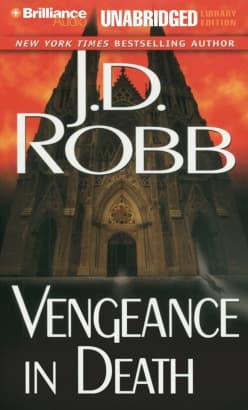
Vengeance in Death is the sixth book in the In Death series, and I came in already knowing Eve Dallas from earlier installments. What I wasn't prepared for was how much this particular entry would feel like a psychology case study wrapped in a futuristic murder mystery. The killer here isn't just violent. He's theatrical. That same theatrical sadism shows up in Six Creepy Stories by Edgar Allan Poe, though Poe's killers are more poetic about it. He's leaving riddles for the police, timing his reveals with sadistic precision, and honestly? The behavioral pattern is textbook narcissistic grandiosity with a revenge motive. My research brain couldn't help itself.
The Killer's Mind Is the Real Mystery
What makes this book work—really work—is that Robb understands something fundamental about revenge-driven killers. It's never just about the act. It's about the performance. The audience. The killer in this book wants Eve Dallas specifically to witness his genius, to solve his puzzles just a beat too late. That's not random. That's a deep need for recognition twisted into something monstrous. Holmes deals with similar game-playing criminals in Memoirs of Sherlock Holmes, though his adversaries are Victorian gentlemen rather than futuristic sadists.
And then there's the connection to Roarke's past. Without spoiling too much, the secret from ten years ago that ties the victims together is exactly the kind of buried trauma that festers. Research actually shows that revenge fantasies often incubate for years before manifesting in action—and Robb nails that slow burn of resentment turning lethal. The protagonist exhibits classic investigator tunnel vision when the case gets personal, and watching Eve navigate her professional duty while her husband's history unravels? Fascinating case study in compartmentalization under stress.
Susan Ericksen Is the Voice in My Head Now
Look, I've listened to a lot of audiobooks. A lot. And Susan Ericksen's narration is the kind that makes you forget you're listening to someone read. Her Eve Dallas is mature, a little rough around the edges, exactly as hardened as a homicide lieutenant in 2058 should sound. The character voices are distinct enough that I never lost track of who was speaking—which, in a book with this many players, is no small feat.
That said. Peabody. Some listeners find her voice grating, and I get it. Ericksen gives her this particular quality that's... let's call it earnest to the point of slightly annoying. But here's my therapist take: that's the character. Peabody is supposed to be a contrast to Eve's cynicism. The voice choice is deliberate characterization, not a flaw. Whether you can tolerate it for eleven hours is a personal threshold thing.
The pacing is solid. I found myself running an extra mile more than once because I needed to hear how a scene resolved. (My Fitbit was confused but pleased.) Ericksen's emotional delivery during the torture descriptions—yeah, there are those, fair warning—walks the line between conveying horror and not being exploitative. Professional work.
When the Personal Gets Too Personal
What I found myself asking: why does Eve keep taking cases that hit this close to home? Psychologically, there's a pattern here. She's drawn to trauma because she's working through her own. Roarke's involvement in this case isn't just plot convenience—it's a stress test on their relationship, and Robb handles the tension between them with more nuance than I expected from what's technically a genre thriller.
The romance elements are there, but they're integrated into the character dynamics rather than feeling bolted on. Eve and Roarke's relationship has actual friction, actual negotiation of boundaries. That's rare. Most thriller romances are either pure fantasy or pure dysfunction. This one reads like two damaged people actually trying to build something real while surrounded by murder. My mother would not approve of this as relationship goals. I find it compelling.
Who's This For (And Who Should Run)?
If you're already invested in the In Death series, this is a strong entry. The mystery is tight, the psychological elements are surprisingly well-researched, and the audiobook production is clean. Susan Ericksen has won Audie Awards for a reason. Skip this if you need your crime fiction cozy, or if detailed violence makes you queasy—the torture scenes are genuinely disturbing, which, given the killer's psychology, is the point.
If you're new to the series, you could technically start here, but you'd miss context on Eve and Roarke's relationship that makes the emotional stakes land harder. Maybe go back to book one first. Just a thought.
Content warnings: violence (detailed), references to sexual abuse, language, and some sexual content.
The Case File Closes
I listened to most of this while cooking an elaborate biryani I ate alone, and the juxtaposition of domestic comfort and fictional brutality was oddly fitting. The human mind is weird. So is this book. I mean that as a compliment.