
The Setup
I was chopping onions for a lamb rogan josh—the kind of meditative cooking that requires just enough attention to keep your hands busy but leaves your mind free to wander into darker places. Perfect conditions for Poe, honestly. Two hours of Edgar Allan Poe while the kitchen fills with spices and my eyes water from onions (definitely the onions, not "The Black Cat"). This is how I spend my Saturday nights now. My therapist would have thoughts about this.
Look, here's the thing about Poe: the man understood the architecture of a guilty conscience better than most practicing psychologists I know. The protagonist of "The Tell-Tale Heart" exhibits classic perseverative guilt—that obsessive, circular thinking where the mind returns again and again to the source of its torment. The research actually shows that guilty individuals often unconsciously seek punishment, and Poe nailed this in 1843 without a single psychology textbook. Just raw observation of human nature.
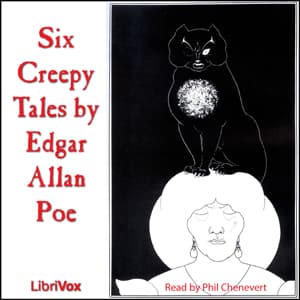
Phil Chenevert's Measured Madness
Phil Chenevert's narration is... interesting. And I mean that genuinely, not in the way academics say "interesting" when they mean "I have concerns." His style is calm, almost conversational, which sounds counterintuitive for horror. Shouldn't someone reading about a man burying his victim under the floorboards sound, I don't know, more unhinged?
But here's what makes it work—and this is a fascinating case study in narrative psychology—the restraint mirrors the narrator's own delusion of sanity. In "The Tell-Tale Heart," the speaker insists he's perfectly rational while describing increasingly irrational behavior. Chenevert's measured delivery creates this unsettling dissonance. His calm tone makes the narrator's unraveling even creepier, like watching someone describe a murder over tea. The horror isn't in the screaming; it's in the absence of it.
"The Raven" gets a genuinely mournful, musical treatment. Chenevert clearly loves this one—you can hear it in how he handles the rhythm, the repetition of "Nevermore" landing with appropriate weight each time. Poetry needs a different touch than prose, and he adjusts. Good instincts.
That said. "The Masque of the Red Death" falls a bit flat. This story is all grandeur and Gothic excess—Prince Prospero's decadent party, the seven colored rooms, Death itself crashing the festivities. It demands theatrical flair, and Chenevert stays in his restrained lane. Not bad, exactly. Just... meh. Like ordering a spicy vindaloo and getting korma instead. Fine, but not what the material called for. If you want more Poe with different narrative energy, Works of Edgar Allan Poe, Raven Edition, Volume 2 offers a fresh take on his lesser-known pieces.
Where Poe Gets Into Your Head
What makes these characters compelling is their absolute conviction that their logic is sound. The narrator of "The Black Cat" doesn't think he's a monster—he thinks he's a victim of circumstance, of alcohol, of a perverse imp that made him do it. Classic external attribution. "It wasn't me; it was the cat." (Okay, he doesn't literally say that, but psychologically? That's exactly what he's doing.)
I found myself asking: why does Poe return to this pattern so obsessively? The unreliable narrator who confesses while simultaneously justifying. The answer, I think, is that Poe understood guilt as performance. These narrators aren't just confessing—they're auditioning for our sympathy. They want us to understand. And that's way more disturbing than simple villainy. Poe explores this psychology even further in Murders in the Rue Morgue, where rationality itself becomes the performance.
"The Cask of Amontillado" is the exception. Montresor never seeks absolution. He's telling us about a murder he committed fifty years ago with zero remorse. Pure, patient revenge. No guilt spiral, no breakdown. Just satisfaction. Poe understood human nature—specifically, that some people genuinely don't feel bad about terrible things. Psychologically, this tracks perfectly. Some minds just... don't work that way.
The Listening Experience (Or: Why This Works at 11 PM)
This is a LibriVox production, which means no-frills audio. No moody background music, no sound effects, just Chenevert and Poe. Honestly? I prefer it this way for horror. Your imagination fills in the gaps, and your imagination knows exactly what scares you personally. The clean audio quality means no distractions—I could chop vegetables, stir the pot, and still catch every word.
Two hours is the perfect length for this collection. Long enough to sink into Poe's world, short enough that you don't hit listener fatigue. I got through the whole thing during dinner prep and eating alone at my kitchen counter (don't feel sorry for me, I had excellent lamb and excellent company in the form of a man being walled up alive).
Fair warning: some stories require concentration. "Berenice" in particular has that dense, 19th-century prose that can lose you if you're multitasking too hard. I had to rewind once when I realized I'd been thinking about whether I added enough cardamom instead of listening to the actual plot. That's partly on me, partly on Chenevert's occasionally flat energy.
Who Should Listen (And Who Should Skip)
Best for: Poe fans who want the classics delivered cleanly. People who cook, clean, or commute and want something atmospheric but not demanding. Anyone who appreciates psychological horror over jump scares. Students who need to "read" these for class (I see you, I was you, no judgment).
Skip if: You want full theatrical performance with voices and drama. You need high-energy narration to stay engaged. You're looking for deep cuts—these are the hits, not obscure Poe.
The verdict? It's free, it's well-read, and it's Poe. The narration won't blow your mind, but it won't get in the way either. Chenevert is a solid guide through some of the most psychologically astute horror ever written. Perfect for a late night when you want to feel slightly unsettled but not actually scared.
Now if you'll excuse me, I have leftover rogan josh and "The Fall of the House of Usher" calling my name. Apparently this is my thing now.