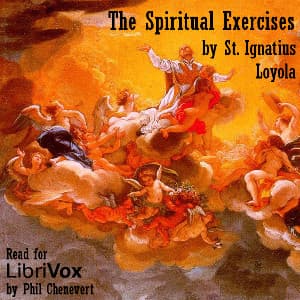

"What St. Francis and St. Dominic have done, that, by God's grace, I will do."
That line hit me somewhere around the forty-minute mark, and I had to pause the audio. I was walking the lakefront with Denise—one of those rare Saturday mornings where neither of us had anywhere to be—and I just stopped. She asked if I was okay. I told her a 16th-century soldier just convicted me of every excuse I've ever made.
This is why we still read the classics. Or in this case, listen to them.
The Third Person as Spiritual Distance
Here's what fascinated me: Ignatius dictated this entire autobiography referring to himself as "the pilgrim" or "he." Never "I." My students would call this pretentious. I think they'd be wrong.
There's something happening in that grammatical choice that Phil Chenevert's narration captures beautifully. The distance isn't false modesty—it's a man looking back at his younger self with the kind of clarity that only comes from genuine transformation. When Ignatius describes lying wounded in his brother's house after the Battle of Pamplona, his leg shattered by a cannonball, he's not dramatizing. He's observing. The pilgrim read the lives of saints. The pilgrim wept. The pilgrim decided.
Chenevert reads this with appropriate restraint. No theatrical flourishes, no attempt to "perform" sanctity. Just clear, measured delivery that trusts the text. At two hours and fifteen minutes, this is a compact listen—you could finish it in a single long walk—but the pacing never feels rushed. The prose deserves to be savored, and Chenevert seems to understand that pause is punctuation.
Pamplona to Paris: A Soldier Becomes Something Else
The injury at Pamplona is where everything turns. Ignatius was a vain man—he admits this, or rather, admits it about "the pilgrim"—concerned with honor, with appearance, with the admiration of a certain noblewoman. Then a French cannonball rearranges his leg and his life.
What struck me, listening during a particularly tedious faculty meeting last week (sorry, Principal Martinez, I was definitely paying attention to the budget projections), was how honestly Ignatius describes his own vanity. He had his leg rebroken and reset because the first surgery left it unsightly. He wanted to wear fashionable boots. This is a future saint we're talking about, and he's worried about his calves.
The spiritual transformation doesn't happen in spite of this vanity—it happens through it. Bedridden, bored, Ignatius asks for romance novels. They don't have any. They have lives of saints. He reads them because there's nothing else. And something catches.
This reminds me of what Hemingway said about grace under pressure, except Ignatius finds grace through the absence of pressure, through enforced stillness. My students would hate this—no action sequences, no dramatic conversion moment with lightning and tears. Just a man lying in bed, reading, thinking, and slowly becoming someone else.
What the Spiritual Exercises Actually Mean
I've taught excerpts from the Spiritual Exercises in my AP Literature class. (We do a unit on influential non-fiction prose—Augustine, Montaigne, that crowd.) But I never really understood them until hearing this autobiography.
The Exercises aren't abstract spiritual theory. They're the systematized version of what Ignatius lived through. When he talks about discerning between different kinds of spiritual movements—which thoughts bring peace, which bring agitation—he's describing his own process of lying in that bed, noticing that fantasies of worldly glory left him empty while thoughts of imitating the saints left him consoled.
This autobiography is, as the preface notes, "a valuable key" to understanding those Exercises. I'd go further: it's almost impossible to understand them without this context. The two-hour investment here pays dividends if you ever want to engage with Ignatian spirituality seriously.
Chenevert also narrates Spiritual Exercises directly, and having now heard both, I think the autobiography is the better starting point—but the two together are worth your time.Who This Is For (And Who Should Skip It)
Let me be direct: this is not casual listening. The language is formal, the concerns are deeply religious, and if you're looking for a page-turner about adventure and intrigue, the 16th-century Jesuits have other books for that.
But if you've ever wondered what genuine spiritual transformation sounds like from the inside—not the hagiographic version, not the sanitized saint's tale, but the actual messy human process of a vain soldier becoming something else—this is remarkably honest testimony. If you loved Augustine's Confessions, this is its spiritual successor, leaner and less philosophical but equally intimate. Skip it if you need narrative momentum or find religious introspection tedious; this rewards patience, not impatience.
The production is straightforward—no music, no sound effects, just Chenevert's voice. For this material, that's exactly right. Anything more would feel like gilding.
It's worth noting that Chenevert brings that same unadorned quality to very different material—I stumbled across his narration of Murders in the Rue Morgue a while back, and the restraint that works so well here works there too, though Poe obviously has other ideas about atmosphere.Worth Pausing the Faculty Meeting For
I've listened to this twice now. Once on that Saturday walk with Denise, once during late-night grading when I needed something to keep me awake without distracting me from student essays about The Great Gatsby.
Both times, I found myself thinking about the relationship between suffering and change. Ignatius didn't choose his transformation—a cannonball chose it for him. But he chose what to do with the stillness that followed.
At two hours, this is a modest commitment. At nearly five centuries old, it's stood the test of time. And Phil Chenevert delivers it with the kind of faithful, unshowy narration that lets the words do their work.
My students would probably skip this one. Their loss. Some of us are old enough to appreciate a man talking honestly about becoming better than he was.








![Steve Jobs [unabridged audiobook] audiobook cover](/_next/image?url=https%3A%2F%2Fcovers.audiobooks.com%2Fimages%2Fcovers%2Ffull%2F9788499923406.jpg&w=1920&q=75)