
Let's be real for a second. I picked this up thinking it was a memoir.
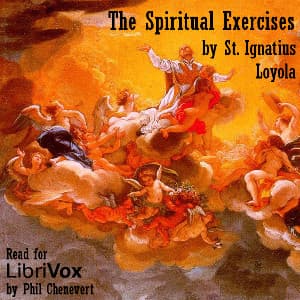
I blame the title. Spiritual Exercises sounds like a collection of essays or maybe a biography of St. Ignatius getting hit by a cannonball (which happened, by the way—look it up). But no. This is literally an instruction manual. It’s a handbook written in 1548 for Jesuit retreat directors.
If I assigned this to my AP English class, they would riot.
But here I am, walking along Lake Michigan on a Tuesday, listening to a 16th-century saint tell me exactly how to visualize my own conscience. And honestly? It kind of worked.
The Voice in the Empty Room
Phil Chenevert is the narrator here. I couldn't find a ton of background on him, but he has this distinct "LibriVox volunteer" energy—and I mean that as a compliment. He brings that same steady, unadorned approach to Seven H.P. Lovecraft Stories, where the material needs a narrator who won't get in the way.
There is zero ego in this performance. None.
If you've listened to as many classics as I have, you know the danger of a narrator who thinks they are the main character. They over-act the dialogue or add dramatic pauses where the author didn't put them. Chenevert doesn't do that. His voice is clear, calm, and incredibly steady.
(My wife Denise says he sounds like a very patient librarian explaining the Dewey Decimal System, which is pretty accurate.)
Because this book is essentially a list of prompts—"First Week," "Second Week," "Composition of Place"—you don't want a performer. You want a guide. Chenevert understands that the text is dry. He doesn't try to spice it up. He just delivers it with enough gravity that you actually pay attention.
Instructions, Not Stories
Here's the thing you have to understand before you hit play: There is no plot.
St. Ignatius isn't writing for the reader's entertainment. He's writing for the user's transformation. He talks a lot about "Composition of Place," which is basically a fancy term for visualization. He wants you to close your eyes and reconstruct a biblical scene in your mind—smell the dust, feel the heat, hear the voices. It's the kind of immersive meditation you'd expect from Bible (WEB) Old Testament - complete, where the source material itself demands that level of mental engagement.
As an English teacher, I got excited here. This is exactly what I try to get my sophomores to do with Of Mice and Men. (They usually just stare at their phones, but a man can dream.)
The prose—if you can call it that—is functional. It's stark. "Do this. Then think about this. Then pray this." It reminds me of Hemingway if Hemingway had been a Spanish mystic instead of an ambulance driver.
But listening to it is a weirdly hypnotic experience. You aren't following a narrative arc; you're following a mental workout plan.
Final Thoughts Over Coffee
Is this for everyone? Absolutely not.
If you're looking for a history of the Jesuits, skip it. If you want a theological thriller, look elsewhere. This is for the person who wants to understand the mechanics of 16th-century spirituality—or for someone who actually wants to do the exercises.
I listened to most of this while grading essays late at night. It was... grounding. In a world of constant noise and TikTok notifications, having a calm voice tell you to systematically examine your conscience is a vibe shift I didn't know I needed.
My students would hate it. It's slow. It requires silence. It demands you look inward.
Which is exactly why it's worth three hours of your time.