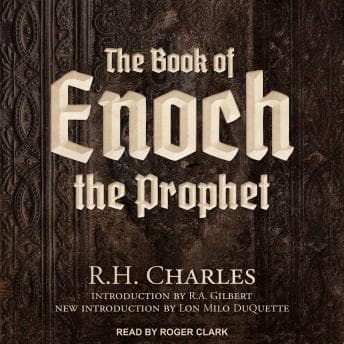

Look, I didn't expect to spend three commutes reading about fallen angels and divine judgment, but here we are. My boyfriend Kevin asked why I was staring intensely at nothing on the train, and I had to explain that I was learning about the Watchers - angels who came down to Earth, taught humans forbidden knowledge, and basically started the whole cosmic mess that led to the flood. You know, normal Tuesday stuff.
So here's the thing about the Book of Enoch: it's basically the extended universe content for the Bible that got cut from the final release. Ethiopian and Eritrean Christians kept it in their canon, but Western Christianity said "nah" somewhere along the way. And honestly? After listening to this, I kind of want to know why. There's wild stuff in here - detailed hierarchies of angels, the origins of demons, a messiah figure called "the Son of Man" that predates the New Testament, and a whole lost Book of Noah tucked inside. It's like finding deleted scenes that actually explain plot holes.
When Ancient Texts Hit Different at 6AM
R.H. Charles's translation is the real deal. This isn't some New Age reinterpretation - it's scholarly, thorough, and you can tell the guy knew his Ethiopic and Greek manuscripts. The introduction by R.A. Gilbert does solid work contextualizing everything before you dive in, which I appreciated because otherwise you're just... dropped into apocalyptic visions with zero onboarding. That's not great UX.
Roger Clark's narration is interesting. Some listeners found it too theatrical, and I get that - there are moments where the dramatic delivery feels a bit much for what's essentially ancient religious poetry. But honestly? I think the material kind of demands it. You're not reading a self-help book about morning routines (though Enoch definitely had one - the guy was busy). You're hearing about cosmic judgment, the binding of fallen angels, and literal heaven manifesting on Earth. That same theatrical energy would've worked well for Art of Seduction, which also benefits from dramatic delivery when discussing power dynamics. A flat, documentary-style read would've put me to sleep before Millbrae.
The pacing works well for commuting. At just over 5 hours, I finished it in exactly three round trips. The text is broken into distinct sections - the Book of Watchers, the Parables, the Astronomical Book - so there are natural stopping points. I appreciated that because ancient apocalyptic literature isn't exactly designed for "let me just finish this chapter" listening.
The Nerdy Stuff That Actually Holds Up
What surprised me is how much of this shows up elsewhere. The whole concept of fallen angels teaching humans metallurgy, cosmetics, and warfare? That's in here. The idea of a pre-existent messiah figure? Enoch's got it, centuries before the New Testament was written. If you're into biblical history or want to understand where a lot of Western religious imagery actually comes from, this is basically the primary source material.
The astronomical sections dragged a bit - there's a lot about the movements of the sun and moon that felt more like ancient science textbook than prophecy. I sped those up to 1.75x and didn't feel like I missed anything crucial. But the apocalyptic visions? The judgment scenes? Those hit. There's a reason this text influenced everything from Dante to modern fantasy.
(Side note: if you've ever wondered why angels in the Bible are described as terrifying multi-winged beings covered in eyes, Enoch's got some context for you. It's not the cute cherub energy.)
Who Should Listen (And Who Should Skip)
Perfect for: long commutes, gym sessions where you want something to think about, or honestly just falling asleep to ancient prophecy (no judgment, I've done it). If you're into religious history, apocryphal texts, or just want to understand references that show up in everything from Paradise Lost to Supernatural, the ROI on this audiobook is solid.
Skip if: you want a fast-paced narrative. This is ancient religious literature - it's not plotted like a thriller. Also skip if theatrical narration genuinely bothers you, because Clark commits to the drama.
The production quality is clean, no weird audio issues. At 1.5x speed it flows well without losing the gravitas. I'd recommend that speed for most of it, bumping up for the astronomical sections if you're not super invested in ancient lunar calendars.
Would I listen again? Probably not cover to cover, but I'll definitely revisit specific sections. The Parables of Enoch are genuinely fascinating, and understanding this text makes a lot of other religious and literary references click into place. It's like finally reading the documentation for a system you've been debugging for years.