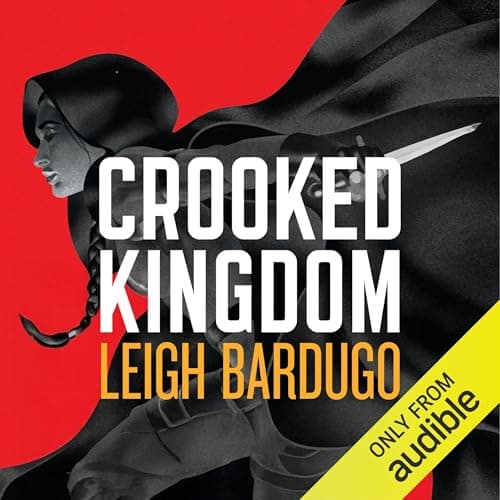

Most people will tell you Crooked Kingdom is better than Six of Crows. I went in skeptical of that claim — sequels rarely outdo their predecessors, especially when the first book pulled off something as fresh as a fantasy heist with a crew of morally gray teenagers. But here's the thing: they're right. Bardugo took everything that worked in Six of Crows and turned the dial up.
Let me talk about the narration first, because that's what makes this audiobook edition special. Eight narrators. Eight. Each character's chapters get their own dedicated voice actor, and the casting here is genuinely inspired. Fred Berman brings this gravelly, calculating edge to Kaz Brekker that makes every scheme feel like it's being whispered from the shadows of the Barrel. Jay Snyder — and I'm far from the only person saying this — made me care about Matthias in ways the text alone might not have achieved. There's a warmth and wounded dignity in his delivery that elevates every scene. Elizabeth Evans captures Nina's fierce, sensual energy without ever tipping into caricature, and Lauren Fortgang gives Inej exactly the quiet steel she deserves. The ensemble works because no one is trying to outshine anyone else. They're serving the characters, and it shows.
The plot itself is a labyrinth of double-crosses, competing factions, and plans within plans within contingency plans. If Six of Crows was a heist, Crooked Kingdom is a war — fought on Ketterdam's docks and in its counting houses, with every major power in the Grishaverse converging on the city to get their hands on jurda parem. Kaz is playing chess against multiple opponents simultaneously, and Bardugo does a remarkable job of keeping the reader just informed enough to follow without spoiling the surprises. Some of these twists genuinely caught me off guard, and I don't say that lightly about YA fantasy. I had a similar moment of genuine surprise reading Infinity Reaper, though that one didn't stick the landing quite as cleanly — 3.8 stars from me, if that tells you anything.
But here's where I'll push back slightly against the universal praise. There are stretches in the middle where the pacing sags. The scheming is complex, yes, but complexity and momentum aren't the same thing. A few chapters felt like setup for setup, and I found my attention drifting during some of the political maneuvering. If you're coming from the breakneck energy of the Ice Court heist in book one, you might feel the shift. Some listeners have pointed out a perceived lack of character growth, and while I don't fully agree — several characters undergo real, painful change here — I understand the complaint. The growth happens in quiet beats between the action, and if you're listening while distracted, you'll miss it.
This is emphatically not a background listen. The multiple narrators help differentiate the POV shifts, but the plot demands your attention. Lose focus for ten minutes and you'll be rewinding to figure out which con is running inside which con. I'd recommend dedicated listening sessions — headphones on, phone down.
Emotionally, this book hits harder than I expected. I won't spoil what happens, but the ending left me sitting in my car for a good five minutes afterward, just processing. Bardugo earns her emotional payoffs because she spends the entire duology making you care about these broken, stubborn, loyal people. The relationships — Kaz and Inej, Nina and Matthias, Jesper and Wylan — feel lived-in and complicated in a way that transcends the YA label.
The production is clean. No sound effects, no music, just strong voice acting carrying the full weight of the story. At nearly 18 hours, it's a substantial listen, but the multi-narrator format keeps things from ever feeling monotonous. Each new chapter brings a fresh voice and perspective, giving the audiobook a rhythm that a single narrator couldn't replicate.
If I'm being honest, a small part of me wanted the suspense to match the Ice Court sequence beat for beat, and it doesn't quite get there. The stakes are higher but more diffuse — a political chess match rather than a single impossible job. That's a narrative trade-off, not a flaw, but it's worth knowing going in.
Who Should Listen (And Who Should Skip)
If you loved Six of Crows, this is the payoff you've been waiting for — and the full cast narration transforms an already strong book into something that feels almost like a prestige audio drama. Skip it if you need constant action over political scheming, or if you're not willing to give it your full attention; this one punishes half-listening.