
What happens when you give a teenager exactly what they asked for and it turns out to be the worst possible thing for them?
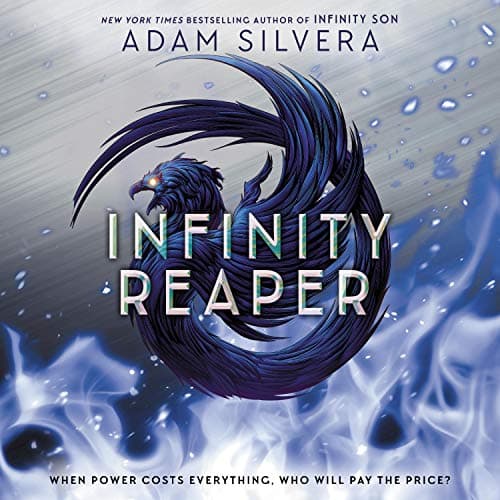
That question kept rattling around my head somewhere around hour seven of Infinity Reaper, while I was supposedly supervising study hall but actually had one earbud in, watching a room full of juniors scroll TikTok. Brighton Rey drinks the Reaper's Blood at the end of book one because he's desperate for powers, desperate for relevance, desperate to be the hero of his own story instead of standing in his brother's shadow. And now it's killing him. Twenty years of teaching teenagers, and I can tell you — Silvera understands that particular brand of adolescent self-destruction better than most YA authors. The kid who cheats to get on the honor roll. The kid who takes the shortcut. Notes on an Execution does something similar with its central character — that same forensic interest in why a person chooses the path that destroys them, and how the people around them never quite see it coming. Brighton doesn't just want powers; he wants to matter. And the gap between wanting to matter and being willing to die for it is exactly the size of a teenage ego.
The Brother Problem (And Why Silvera Gets It Right)
The Emil-Brighton dynamic is the engine of this book, and it's also the thing that's going to polarize listeners. Emil doesn't want his phoenix powers. Brighton would kill for them — and basically did. Silvera is working through something real here about how siblings can love each other and resent each other in the same breath, how one brother's reluctance becomes another brother's insult. Let's talk about what the author is really saying: this isn't a fantasy about magic. It's a fantasy about what happens when two people who share blood want fundamentally incompatible things.
But — and this is where I have to be honest — the pacing sags in the middle stretch. There are plot threads involving the Spell Walkers fracturing, Maribelle's revenge arc, Senator Iron's political machinations, and Ness's captivity, and Silvera is juggling so many POVs that some of them don't get enough oxygen. The political allegory about exploiting magical creatures and weaponizing difference is genuinely sharp, and I found myself thinking about it while grading persuasive essays about social justice (my students would probably connect with the Senator Iron storyline faster than anything I've assigned them this semester). But the chess-game plotting the description promises doesn't always feel like chess. Sometimes it feels like checkers with too many boards.
Four Voices, Four Lanes
The narrators understand that pause is punctuation — and with four of them splitting duties, the transitions between POVs actually become the audiobook's secret weapon. Robbie Daymond handles Emil with this anxious, slightly breathless energy that fits a protagonist who genuinely doesn't want to be one. Kirby Heyborne gets Brighton, and the performance captures that specific cocktail of bravado and terror underneath — you can hear Brighton performing confidence even as the Reaper's Blood is eating him alive. Elliot Knight brings Ness's sections a quiet intensity, especially when Ness is navigating the psychological abuse from his father. Maria Liatis handles Maribelle's perspective with an edge that sharpens as the character's moral compass starts spinning.
The four-narrator approach does something interesting: it means you never lose track of whose head you're in, even if you zone out for a minute. At 14-plus hours, that matters. I will say the handoffs between narrators occasionally feel abrupt — no musical transitions, no production cues, just one voice stopping and another starting. You adjust, but in the first hour it's a little jarring.
The Representation That Isn't Window Dressing
Silvera writes queer characters the way I wish more authors would — as people first, with their queerness woven into who they are rather than bolted on as a subplot. Emil and Ness's relationship is tender and complicated by the fact that Ness is literally being used as a political weapon by his own father. There's a scene where Ness debates whether reaching out to Emil would put him in danger, and Knight's delivery turns what could be a standard YA angst moment into something genuinely painful. The prose deserves to be savored in those quiet moments between the action set pieces.
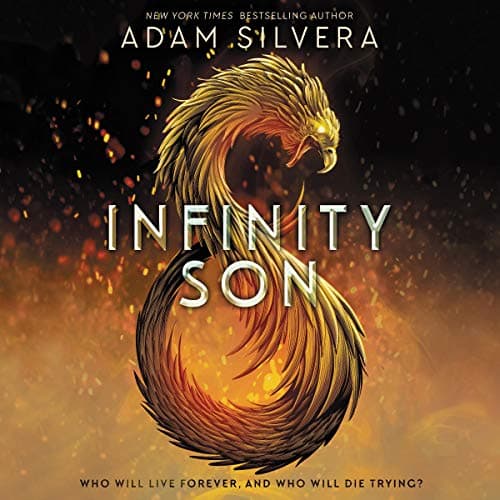
If you loved They Both Die at the End — Silvera's other big hit — this is its spiritual successor in terms of emotional stakes, though the fantasy world-building makes it a very different animal. The Infinity Cycle is messier, more ambitious, and occasionally stumbles under its own weight. But the heart is the same.
Who Gets the Assignment (And Who Gets a Pass)
Pick this up if you want YA fantasy that's actually about something beyond its magic system. Skip it if you need tight, propulsive plotting — the middle third meanders, and some subplots feel like setup for book three rather than payoff for book two. And if you haven't listened to Infinity Son first, don't start here. You'll be lost by minute fifteen.
My students would hate this. Actually — no. My students would love this. It's me they'd hate, for making them analyze the sibling dynamics instead of just enjoying the phoenix fights.
Worth Pausing the Faculty Meeting For
Silvera's doing something ambitious with this series, even when the execution doesn't fully match the ambition. The four-narrator production elevates a middle-book that might drag on the page, and the emotional core — brothers, belonging, the cost of power you didn't earn — hits harder in audio than I expected. It's not perfect. But it's real in the ways that matter, and at 1.0x speed, those quiet moments between Emil and Ness land exactly the way they should.