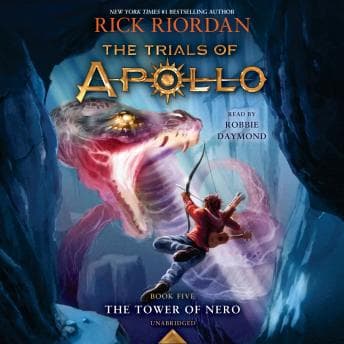
"I am Apollo. I will remember being Apollo. I was the god of music, poetry, and a dozen other things."
Somewhere around hour two, sitting in the grad lab at 1 AM pretending to debug my procedural terrain generator, I realized I'd been grinning at my screen for twenty minutes straight and hadn't written a single line of code. Classic Riordan move. The man has been ruining my productivity since Percy Jackson, and apparently the tradition continues even when he swaps protagonists.
A Four-Thousand-Year-Old God With the Self-Awareness of a D&D Bard
Here's the thing about Apollo as a narrator: he's basically that guy at the table who rolled a Bard with 20 Charisma and 6 Wisdom. He's conceited, dramatic, constantly composing terrible haikus about his own suffering, and somehow you're rooting for him anyway. Riordan does something genuinely clever here - he takes a character who is objectively insufferable (Apollo literally mourns the loss of his abs more than his divine powers) and makes you care about his journey by stripping away everything that props up his ego.
The fish-out-of-water setup isn't new. God becomes mortal, has to survive in the modern world, blah blah. But Riordan's version works because Apollo isn't humble about it. He's furious. He's offended. He keeps trying to pull rank with monsters who couldn't care less that he used to drive the sun chariot. There's a scene early on where he tries to intimidate a plague ghoul by listing his divine titles, and it goes about as well as you'd expect. That gap between who Apollo thinks he is and who he actually is right now - that's where all the comedy lives.
The magic system isn't Sanderson-level (I mean, what is), but the mythological framework does what Riordan always does well: it takes Greek mythology and jams it into the modern world in ways that are both ridiculous and internally consistent. Camp Half-Blood still functions as a great home base, and the new characters - especially Meg McCaffrey, Apollo's tiny, bossy, dumpster-diving demigod master - add genuine surprise to a formula that could've gone stale.
Robbie Daymond's Apollo Voice Is Doing Heavy Lifting
Okay, so narration. Robbie Daymond gets Apollo. Like, really gets him. His read is pompous and self-important in exactly the right way - there's this breathy, theatrical quality he gives Apollo's internal monologue that makes every haiku land (and they're terrible haikus, which is the point). His comedic timing is legitimately good; there are beats where he pauses just long enough before a punchline that you can feel it coming and it still works.
The creature voices are where he gets creative. The plague ghouls have this wet, gurgly rasp that made me pull out an earbud on the MARTA bus because I thought someone near me was choking. Chiron gets an authoritative, patient tone that sounds like every D&D DM I've ever had when the party does something stupid. And there's a grain spirit that manifests as a screaming baby - Daymond commits to that bit fully, and it's both horrifying and hilarious.
But - and this is real - some of the human character voices blend together. Meg has moments where she sounds a lot like other young characters, and in dialogue-heavy scenes I occasionally lost track of who was speaking. It's not a dealbreaker, but Steven Pacey walked so other narrators could run, and when you're used to every character having a completely distinct voice, the blending is noticeable. There are also a couple of pronunciation choices that felt off - small stuff, but if you're deep in Riordan's mythology, your brain will snag on them.
Middle Grade Energy, But Make It Fun for a 26-Year-Old Who Should Know Better
Look, this is a middle grade book. I know that. You know that. The stakes are lower than Stormlight, the worldbuilding is lighter, and nobody's getting their arm cut off (well, not graphically). But Riordan writes action sequences that move, he structures his mythology in a way that actually teaches you something, and the humor hits a frequency that works whether you're twelve or... let's say "thesis-adjacent."
The pacing does rush in places - the back third compresses a lot of plot into not a lot of pages, and some character development gets shortchanged. This is clearly a setup book for the series, and it has that "first session of a campaign" energy where the DM is establishing the world and the real adventure hasn't quite started yet. If you don't like info-dumps, this isn't for you (but you're wrong).
At 10 and a half hours, it's a quick listen. I burned through it across three coding sessions and a laundry run. My D&D group would love this - specifically our forever DM who's always looking for mythology references to steal.
Who Gets an Invite to This Party
If you grew up on Percy Jackson and want to see Riordan try a different POV character, this is worth your time. If you need your fantasy dark and gritty, this ain't it. If you want a narrator who genuinely commits to being a pompous disaster of a fallen god, Daymond delivers. I read this instead of writing my thesis, and I regret nothing.
Rolling a Nat 15 - Good but Not Legendary
Solid start to a new Riordan series. Not his best work - it's a setup book and it feels like one - but Daymond's performance elevates it, the humor is consistent, and Apollo's arc from insufferable to... slightly less insufferable is genuinely satisfying. The progression is satisfying, even if we're clearly just getting started. Worth a credit if you're in the Riordan ecosystem. If you're new to his stuff, start with Percy Jackson, but come back here when you're ready for a god who can't stop writing bad poetry about his own suffering. That same sense of a young person finding their footing in a world bigger and stranger than they expected is something Madeleine L'Engle nailed decades earlier in A Wrinkle in Time, though L'Engle's narrator has considerably more humility than a fallen sun god composing haikus about his own abs.