
You don't expect a guy like me—who spent half his life in cammies and the other half consulting on perimeter security—to be listening to a children's book about space witches. I usually stick to non-fiction or thrillers where the bad guys get what's coming to them.
But here's the thing: Linda (my wife) loaded this onto the shared account for our niece, and I was stuck in Austin traffic on I-35. If you know, you know. I had nowhere to go, Ranger was asleep in the back seat, and I hit play.
(Don't tell the guys at the firm I listened to this. I have a reputation to maintain.)
The Intel on Hope Davis
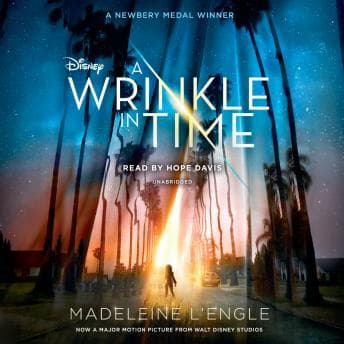
Hope Davis reads the main story. I know her from movies, not audiobooks. She's... committed. That's the word.
She doesn't just read; she acts. Every character gets a voice. Now, usually, I appreciate distinct voices—helps me keep track of who's talking without rewinding. But man, some of these choices were—let's say—bold.
The little brother, Charles Wallace? Davis gives him this breathy, slow, almost eerie voice. I get it, the kid is supposed to be a genius/telepath/whatever, but it dragged. I had to bump the speed up to 1.35x just to keep him from sounding like he was falling asleep mid-sentence.
And Meg. The protagonist. She's whiny. Look, I know she's an insecure teenager, and Davis plays that up hard. Maybe too hard. There were moments I wanted to reach through the speakers and tell the kid to tighten up her shot group. But—credit where it's due—when the emotional hits land, Davis sells it. She's got range.
Having Ava DuVernay do the intro and the author herself (Madeleine L'Engle) do the foreword? Nice touch. Adds historical weight to the file.
The Mission Itself
It's weird. Seriously weird.
I missed this book as a kid. I was probably reading Hardy Boys or sneaking my dad's Louis L'Amour westerns. So going in blind at my age? It's a trip. Linda's been trying to get me into more fantasy stuff—I made it through Book of Dragons last month without falling asleep, so I guess I'm making progress. Tesseracts, disembodied brains, centaurs... it's a lot.
The concept of the "Black Thing" spreading across the universe? That hit home. I've seen evil. I've seen darkness. L'Engle doesn't sugarcoat the threat, which I respect. She treats kids like they can handle the heavy stuff.
But the pacing is odd. It starts slow—really slow—with the whole "dark and stormy night" business (literally, that's the opening line). Then suddenly we're teleporting across the galaxy. Feels like a fever dream.
One thing that bugged me: The resolution. I won't spoil it, but the way they defeat the big bad? A little soft for my taste. I'm a "superior firepower" kind of guy, and the solution here is... well, let's just say it's very 1960s idealism. (Not that there's anything wrong with that, just not my usual operational doctrine.)
Worth the Drive?
If you've got kids in the car? Absolutely. It's clean. No language, no gore, just high-concept sci-fi weirdness. Great for family road trips.
For a grown man driving a truck? Eh. It was a nice break from the news, I guess. The production quality is crisp—no background hiss, clear audio—which matters when you're trying to hear over a diesel engine.
But frankly, the character voices might grate on you if you're not in the right headspace. Hope Davis is talented, but she makes some choices that didn't always land for me.
Who should listen: Parents with kids who can handle weird, adults chasing nostalgia, or anyone stuck in Austin traffic with nothing else queued up. Who should skip: If you need action-driven plots and can't stand whiny protagonists, this one's gonna test your patience.
Ranger slept through the whole thing, though. So there's that.