
Look, you can't teach American literature for two decades without realizing one uncomfortable truth: half the metaphors in the Western canon fly right over my students' heads because they don't know the source material. I'm trying to explain the ending of East of Eden or the symbolism in The Grapes of Wrath, and I get blank stares. Nothing. Crickets.
So, mostly to arm myself for my AP Lit seminar—and partly because I needed something long enough to last through grading a stack of truly dismal midterms—I decided to tackle the Old Testament. The whole thing. Fifty-eight hours. (Principal Martinez, if you're reading this, I consider this professional development.)
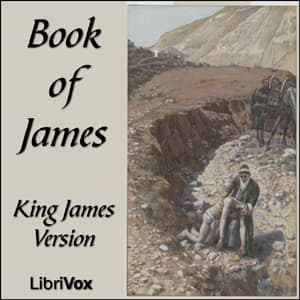
I went with the LibriVox version because, frankly, public school teacher salary. It's free. But here's the thing about LibriVox—it's the audio equivalent of a community potluck. Sometimes you get your aunt's award-winning lasagna, and sometimes you get that weird gelatin salad nobody touches.
The "Community Theater" of Narration
If you've never listened to a LibriVox recording, you need to adjust your expectations. The same volunteer army tackles The Art of War, and you get that exact same potluck energy—some chapters sound like they were recorded in a professional studio, others like someone's reading into their phone on a bus. This is the World English Bible (WEB) translation, read by a rotating cast of volunteers. And I mean rotating.
You'll be settling into a nice rhythm with a narrator who has a soothing, NPR-quality baritone during Genesis, really feeling the weight of the Creation story. Then, boom. Chapter switch. Suddenly you're listening to someone recording on a laptop microphone in what sounds like a tiled bathroom, possibly with a fan running in the background.
It's jarring. I'm not gonna lie.
I had the same whiplash with Alice in Wonderland (Drama)—another LibriVox project where the cast changes every scene and you're never quite sure if you're getting community theater or something actually magical.
As someone who usually preaches about "narrative consistency" to my juniors, this was a hurdle. There are moments in the Book of Numbers—which, let's be real, is already a slog with the censuses—where the narrator sounded like they were reading a grocery list they were mildly annoyed by. But then you hit the Psalms, and you get a volunteer who clearly feels the poetry, who understands that the pause is punctuation, and it's genuinely moving.
It reminds me of grading papers, actually. You wade through twenty rough ones to find the one kid who actually understood the assignment, and it makes the whole stack worth it.
The Translation: Accessible, if a Bit Dry
The text itself—the World English Bible—is solid. It's modern. It lacks the thunderous poetry of the King James Version (which, let's be honest, is what Faulkner would've been reading), but it's clear.
I listen at 1.0x speed usually, but for the Levitical laws? I bumped that up to 1.25x. Maybe 1.5x. (Don't tell my mom.) The "begats" and the dimensions of the temple... look, unless you are an architect or a genealogist, you're gonna zone out. And with the inconsistent narration, sometimes the monotone readers make the dry parts feel like the Sahara.
But for the narrative chunks—Joseph in Egypt, David and Goliath, the sheer drama of Esther—the plain English works. It strips away the archaic language barrier. I found myself catching plot points I'd missed when I tried to read the KJV in college because I wasn't fighting through the "thees" and "thous."
Who Should Listen (And Who Should Skip)
If you're looking for a performance—something with soundscapes, distinct character voices, and professional polish—this isn't it. Go buy a dramatized version.
This is for the completist. The student. The commuter who wants to absorb the text without paying a subscription fee. It's raw. It's human. There are mispronunciations of Hebrew names that would make a scholar weep. But there's also something charming about hearing real people, regular folks, reading these ancient texts. It feels less like a "production" and more like an oral tradition passed down by a very disjointed village.
I listened while walking the lakefront, and honestly, having the wind off Lake Michigan battle with the audio quality felt appropriate. It's a struggle, but a worthy one.
Just be ready to adjust your volume every twenty minutes when the narrator changes.