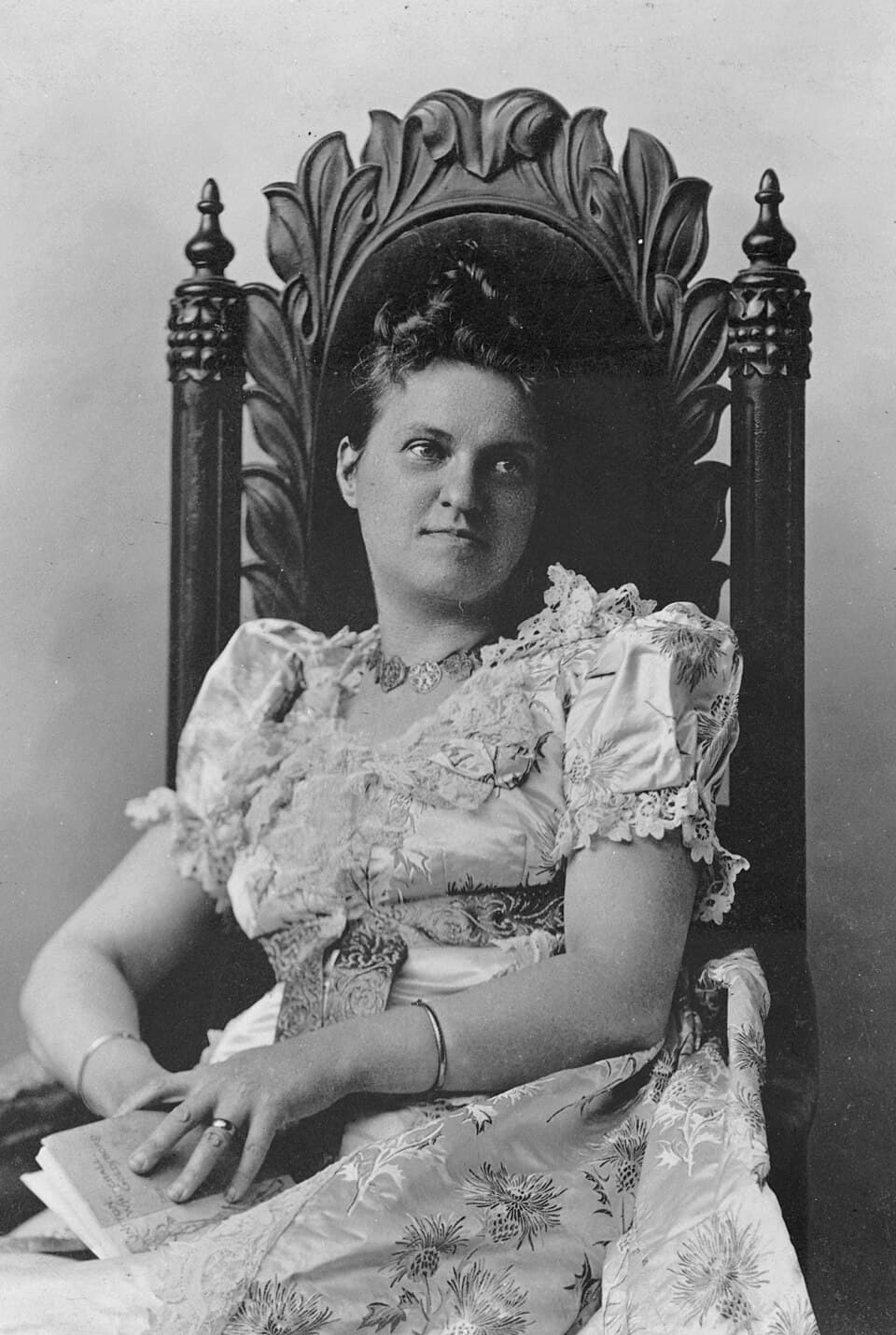

I was chopping onions for a chana masala at 10 PM on a Tuesday — the kind of night where you need something short and absorbing to keep you company — and I thought, two hours and fifteen minutes? Perfect. Anna Katharine Green, the woman who basically invented American detective fiction before Agatha Christie even learned to read? Sign me up.
Here's the thing nobody told me: the narration would fight me every step of the way.
The Woman Who Wrote Detective Fiction Before It Was Cool
Let me give Anna Katharine Green her flowers first, because she deserves them. This woman was publishing detective novels in 1878. Eighteen seventy-eight. She influenced Christie, she influenced Conan Doyle, and yet most people have never heard her name. The protagonist exhibits classic golden-age detective instincts — Ebenezer Gryce is methodical, observant, and operates in that wonderful era where "talking to the neighbors" constitutes a major investigative breakthrough. The setup is simple but psychologically rich: a man shot dead in his home, no leads, and the only people worth questioning are a blind doctor and his beautiful wife.
And this is a fascinating case study in how Green constructs suspicion. The blindness of the doctor isn't just a plot device — it fundamentally alters what he can and can't know, what he can and can't be accused of. Green understood something about perception and reliability that modern thriller writers still fumble. The wife's beauty is mentioned repeatedly, and you start asking yourself: why does the narrative keep drawing attention to her appearance? Is Green deploying it as misdirection, or is she saying something about how Victorian society assigned guilt based on attractiveness and gender? The research actually shows that even today, physical appearance biases jury decisions. Green was working that angle over a century ago.
The story itself moves with the efficiency you'd expect from something this short. There's no fat. Every conversation Gryce has is doing double duty — gathering information while also revealing character. The turn of events genuinely surprised me, which doesn't happen often when you've read as many mysteries as I have (occupational hazard of growing up with Christie novels stacked on your nightstand). Memory in Death gave me that same rare gut-drop moment — modern procedural instead of Victorian drawing room, but the same psychological architecture underneath where the answer was hiding in plain sight the entire time.
When the Voice Gets Between You and the Story
Okay. The narration. I want to be fair here because this is a LibriVox recording, which means it's a volunteer reading a public domain text for free. That matters. But it also means there's no professional audio direction, no retakes, no sound engineer smoothing things out.
Crln Yldz Ksr's accent is noticeable from the first sentence. English is clearly not the narrator's first language, and the intonation patterns — the rises and falls that native speakers use to signal questions, emphasis, sarcasm — are frequently off. This isn't about accent snobbery. I grew up in a household where three languages were spoken at any given dinner. But in an audiobook, intonation carries meaning. When a character is supposed to sound suspicious and the vocal pattern reads as neutral, you lose the psychological subtext. When Gryce is piecing something together and the delivery doesn't build, the detective's thought process flattens.
I found myself rewinding multiple times, not because the plot was complex but because the delivery made me second-guess what I'd actually heard. By the halfway point I'd adjusted somewhat — your brain does recalibrate — but I never fully settled into it. No character differentiation that I could detect; the blind doctor, his wife, and Gryce all come through in roughly the same register.
Psychologically, this doesn't track with how you want a mystery to land. Mysteries depend on vocal cues to plant doubt, to make you suspect one person over another. Without that layer, you're essentially reading with your ears, and the reading is unreliable.
Who Should Bother (and How)
If you're a mystery history nerd — if you care about the genre's origins and want to hear one of the earliest American detective stories — the source material is genuinely worth your time. Green's character psychology holds up surprisingly well. My therapist would have thoughts about the doctor's wife, and so did I, and that's exactly what good mystery writing should provoke.
But this particular audio version? I'd honestly recommend reading the text instead. It's freely available. You'll get more from the prose on the page than through this performance. If audio is your only option, bump it to 1.25x speed — it actually helped smooth some of the intonation unevenness for me.
The Case File Closes
Anna Katharine Green deserves a renaissance. This story — tight, psychologically aware, structurally clever — proves she wasn't just "first," she was good. But a detective story lives and dies by how its clues are delivered, and this narration buries too many of them. I finished my chana masala before the audiobook ended, which means I spent the last forty minutes just sitting at my kitchen table, squinting at nothing, trying to listen harder. That's not the experience anyone wants.