
What happens when the monster from your past shows up wearing a pleasant smile and asking for coffee?
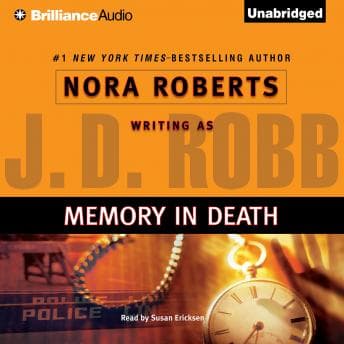
I was reorganizing the horror section at the library - yes, at 9 PM, yes, alone, Shirley Jackson's collected works don't alphabetize themselves - when I hit play on Memory in Death. And look, I knew the In Death series wasn't horror. I knew this was procedural thriller territory. But J.D. Robb (Nora Roberts writing under her darker pseudonym) understands something fundamental about dread: the scariest monsters aren't supernatural. They're the ones who had legal custody of you.
The Ghosts That Don't Need to Be Dead
Trudy Lombard walks into Eve Dallas's precinct, and suddenly our hardened homicide detective - the woman who opened this book processing a Santa who took a thirty-seven story dive onto the sidewalk without flinching - can barely hold herself together. That's horror. That's real horror. The kind that doesn't need atmosphere or jump scares. That same slow-building dread lives in Killer Clown: The John Wayne Gacy Murders - the horror of realizing the monster was hiding in plain sight all along. Just a woman from your foster care days sitting across from you, smiling like she didn't spend years making your childhood a waking nightmare.
Susan Ericksen's narration here is... okay, I need to talk about this. She's been voicing Eve Dallas for over twenty books at this point, and you can hear the difference when Trudy appears. Eve's usual tough-cop cadence fractures. There's this slight breathiness, a regression in the voice that suggests the traumatized child Eve used to be is suddenly very close to the surface. It's subtle work. The kind of performance choice that separates audiobook narrators from audiobook actors.
And then there's Roarke. Eve's billionaire husband - reformed criminal, Irish accent, protective streak a mile wide. When Trudy shows up at his office demanding blackmail money, Ericksen gives him this cold, controlled fury that honestly made me stop shelving books and just... listen. The research mentioned "Scary Roarke" and yeah. Yeah, that tracks. (Shirley the cat was unimpressed. I was not.)
When the Victim Becomes the Victim
Here's where Robb does something clever: Trudy ends up dead. Beaten, bruised, left on her hotel room floor. And Eve - who has every reason to want this woman erased from existence - has to solve her murder. Has to be a cop first and a survivor second.
The procedural elements are solid. Robb's been doing this for decades and it shows. But what elevates this particular entry is the psychological excavation happening alongside the investigation. Eve and Roarke's relationship gets tested in ways that feel earned rather than manufactured. There's genuine tension in watching Eve confront the fact that she wasn't Trudy's only victim - that this woman left a trail of damaged children behind her, any of whom might have finally snapped.
Ericksen handles the supporting cast with her usual precision. There's apparently a "bimbo voice" she breaks out for certain characters that adds unexpected humor to the darker proceedings. I'll admit I laughed out loud during a scene I probably shouldn't have. The tonal balance is tricky - futuristic noir with trauma and comedy and romance all coexisting - and both Robb and Ericksen make it work.
Who's This For (And Who Should Run)
If you're already deep in the In Death series, you don't need me to tell you to listen. This is book twenty-two, and it's one of the ones that actually matters for Eve's character arc. If you need a shorter entry point to the series, Interlude in Death gives you Eve and Roarke without the commitment of a full novel. The foster care backstory has been threaded through the series, but this confronts it head-on.
New to the series? Start earlier. Not because you'll be lost - Robb provides enough context - but because the emotional payoff here depends on having spent time with Eve and Roarke. You need to know who they are when they're not being ambushed by the past.
Content note: abuse (childhood, psychological), violence, and the particular kind of horror that comes from realizing the adults who were supposed to protect you chose not to. If that's too close to home, proceed with caution or skip entirely. No shame in protecting yourself.
Filing This One Under "Unforgettable"
I finished Memory in Death at 1 AM, still in the library (don't tell my supervisor), with that specific hollow feeling you get when fiction has poked at something real. This isn't horror in the genre sense. But Robb understands that horror isn't about gore - it's about dread. About powerlessness. About the past refusing to stay buried.
Susan Ericksen commits. That's rare. Eleven hours of performance that never flags, that finds the humanity in a procedural framework, that makes you forget you're listening to one person doing dozens of voices.
Some audiobooks are background noise. This one demands your attention. Give it.