
Look, I need to talk about the fact that one of the volunteer readers pronounces "Catherine" like it's a word they just invented on the spot. Every single time. I'm in my car at 7:15 AM after twelve hours of trauma bays and blood draws, and this person hits me with a pronunciation so unhinged I actually said "excuse me?" out loud. To my dashboard. Again.
But here's the thing - I kept listening. And that tells you something about Dumas.
Twin Telepathy Is Not How Medicine Works (But I'll Allow It)
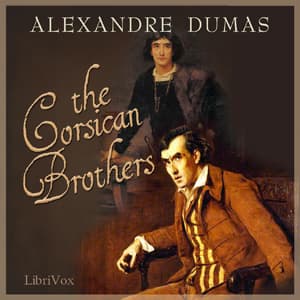
So the premise: Siamese twins, surgically separated, who still feel each other's pain and emotions across hundreds of miles. As someone who's actually worked a code, let me just say - sympathetic pain responses between separated conjoined twins is not a documented medical phenomenon. I know this. You know this. Dumas knew this in 1844 and did not care even a little bit.
And honestly? It works. The connection between Lucien and Louis de Franchi isn't really about medicine - it's about brotherhood pushed to its most extreme and romantic edge. When one brother gets stabbed with grief in Corsica, the other feels it in Paris. When Louis is killed in a duel (not a spoiler, the summary literally tells you), Lucien crosses from the wild mountains of Corsica to the drawing rooms of Paris to avenge him. The supernatural twin bond is just Dumas doing what Dumas does best: taking an emotional truth - that siblings can feel each other's pain - and cranking the volume to eleven.
At three hours and eleven minutes, this is basically a novella. A quick hit. I finished it across two post-shift drives home, which is actually perfect because the story splits neatly: Corsica in part one, Paris in part two. The Corsican chapters are full of vendetta culture, mountain hospitality, bandits hiding in the maquis - Dumas writing like a travel journalist who's also a dramatist. The Paris chapters shift to salon intrigue, a love affair gone wrong, and a duel that feels inevitable from the moment you meet the characters.
The LibriVox Lottery - Some Winners, Some... Not
Here's where I have to be honest. LibriVox is free. Free is wonderful. Free also means you're getting volunteer readers, and the quality swings like a pendulum between chapters. There's a British male reader in the later sections who genuinely nails it - clear, measured, with enough variation in his voice that you can tell when Dumas is being wry versus when the stakes are deadly. That reader understood the assignment.
Then there are American readers whose pacing runs hot - too fast, words tumbling over each other like they're trying to finish before a timer goes off. It's not terrible, but it's inconsistent, and in a story this short, every chapter transition where the voice and quality shift is noticeable. No sound effects, no music, just raw narration with varying audio levels between readers. You adjust. You roll with it. But if you're someone who needs a polished, single-narrator experience, this will bug you.
The mispronunciations pop up beyond just "Catherine" - French and Italian place names get creative interpretations. I'm Filipina-American; I grew up hearing my titas mangle English idioms with total confidence, so honestly, mispronunciations don't bother me as much as they bother some people. But I notice.
Why This Little Story Still Hits
What surprised me about The Corsican Brothers is how emotionally direct it is. This isn't The Count of Monte Cristo with its labyrinthine plotting over dozens of hours. This is a clean, sharp blade of a story about what you'd do if someone killed the person you loved most. Lucien doesn't scheme. He doesn't play games. He goes to Paris and he handles it. That same stripped-down, no-games approach to vengeance is something I kept thinking about while listening to Rogue Lawyer - different century, different setting, but the same bone-deep certainty that some wrongs demand a direct response. There's something almost clinical about his grief - he processes it through action, through duty, through the Corsican code that says blood answers blood.
I've watched families in the trauma center make impossible decisions at 4 AM. I've seen brothers punch walls and sisters go completely still. Dumas captures that spectrum - the brother who rages and the brother who plans. The ghost scene near the end (yes, there's a ghost, because Dumas) should be ridiculous but instead landed with this quiet, gut-punch certainty that made me grip my steering wheel harder than I needed to.
Carlos asked why I looked upset when I walked in the door. I blamed the sun in my eyes. It was cloudy.
Who Gets This Prescription
If you've only ever read Dumas's big novels and want something you can finish in an afternoon - or two drives home from night shift - this is it. If you can tolerate inconsistent narration quality (and at the price of free, you probably can), there's a genuinely affecting story here about family, honor, and supernatural brotherly love that hasn't lost its punch in 180 years.
Skip it if: volunteer narration drives you up a wall, or you need your audiobooks to have one consistent voice. No shame in that.
Night shift approved - but barely. The narrator switches kept jolting me awake more than the story did, which is both a complaint and a compliment depending on how tired you are.