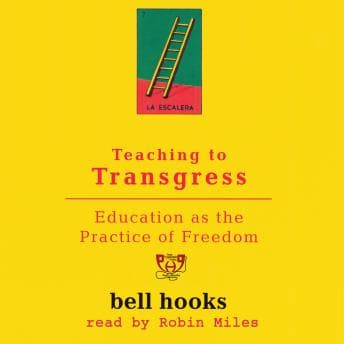

Everyone told me this was a classic. The kind of book you're supposed to nod reverently at when someone mentions it in academic circles. And honestly? I expected it to feel dated — it was published in 1994, and education discourse moves fast. I was chopping onions for a chana masala I had no business attempting on a Tuesday night when Robin Miles started reading, and within twenty minutes I'd stopped chopping because I was just... standing there. Listening.
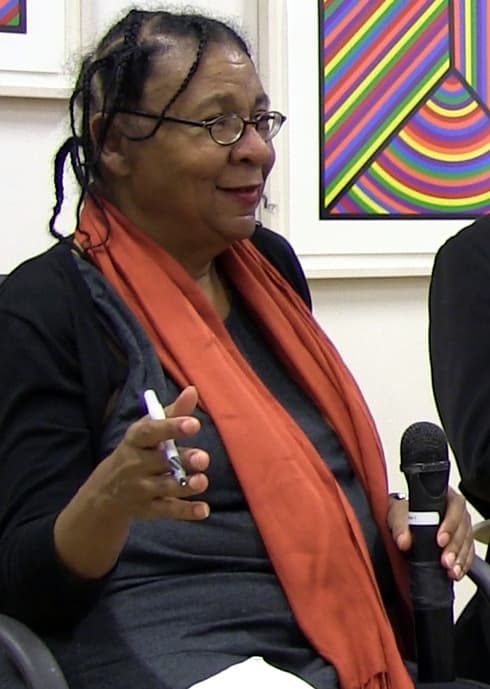
Here's the thing about bell hooks: she doesn't write like an academic who wants you to know she's smart. She writes like someone who's been genuinely wounded by the classroom and genuinely healed by it too. That combination is rare, and it's what makes this book hit differently than the stack of pedagogy texts collecting dust on my shelf.
The Psychology of a Teacher Who Actually Feels Things
What hooks does here — and what I found myself analyzing like the researcher I can't stop being — is lay out a case study of her own intellectual development. She talks about attending all-Black schools in the segregated South where teachers saw educating Black children as a political act, as resistance. Then she enters desegregated, predominantly white institutions and the classroom becomes cold, transactional, disconnected from the body and the self.
The protagonist (yes, hooks is the protagonist of her own pedagogical memoir, fight me) exhibits classic disillusionment patterns. But instead of retreating into cynicism — which, let me tell you, is the path most academics choose — she builds something. She pulls from Paulo Freire, from Buddhist practice, from her own lived experience as a Black woman in white-dominated academic spaces, and she constructs an argument for what she calls "engaged pedagogy."
I found myself asking: why does hooks keep returning to the idea of eros in education? Not sexual eros, but the life force, the passion, the willingness to be changed by the encounter. The research actually shows that emotional engagement is central to deep learning — hooks was saying this decades before neuroscience caught up. She understood human nature before we had the fMRI data to back her up.
Robin Miles Made Me Forget I Was Listening to an Audiobook
Okay, so about the narration. Robin Miles reads this as though these are her own ideas she's been mulling over for years and finally decided to share with you over tea. There's a warmth and an authority in her delivery that never tips into lecturing. When hooks describes the pain of being silenced in a graduate seminar, Miles's voice doesn't perform grief — it just carries it. Quietly. The way someone does when they've processed something but still feel the bruise.
At 7 hours and 28 minutes, this isn't a monster listen, but it's dense. Some of the chapters — especially the one structured as a dialogue between hooks and philosopher Ron Scapp — shift register dramatically. Miles handles those transitions cleanly, making the conversational sections feel genuinely like two minds in a room together rather than one narrator doing a bit.
I bumped the speed to 1.5x during some of the more theoretical passages (hooks's engagement with Freire's Pedagogy of the Oppressed is important but can feel circular), and that pacing felt right. Some listeners recommend 1.75x. I'd say that depends on your familiarity with critical pedagogy — if you're new to this, stay at 1x or 1.25x. Let it breathe.
Where It Doesn't Quite Track
I'm not going to pretend every chapter lands equally. The book is structured as a collection of essays, not a single sustained argument, and some chapters feel like they were written for a specific conference audience that isn't you. The essay on theory as liberatory practice, for instance, makes claims about the accessibility of theoretical language that hooks herself doesn't always live up to. Psychologically, this doesn't track — she argues against obscurantism while occasionally being obscure.
And the chapter on multiculturalism in the classroom, while radical for 1994, reads now like it's describing problems we still haven't solved. Which is either a sign of the book's continued relevance or a depressing commentary on education. Probably both.
But here's what kept me returning to it across three cooking sessions and one very long jog through Cambridge where I missed my turn twice: hooks is honest about being afraid. About walking into a classroom and not knowing if she'll reach anyone. About the exhaustion of doing liberatory work in institutions that don't want liberation. My therapist would have thoughts about this character — specifically about how hooks processes institutional betrayal while still choosing to stay inside the institution. David Brooks circles around adjacent territory in How to Know a Person — the mechanics of actually seeing someone rather than processing them, which is really just hooks's engaged pedagogy applied outside the classroom.
Who Needs This in Their Ears (And Who Doesn't)
If you teach anything — formally or informally — this is essential listening. If you've ever sat in a classroom and felt invisible, hooks sees you and she wrote this for you. If you're interested in the psychology of power dynamics in educational spaces, this is a fascinating case study in how one thinker metabolizes oppression into practice.
If you want a step-by-step teaching manual with lesson plans and rubrics, this isn't it. If you need everything backed by controlled studies and p-values, hooks's methodology will frustrate you. She works from experience and philosophy, not from data. I respect that even as the researcher in me twitches slightly.
The Chana Masala Turned Out Fine, By the Way
Some books change how you think about a subject. This one changed how I think about what a classroom is supposed to feel like — which, for someone who spends her life studying how stories shape identity, is no small thing. hooks argues that education should be about mutual vulnerability, about teachers and students being willing to be transformed. That's terrifying. And she knows it's terrifying. And she says do it anyway.