
How do you hold two lives inside one body?
I finished this at 6:47 AM, sitting in my driveway with the engine off, unable to go inside. Carlos texted asking if I was okay. I blamed allergies. It wasn't allergies.
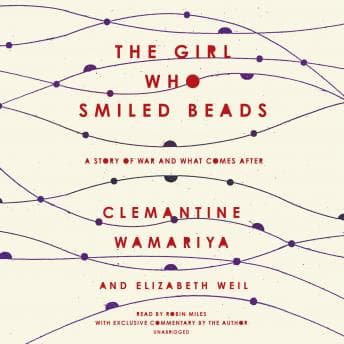
Clemantine Wamariya was six when she fled Rwanda with her fifteen-year-old sister Claire. Six. I have patients who are six. They cry when we start IVs. This child walked through seven countries, witnessed starvation and death and things I won't repeat here, and somehow survived to write this book. And here's what got me—she doesn't let you off the hook with inspiration porn. She refuses to be your feel-good refugee story.
The Structure That Mirrors Trauma
The book jumps between past and present—Clemantine at six fleeing genocide, Clemantine at Yale trying to be a normal college student, Clemantine as a child watching her sister Claire become a mother figure, Clemantine as an adult watching that same sister struggle as a single mom in Chicago while she got taken in by a wealthy family. Some listeners apparently found this confusing. I didn't.
You know what else is confusing? Trauma. The way it doesn't stay in the past where you put it. The way you can be giving a presentation in a boardroom and suddenly you're six years old again, hungry and terrified. The structure isn't a flaw—it's the point. Wamariya is showing you how her brain works, how survival works. You don't get to experience her story in neat chronological order because she doesn't get to experience her own life that way.
Robin Miles and the Question of Voice
Here's where it gets complicated. Robin Miles is a Golden Voice narrator, multiple Audie Awards, and she's genuinely excellent here. Her delivery captures something I can only describe as "wonder and pain existing in the same breath"—the way Clemantine describes beauty in the middle of horror, the way a child's perspective can make the unbearable almost... not bearable, but observable.
But some listeners felt the polished American narration didn't fit an African story. And I get it. I do. There's a tension there. Miles handles African pronunciations well—better than most American narrators would—but she's still an American narrator telling an African story.
Here's where I landed: Clemantine wrote this book in English, as an American (she became one), about the collision between who she was and who she became. The polished voice isn't wrong—it's the voice of the Yale graduate who can't quite reconcile with the six-year-old still living inside her. Whether that was intentional or not, it works.
What the Medical Thriller Authors Get Wrong About Survival
As someone who's actually worked codes, who's seen people come back from things that should have killed them—I know something about survival. The movies get it wrong. The thrillers get it wrong. They show you the dramatic moment, the near-miss, the triumphant recovery.
Wamariya shows you the after. The way survival doesn't end when the danger does. The way her sister Claire, who kept her alive for six years, who was essentially her mother from age fifteen, ended up struggling in poverty while Clemantine got the American dream handed to her by a wealthy adoptive family. The guilt of that. The impossibility of that.
There's a moment—I won't spoil it exactly—where Clemantine describes the disconnect between her two lives, and I had to pull over. Because I've seen that look. In patients who survived things they shouldn't have. In refugees I've treated in the ER. That particular kind of haunted that comes from knowing you're supposed to be grateful but you're actually just... broken in ways that gratitude can't fix.
Who Needs This Book (And Who Should Steer Clear)
This is not background listening. This is not "throw it on while you're cleaning." This requires your attention, your emotional bandwidth. The time jumps demand focus, and honestly, you owe this story your focus.
Perfect for: Long drives where you can sit in your driveway afterward. Anyone who works with refugees or trauma survivors. Anyone who's ever felt like they're living two lives at once. Last Black Unicorn explores that same split identity—the person you were versus who you had to become—though Tiffany Haddish uses humor where Wamariya uses unflinching honesty. My mom would love this. She'd also cry for three days and then call me to process.
Skip if: You need linear storytelling to stay engaged. You're looking for something lighter. You're in a mental health space where genocide and child trauma would be genuinely harmful to encounter.
Night Shift Prescription
Nine hours. That's a commitment. But it's nine hours that will change how you see every refugee story in the news, every "inspirational" narrative about overcoming adversity. Wamariya doesn't want your pity or your admiration. She wants you to see her as fully human—messy, angry, grateful, resentful, brilliant, broken, surviving.
I've recommended this to three coworkers already. One of them texted me at 2 AM last night: "I hate you for making me listen to this. Also thank you."
Yeah. That about covers it.