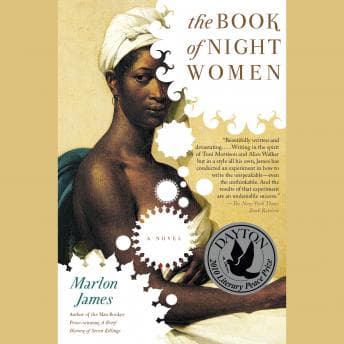

I'm going to start with a complaint, and it's not a small one: Marlon James ruined my Saturday.
Denise and I had plans. Lakefront walk, brunch at that place on Michigan Avenue she likes, maybe catch the afternoon light before winter swallows it whole. Instead, I sat in our kitchen for three hours with cold coffee, staring at nothing, because I'd just finished The Book of Night Women and I couldn't move. Couldn't talk. Couldn't do anything except sit with what this book had done to me. Denise took one look at my face and said, "Must've been a good one." Good isn't the word. Devastating is closer. Necessary is closer still.
The Voice That Won't Let You Look Away
Let me tell you what Marlon James does that I've spent twenty years trying to teach my juniors: he builds a narrative voice so specific, so rooted in place and time, that the language itself becomes the story's argument. The entire novel is written in Jamaican patois — eighteenth-century Jamaican patois — and if you're reading that on the page, I imagine it takes real work to find your footing. But Robin Miles? She dissolves that barrier in the first thirty seconds.
Her calypso lilt doesn't just "set the scene" — it is the scene. The rhythm of her speech carries the sugar cane heat, the exhaustion, the rage that simmers under every interaction on that plantation. When she voices Lilith, there's this hard edge underneath the youth, like a blade wrapped in cloth. You hear the danger before you understand it. And when she shifts to the plantation mistress or the overseers, the voice tightens, goes clipped and cold — the accent changes just enough that your body registers the power shift before your brain catches up.
This is what I mean when I tell my students that narration is performance art. Miles isn't reading Marlon James. She's channeling him. She's doing what a great actor does with Shakespeare — making the unfamiliar language feel like the only possible way to tell this story.
Lilith's Birth Scene and the Weight of Foreshadowing
The novel opens with Lilith's birth, and it's — look, I've taught Beloved. I've taught Incidents in the Life of a Slave Girl. I thought I understood how literature handles the violence of slavery. James goes somewhere different. The birth scene isn't just brutal; it's mythic. The Night Women recognize something in this child from the first breath, and the way James writes it — and Miles performs it — you feel the weight of destiny pressing down on an infant who hasn't even opened her eyes yet.
What surprised me, though — genuinely surprised me, and I don't say that lightly after two decades of reading — is how the novel handles Lilith's interiority as she grows. This isn't a simple resistance narrative. Lilith is complicated in ways that make you uncomfortable. Her desires don't line up neatly with the revolt the Night Women are planning. She pushes against the conspiracy not because she's weak but because she's claiming something for herself — agency, identity, even tenderness — in a world designed to deny her all of it. And that tension, that refusal to simplify, is what elevates this from historical fiction into literature.
This reminds me of what Hemingway said about writing — that the dignity of movement of an iceberg is due to only one-eighth of it being above water. James shows you the one-eighth. Miles makes you feel the other seven.
Fifteen Hours That Demand Your Full Attention
At nearly sixteen hours, this is not a casual listen. I'm going to be honest: you cannot half-listen to this book while grading papers. I tried during a stack of sophomore essays on The Great Gatsby, and I missed an entire plot thread because my brain couldn't hold both Lilith's world and a seventeen-year-old's argument that Gatsby was "basically just a simp." (He's not wrong, but still.)
The patois requires your full ear, especially early on. At 1.0x — which is the only acceptable speed for this, don't even think about 1.5x — Miles's pacing lets the language breathe. The prose deserves to be savored. Every sentence has this percussive quality, almost musical, and speeding it up would be like playing Kind of Blue at double tempo. Technically possible. Spiritually criminal.
I should warn you: the content is unsparing. Violence, sexual violence, the systematic dehumanization of slavery rendered in visceral, specific detail. James doesn't flinch, and Miles doesn't soften it. There were moments on that lakefront — when I was listening during an earlier walk — where I had to stop and just stand there, waves hitting the rocks, processing what I'd just heard.
Who Should Listen (and Who Should Prepare)
If you loved Beloved, this is its spiritual successor — not in style, because James and Morrison write nothing alike, but in ambition and moral seriousness. I found that same weight of moral seriousness — generations of people shaped by forces larger than themselves, rendered in prose that earns every page — in Covenant of Water, which follows a South Indian family across seventy years with that same refusal to look away from what history costs. If you're a reader who thinks audiobooks can't improve on the page, this is the book that will change your mind. The dialect work alone justifies the format.
My students would hate this. I love it. Not because it's difficult — though it is — but because it refuses to make slavery digestible. It refuses to give you a comfortable ending or a clean moral. The resolution frustrated some listeners, and honestly, I understand why. But I think the frustration is the point. History doesn't resolve neatly. Why should fiction about it?
The Lesson Plan I'll Never Assign
I can't teach this book. Not to high schoolers. The content is too much, the language too demanding, the emotional toll too heavy for a Tuesday third period. But I'll carry it with me into every classroom discussion about voice, about power, about who gets to tell their own story and how. Robin Miles's performance is the best argument I've heard for audiobooks as an art form — not a substitute for reading, but something more. An interpretation. A reclamation.
Worth pausing the faculty meeting for. Worth ruining your Saturday for. Worth sitting alone in your kitchen with cold coffee, changed.