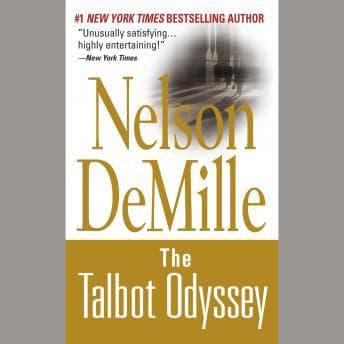

Okay, I have a complaint. And it's not about the medicine this time.
I picked up The Talbot Odyssey on a Tuesday morning after a brutal twelve-hour shift. I was wired but exhausted - that specific post-night-shift state where your body wants sleep but your brain is still running triage protocols. I figured a Cold War spy thriller would be exactly the right speed. Forty years of espionage, a mole buried inside the CIA, Russians with a first-strike weapon, New York City streets turned into a shadow war - on paper, this thing should've been my 6 AM adrenaline fix.
Instead I was asleep before I hit the I-10 on-ramp.
Look. I'm not saying The Talbot Odyssey is bad. Nelson DeMille was genuinely good at this, and the bones here are solid - a mole called Talbot who's been burrowed inside Western intelligence for forty years, a street-smart ex-cop stumbling into something way above his clearance level, a Long Island suburb where a civic protest is actually cover for a very high-stakes intelligence operation. That last detail is the kind of thing that should feel paranoid and tense. And sometimes it does! The premise has real weight to it.
But DeMille published this in 1984, and it shows. The Soviet threat that drives every page feels like reading a history textbook about a world that no longer exists. Some readers find that nostalgic. I found it airless. The tension depends on you buying into a geopolitical reality that dissolved thirty-plus years ago, and the book doesn't do enough to make you forget that.
Twenty-Three Hours Is a Long Time to Wait for the Pulse to Pick Up
Here's my real issue with this one as an audiobook specifically: twenty-three hours. That's a commitment. That's longer than most of my overnight shifts plus my commute home combined. For twenty-three hours, you need momentum. You need the story to keep pulling you forward even when you're charting at 3 AM or fighting highway hypnosis on the drive home.
The Talbot Odyssey does not always pull you forward. There are stretches - long ones - where the plot moves through setup and positioning and political maneuvering that felt more like a briefing document than a thriller. Compared to DeMille's later work (The Lion's Game does things to your nervous system that I cannot explain), this one is noticeably slower and less punchy. English Assassin gave me that same slow-burn spy machinery, and I had a similar argument with myself about whether the deliberate pacing was a feature or a bug. Some of the humor that DeMille's fans love is here, but it's quieter. More restrained.
I'll be honest: I listened to parts of this at 1.5x and it helped. The pacing problems smooth out a little when you push the speed.
Scott Brick Is Doing His Job Better Than This Book Deserves
Here's where I have to give credit. Scott Brick is working hard. His pacing is genuinely good - he understands when to slow down for tension and when to push through dialogue, and he handles the occasional dry humor without telegraphing it, which is harder than it sounds. The character voices are distinct enough that you don't lose track of who's talking even when scenes get crowded. For a book this long with this many players, that matters.
Brick doesn't save the book. But he keeps it from being a slog in the way it might've been with a flatter narrator. If you're going to spend twenty-three hours in 1984 New York doing spy things, at least you're doing it with someone who sounds like he actually wants to be there.
Who Should Actually Listen to This
If you've read everything DeMille has written and you're working through his catalog chronologically - yes, absolutely, this belongs in your queue. If you're a Cold War history person who gets nostalgic for the specific anxiety of that era, there's something here for you. If you want a slow, cerebral spy story and you're not in a hurry, Talbot has enough plot machinery to keep you engaged.
But if you're coming in expecting the sharp, propulsive DeMille of his later work? Adjust your expectations before you start. And maybe don't start it on your post-night-shift drive home. Your dashboard will not thank you.
Borrow this one. Don't spend a credit.