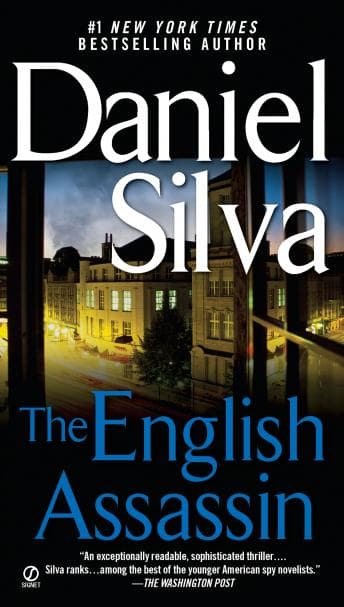

Let me cut to the chase - the title is a lie. Well, not a lie exactly, but "The English Assassin" spends way more time on Swiss banking scandals and Nazi-looted art than on the actual English assassin. I spent the first three hours on a client consultation drive to Houston wondering when this mysterious killer was going to show up. When he finally does, he's worth the wait. But still. Truth in advertising, Silva.
That gripe aside, this one earned its place in my rotation.
Gabriel Allon: The Kind of Operative I'd Actually Hire
Silva clearly did his homework on tradecraft. Gabriel Allon isn't some superhuman action hero - he's an art restorer first, assassin second, and that combination actually makes tactical sense. The man's cover is bulletproof because it's genuine. He really does restore Renaissance paintings. He really does have the patience to spend months on a single canvas. That patience translates to fieldwork in ways that ring true.
I've seen this scenario play out in real life - the best operators aren't the door-kickers. They're the quiet ones who notice everything and move when the moment's right. Allon fits that profile. When Silva describes him examining a Raphael while simultaneously cataloging every exit and potential threat in the room, I believed it. The art world details are dense - maybe too dense for some listeners - but they ground the espionage in something tangible.
The Swiss banking angle is where Silva really shines. The book's rooted in actual history: Switzerland's dirty little secret of profiteering off Holocaust victims, laundering Nazi gold, and burying the evidence for decades. Murder in an Irish Village takes a lighter approach to history, but O'Connor also grounds her mystery in real Irish culture and customs that feel authentic. Silva weaves real documents and historical events into the fiction so smoothly that I had to look up what was true afterward. (Most of it. Uncomfortably most of it.)
John Lee's Voice Fits Spies Like a Tailored Suit
John Lee narrates with what I can only describe as cool aplomb - the man sounds like he's been briefing intelligence committees his whole life. His pacing matches the story's rhythm perfectly. When Allon is methodically working through a problem, Lee's delivery is measured, precise. When the action kicks up, so does he.
Here's where it gets complicated though. Lee's approach is subtle - too subtle sometimes. The character differentiation relies on tone shifts rather than distinct voices, and when you've got multiple European intelligence operatives having tense conversations, that subtlety becomes a problem. I caught myself rewinding a few times during a three-way conversation between Mossad handlers, trying to figure out who just said what. Ranger gave me a look like I was losing my mind.
It's not a dealbreaker. Once you tune into Lee's frequency, you can usually track the characters. But if you're listening while doing anything else - driving, working, whatever - you might miss some nuance. This one demands attention.
The Englishman Himself
Without spoiling too much: the assassin Gabriel trained and now hunts is genuinely unsettling. Not in a theatrical way - in a quiet, professional way that's far more chilling. Silva understands that the scariest killers aren't the ones who enjoy it. They're the ones who simply don't care either way. Just another job.
The cat-and-mouse dynamic between Allon and his former student works because Silva takes time to establish their history. Poisoned Pen builds that same kind of layered character history—you need to understand the past to appreciate the present stakes. You understand why Allon feels responsible. You understand why the Englishman became what he is. Neither man is a cartoon.
Who's This Mission For?
If you want explosions every chapter, look elsewhere. This is a thinking person's thriller - le Carré territory, not Clancy. The pacing is deliberate, the plot unfolds in layers, and the payoff requires patience.
Perfect for: Long road trips where you can actually focus. History buffs who like their fiction grounded in uncomfortable truths. Anyone who's ever wondered what really happened to all that Nazi-looted art. (Spoiler: we still don't know where most of it is.)
Skip if: You need constant action to stay engaged. You find art history boring. You get frustrated when you can't immediately tell characters apart.
Mission Debrief
Silva delivers a smart, historically-grounded thriller that respects its audience's intelligence. John Lee's narration is professional and polished, even if the character work occasionally blurs. At just over ten hours, it's a solid commitment that pays off - especially if you appreciate the slower burn.
Worth your time? Affirmative. Just don't expect the English assassin to dominate the story his name is on. Ranger approved this one, though he did fall asleep during the banking exposition. Can't blame him.