
I was making dal makhani at 10 PM on a Tuesday — the kind of elaborate, unnecessary cooking project my mother would approve of if she knew I was actually eating dinner and not just subsisting on chai and almonds — when Harry Hole woke up covered in someone else's blood and couldn't remember why. I burned the onions. Worth it.
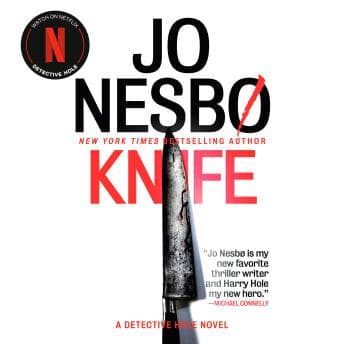
Nesbø gets something about addiction that most thriller writers botch completely. Harry Hole isn't just a detective who drinks too much. He's a man whose entire cognitive architecture has been rebuilt around the bottle, and Knife puts that front and center in a way that made me genuinely uncomfortable. The blackout sequence isn't played for shock. It's played for dread. Harry wakes up, pieces together fragments, and the reader — or listener, in this case — does the same awful detective work alongside him, except the crime scene might be his own hands. The protagonist exhibits classic dissociative amnesia patterns consistent with severe alcohol use disorder, and Nesbø doesn't flinch from showing how that kind of memory fragmentation warps not just recall but identity itself. I found myself asking: why does Harry really keep drinking? Not the surface reason. The deep one. And the book actually has an answer that isn't cheap.
The Psychology of a Man Who Can't Stop Hurting Himself
What makes Harry Hole compelling across twelve books is that he's not a tortured genius archetype. He's a man with genuine self-destructive compulsions who also happens to be brilliant at pattern recognition — and those two traits aren't unrelated. Knife leans hard into this by structuring the entire mystery around Harry's unreliable consciousness. You're inside his head, but his head is broken. He knows Svein Finne is out there. He knows Rakel has left him. He knows something terrible happened during his blackout. But the connections between these facts keep shifting, and Nesbø uses that instability as the engine of suspense rather than just set dressing.
Svein Finne is a genuinely unsettling antagonist — a serial rapist who frames his predation in quasi-religious terms about "sowing seeds," which is exactly the kind of delusional framework you see in case studies of offenders who construct elaborate moral justifications for violence. The research actually shows that the most dangerous repeat offenders aren't the ones who know they're monsters. They're the ones who've convinced themselves they're on a mission. Finne's calm certainty about his own righteousness is far more disturbing than any graphic scene could be.
And then Rakel. Without spoiling anything — the thing that happens in this book hits like a freight train not because it's unexpected (if you've been reading Nesbø, you feel it coming the way you feel weather change), but because of what it reveals about Harry's capacity for love versus his capacity for destruction. My therapist would have thoughts about this character. Many, many thoughts. Possibly billable hours worth.
John Lee and the Art of Sounding Like a Man Barely Holding It Together
Sixteen hours and fifty-nine minutes. That's a commitment. And John Lee earns every one of them. He's narrated most of the Harry Hole series, which means his voice IS Harry at this point — gravelly, measured, with this undertone of exhaustion that never quite crosses into melodrama. When Harry is drunk and spiraling, Lee doesn't ham it up. He gets quieter. Slower. Which is psychologically accurate, by the way — severe intoxication doesn't usually make people louder. It makes them foggy and deliberate, words chosen carefully because the machinery of speech is failing.
Lee's treatment of Finne deserves special mention. He gives the character this soft, almost paternal quality that made my skin crawl while I was stirring lentils in my kitchen at midnight. There's something deeply wrong about a voice that sounds kind while describing monstrous things, and Lee understood that contrast instinctively. No vocal fireworks. Just this steady, patient menace.
The pacing across seventeen hours never dragged for me, though I'll say this: if you haven't read the previous Harry Hole books, you're going to feel like you walked into a family argument at Thanksgiving with no context. The contrast with something like Quiet Retreat is instructive here — that book drops you into its world with a kind of deliberate gentleness that makes it genuinely accessible as a standalone, which made me appreciate even more how much Nesbø trusts that you've done your homework. The emotional weight of the Rakel storyline, Harry's history with Finne, his complicated standing within the Oslo police — this is book twelve. The payoffs are earned, but they're earned across a decade of storytelling.
Who Gets a Knife to the Gut (Figuratively)
This is for you if: you've been following Harry Hole and you're ready for Nesbø to stop pulling punches. If you love psychological complexity in your crime fiction, the kind where the detective's pathology is as interesting as the killer's. If you want Nordic noir that actually understands how damaged minds work rather than just performing damage.
Skip it if: you want a standalone thriller. This is not that. Also skip if graphic violence and sexual assault are hard limits — Knife earns its content warnings.
The Case File Stays Open
Nesbø wrote a book about a man investigating his own worst self, and the reveal — when it comes — recontextualizes everything you thought you understood about Harry's choices. The stunning reveal IS worth the seventeen-hour investment. Not because it's a clever twist (though it is), but because it's psychologically inevitable. You look back and think: of course. That's the only thing it could have been. This is a fascinating case study in how self-destruction and love can inhabit the same person without canceling each other out. The onions I burned that night were a small price.