
What if the most radical act a person could commit isn't revolution - it's choosing to die for someone who'll never know why you did it?
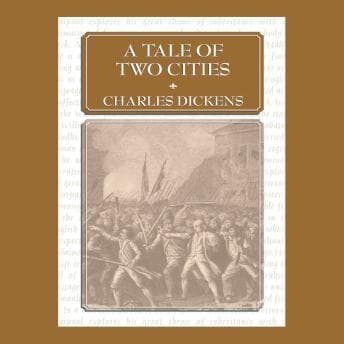
I've been teaching A Tale of Two Cities for eighteen years, and I'll be honest: somewhere around year twelve, I stopped actually reading it. I taught it from memory, from notes, from the accumulated scar tissue of a thousand student essays about Sydney Carton's redemption arc. The book became furniture in my brain - familiar, functional, invisible. Then John Lee's narration showed up on my phone during a Saturday morning walk along the lakefront with Denise, and Dickens ambushed me all over again.
The First Sentence That Should Be Illegal
Let's talk about what Dickens is really doing with that opening. "It was the best of times, it was the worst of times" - every student I've ever taught thinks that's the whole sentence. It's not. It keeps going. And going. It's a sentence that builds like a wave, and John Lee rides it with this measured, almost judicial patience that makes you realize Dickens wasn't being clever. He was laying down the thesis for the entire novel in one breath. Lee doesn't rush it. He doesn't dramatize it. He presents it, the way a prosecutor presents evidence, and you feel the weight of what's coming.
This is why I listen at 1.0x. The prose deserves to be savored.
What surprised me - and genuinely, after two decades with this text, surprise is rare - is how Lee handles the tonal shifts. Dickens is funny in this book, and people forget that. The scenes with Jerry Cruncher and his wife's "flopping" (her praying, which he considers a personal affront) have this dry, almost Monty Python absurdity. Lee leans into the comedy with a kind of restrained wit that never undercuts the horror happening three chapters away. It's a performance that understands something critical: Dickens wrote comedy and tragedy in the same ink, and you can't separate them without losing both.
Madame Defarge's Knitting Needles Click Louder Than the Guillotine
Here's my comparison, and I think it's apt: if you've listened to Simon Vance's Great Expectations and admired the technical precision, John Lee is doing something different. He's less polished, maybe, but warmer. More immediate. Where Vance is a portrait painter, Lee is a storyteller leaning across a pub table. His Madame Defarge doesn't arrive as a villain - she arrives as a woman who has been keeping score, and the knitting is just her ledger. There's something chilling in how Lee reads her silences. The narrator understands that pause is punctuation.
And then there's Carton. Sydney Carton, the drunk, the wasted talent, the man who looks at Charles Darnay and sees the version of himself that tried. Lee doesn't oversell the redemption. He plays Carton as tired for most of the book - genuinely, bone-deep tired - so when that final sacrifice arrives, it doesn't feel like a dramatic pivot. It feels inevitable. Like he's been walking toward that guillotine since page one and just didn't know it yet.
I was grading sophomore papers when I got to the final chapters. I stopped grading. (Sorry, second period. Your essays on Lord of the Flies waited an extra day because a 155-year-old novel made your teacher's eyes water over his red pen.)
Who This Is For (And Who Should Maybe Start Elsewhere)
If you loved Les Misérables in audiobook form, this is its spiritual successor - shorter, tighter, and with Dickens's particular gift for making you care about people you'd cross the street to avoid. If you've bounced off Dickens before because the Victorian prose felt like wading through wet wool, Lee genuinely helps. He parses the sentences so your ear catches the rhythm your eye might miss on the page.
But I'll be straight with you: this is fourteen hours of Dickens. It's dense. There are stretches in the middle - the legal proceedings, some of the Tellson's Bank business - where the plot moves like a faculty meeting about parking lot logistics. If you need constant forward momentum, you'll feel those sections. My students would hate this. I love it. I had a similar reaction to Commonwealth — dense, slow-burning, the kind of book that rewards patience in ways impatient readers never get to discover.
The Simon Schama introduction is a nice touch, though I'll admit I was antsy to get to the novel itself. Schama's a brilliant historian, but when John Lee is waiting in the wings, you don't want the warm-up act to run long.
Worth Pausing the Faculty Meeting For
Twenty years of teaching this book, and Lee made me hear things I'd stopped noticing. The doubling - two cities, two men who look alike, two women who couldn't be more different - rings clearer when a single voice carries all of it. You hear the architecture Dickens built. It is a far, far better audiobook than most I have ever heard. And I'm not even sorry for that.