
Look, I need to lodge a formal complaint with evolution. You're telling me that the reason I have to worry about hemochromatosis running in my family is because my ancestors needed extra iron to survive the plague? That's the biological equivalent of leaving a production bug in place because it accidentally fixed another issue. And now I can't unknow this.
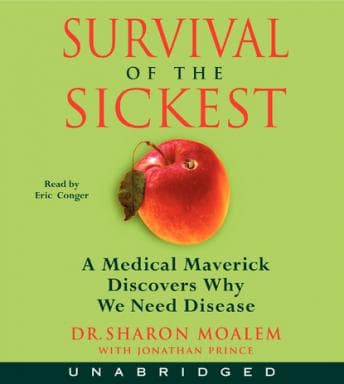
I finished this in exactly three commutes - two morning rides and one evening where I missed my stop because Dr. Moalem was explaining why diabetics might have had a survival advantage during the Ice Age. Froze to death less often, apparently. The glucose in their blood acted like antifreeze. I sat there on an empty train past Mountain View thinking about how my body is basically running legacy code from 10,000 years ago.
Your Genome Is Technical Debt
This is basically Freakonomics but for evolutionary biology. The closest comp I've found on the science-as-detective-story shelf is The Disappearing Spoon, which does the same trick with chemistry - finding the genuinely weird human drama buried inside the periodic table.Moalem takes diseases we've always categorized as purely bad - hemochromatosis, diabetes, high cholesterol - and reframes them as features that got shipped because they solved a critical problem at the time. The plague was killing everyone? Cool, let's lock up iron so bacteria can't use it. Ice Age freezing people solid? Let's spike blood sugar for natural antifreeze. The fact that these "fixes" cause problems now that we're not, you know, dying of bubonic plague at 25? That's a problem for future humans. Which is us. We're the future humans dealing with the technical debt.
The section on epigenetics genuinely rewired how I think about genetics. Your genes aren't just a static codebase - they can be turned on and off by environmental factors, and those switches can be inherited. Moalem uses the Dutch Hunger Winter as a case study: babies conceived during the famine had higher rates of obesity and diabetes decades later, and so did their children. The trauma literally wrote itself into their genetic expression. I had to pause the audiobook and just... sit with that for a minute.
Eric Conger Does the Heavy Lifting
The ROI on this audiobook is ridiculous for a 6-hour-40-minute listen. Conger's narration is exactly what you want for dense science content - brisk enough that you don't zone out, but clear enough that you actually catch the terminology. He handles words like "hemochromatosis" and "methylation" without any of those awkward pauses where you can tell the narrator is reading something for the first time. His rhythm is consistent, almost metronomic, which sounds boring but is actually perfect for absorbing complex information at 6 AM when your brain is running at 40% capacity.
No dramatic voice acting, no sound effects, no full cast - just clean, competent narration. Conger brings the same steady, no-fuss delivery to Art of Thinking Clearly, which I'd actually rate lower overall but appreciated for exactly the same reason - dense ideas need a narrator who stays out of the way. For a book this information-dense, that's exactly right. You don't need theatrical interpretation of why sunlight affects cholesterol synthesis. You need someone who can make "aquaporins" sound like a normal word humans say.
The Science Actually Holds Up (Mostly)
I'm not a biologist, but I debug systems for a living, and I can tell when someone's making logical leaps versus building an actual argument. Moalem does the work. He traces the evolutionary logic, acknowledges where the evidence is still circumstantial, and doesn't oversell his conclusions. The hemochromatosis-plague connection has solid historical and genetic backing. The diabetes-Ice Age hypothesis is more speculative, and he's upfront about that.
The book is from 2007, so some of the cutting-edge research he references is now almost two decades old. Epigenetics has advanced significantly since then. But the core framework - that diseases we think of as purely negative often had survival advantages in specific historical contexts - remains solid and genuinely useful for understanding human health.
Who Should Queue This Up
Perfect for any activity where your body is occupied and your brain is free - commuting, treadmill, organizing your apartment while pretending you're being productive. I'd bump it to 1.5x without losing comprehension; Conger's pacing can handle it. If you're the person who reads Wikipedia rabbit holes about weird medical conditions at midnight, this is your audiobook.
Skip if you want a deep dive into any single topic. This is a survey course, not a graduate seminar. Each chapter introduces a new disease-evolution connection and then moves on. If you want 300 pages on just epigenetics, look elsewhere.
The Commit Message
Bottom Line: Worth your commute. Moalem makes a compelling case that your body's bugs are actually legacy features, and Conger delivers the science without making you feel like you're back in AP Bio. I've already recommended this to Kevin, who will probably listen to it once and then explain it back to me incorrectly for the next six months. That's fine. At least we'll be talking about evolutionary biology instead of whether I love optimization podcasts more than him.
(The answer is still yes.)



![Steve Jobs [unabridged audiobook] audiobook cover](/_next/image?url=https%3A%2F%2Fcovers.audiobooks.com%2Fimages%2Fcovers%2Ffull%2F9788499923406.jpg&w=1920&q=75)