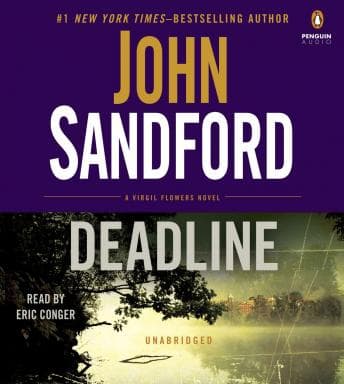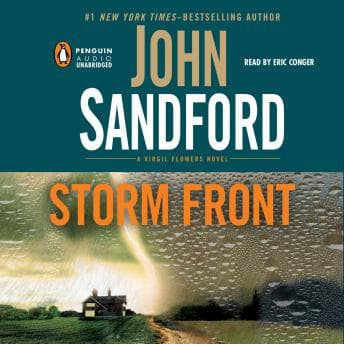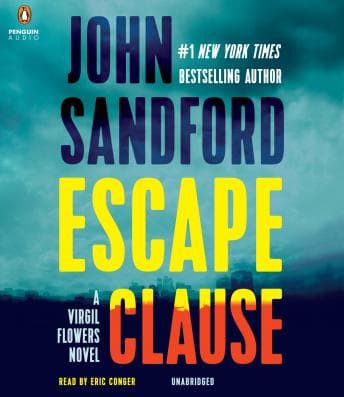

Everyone kept telling me Virgil Flowers was this charming, witty investigator I'd love. And look, I'm a psychologist—I'm professionally skeptical of characters who are supposed to be universally likable. That's usually code for 'emotionally shallow protagonist written to appeal to everyone.' So I went into Escape Clause ready to be disappointed.
I was wrong. Mostly.
The Psychology of a Laid-Back Cop
Here's what makes Virgil work as a character study: he's not trying to be deep. John Sandford writes him with this almost infuriating ease—the guy cracks jokes during investigations, flirts with his girlfriend's sister (sort of), and approaches stolen tigers with the same semi-amused detachment he brings to everything else. On paper, this should annoy me. In practice? It's weirdly refreshing.
The protagonist exhibits classic avoidant attachment patterns masked by humor. (Yes, I'm analyzing a fictional cop. This is what I do.) Virgil deflects emotional intensity with wit, maintains surface-level connections with multiple women, and keeps his internal world frustratingly opaque. Some listeners find him 'emotionally blank,' and I get that critique. But I'd argue that's the point. Sandford isn't writing a tortured detective with a tragic backstory. He's writing a guy who's genuinely comfortable in his own skin—and that's actually rarer in crime fiction than you'd think.
Sandford's Lucas Davenport in Mind Prey operates with similar emotional confidence, though he channels it into darker psychological territory.
The sister subplot with Sparkle is where the character dynamics get interesting. Frankie's knife comment in the description? That's the whole relationship in miniature. Sandford understands jealousy and sibling rivalry and the weird power dynamics that emerge when someone new enters an established couple's orbit. It's not the strongest subplot in the series, apparently, but from a behavioral psychology standpoint, the tension felt authentic.
Eric Conger Gets Inside Virgil's Head
I listened to this on morning jogs through Cambridge, which is maybe not the ideal setting for a book about tiger poaching and Chinese medicine black markets. (The squirrels seemed unbothered.) Eric Conger's narration has this quality that works whether you're running or cooking or pretending to grade papers—it's engaging without demanding your full attention.
What makes Conger work for Virgil specifically is that semi-amused quality in his voice. He doesn't oversell the humor. The jokes land because he delivers them straight, like Virgil would actually say them. There's a scene—I won't spoil it, but there's a gun battle that apparently picks up the pacing significantly—where Conger shifts gears without losing that essential Virgil-ness. The tension builds, but it never feels like a different character suddenly showed up.
I couldn't find much about Conger's background online beyond his awards (Golden Earphones, Publishers Weekly Listen Up), but based on this performance, I understand why listeners call him a 'perfect voice match.' He's not doing anything flashy. He's just... right. Sometimes that's harder than theatrical range.
The Slow Burn That Eventually Explodes
Okay, the honest truth: this book starts slow. And kind of icky, if we're being real about the tiger body parts situation. The research actually shows that traditional medicine markets create some genuinely disturbing supply chains, and Sandford doesn't shy away from that. I appreciated the authenticity, but I also understand why some listeners found the opening rough.
Here's the thing about slow burns—when they pay off, they really pay off. The pacing picks up around the midpoint, and by the time you hit that gun battle everyone mentions, you're invested. Sandford knows how to structure tension. He's been doing this for decades, and it shows.
The migrant worker subplot with Sparkle adds a second layer of conflict that keeps things from feeling like a single-thread procedural. It's messier than the main tiger investigation, which makes it feel more real. Real cases don't wrap up neatly. Real danger comes from unexpected directions.
Who This Works For (And Who It Won't)
If you need your protagonists to have emotional breakdowns and tragic backstories, Virgil Flowers might frustrate you. He's not built for that kind of narrative. Skip this one. But if you want a smart, character-driven thriller with sharp dialogue and a narrator who absolutely nails the vibe? This works.
The language is strong—swearing, some violence, content that earns its warnings. A few listeners found this jarring given Virgil's background, and I get that. But I'd argue it fits the world Sandford builds. These aren't sanitized crimes.
Case Notes: Closed
My therapist would probably have thoughts about why I find emotionally unavailable protagonists relaxing to listen to. But that's a session for another day.
I'm adding more Virgil Flowers to my jogging rotation. Don't tell my dissertation committee I'm procrastinating.