
Look, I made a promise to myself: only books that keep me awake at night. Usually, that means demons, hauntings, or whatever fresh hell Stephen King cooked up in the 80s. But sometimes—usually around 2 PM on a rainy Tuesday at the library—I need a palate cleanser. Something that doesn't require me to check the backseat of my car before I drive home.
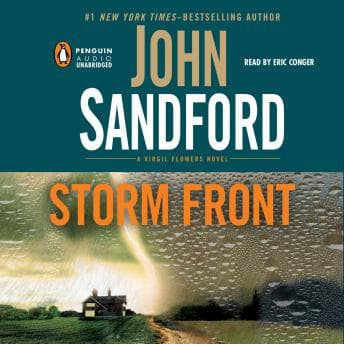
So I picked up Storm Front. Why? Because the summary mentioned an "ancient relic" unearthed at a dig site. My horror brain immediately went to The Exorcist. Or at least The Mummy. (I have very specific tastes, okay?)
It's not that. At all. But I didn't hate it.
The Sound of a Guy Who's Seen It All
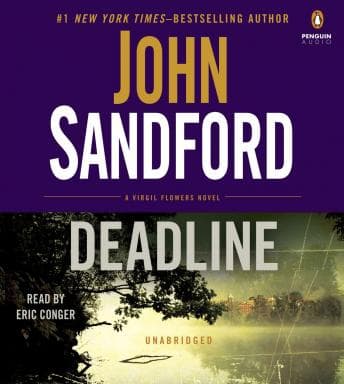
Here's the thing about Eric Conger. I looked him up, and people are torn. Some say he's "lax." Others say he's "boring."
They're wrong. Or maybe they just need their narrators to scream to feel something.
Conger isn't performing a one-man Broadway show here. He's channeling Virgil Flowers—this laid-back, cowboy-boot-wearing investigator who'd rather be fishing than solving crimes. Conger's voice reflects that perfectly. Dry. Laconic. Sounds like he's leaning against a wall, telling you a story while sipping lukewarm coffee.
(Shirley, my cat, actually stayed in the room for this one. Usually, she leaves when the screaming starts. She found Conger's voice very nap-conducive. Take that as you will.)
If you need distinct, high-energy voices for every character to know who's talking, you might struggle here. Conger does attitude more than accents. But for a book that runs on dry humor and cynicism? It works. Grounds the story. Feels real, not like a performance.
Indiana Jones in Minnesota (Sort Of)
The plot is... weirdly ambitious for a rural mystery. We've got a dying Israeli professor, a stolen relic, and a fake archaeological dig. Like Indiana Jones got lost and ended up in a Minnesota police procedural.
I'll be honest—the pacing is a slow burn. Maybe too slow for me. I'm used to a jump scare every fifteen minutes or a looming sense of dread. This is more of a "let's drive around and talk to people" vibe. But the dialogue? Sharp. Funny. Sandford writes the kind of banter that makes you snort-laugh in public places. He nails that same rhythm in Mind Prey, which is probably why I keep coming back to his stuff even when there's zero supernatural content. (Yes, I did this at the circulation desk. No, I didn't explain myself to the patron checking out Chicken Soup for the Soul.)
The "ancient relic" stuff didn't unleash a curse, which was a personal disappointment. But the chase itself has enough twists to keep you listening. Just don't expect your heart rate to spike.
Who's This For?
If you want laid-back mysteries with sharp dialogue and zero supernatural elements, this is your jam. Fans of procedurals who don't need constant action will find a lot to like. But if you're here for horror—or even thriller-level tension—skip it. This one's built for long drives, not sleepless nights.
The Librarian's Closing Stamp
This isn't the kind of book I'd usually feature on "The Witching Hour." No ghosts. The only monsters are humans (standard). But as an audiobook? Solid.
It's the audio equivalent of a comfortable flannel shirt. Not flashy, not trying to be high art, and definitely not scary. Night Prey has that same workmanlike quality—Sandford doesn't waste your time with flourishes when the story itself does the heavy lifting. And Conger sells the vibe of a guy who knows exactly what he's doing, even if the world around him is falling apart.
Would I listen again? Probably not—once you know the mystery, the thrill is gone. But for a long drive where you want to be entertained without sleeping with the lights on afterwards? You could do a lot worse.