
"He's out there. And he's not going to stop."
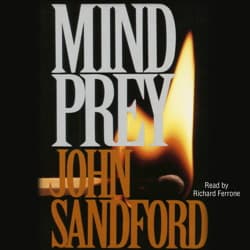
That line hit me somewhere around hour three, and I knew I was in for the long haul. Look, I've listened to a lot of thrillers that claim to be intense. Most of them wouldn't survive a basic threat assessment. Mind Prey? This one passes muster. Ceremony in Death had that same level of operational credibility—procedural details that actually hold up under scrutiny.
When the Intel Actually Checks Out
John Sandford clearly did his homework. The police procedural elements, the way Lucas Davenport coordinates with different agencies, the jurisdictional friction - it's all there, and it's all believable. I've worked with enough law enforcement types in my consulting work to know when an author is faking it. Sandford isn't. The tactical decisions Davenport makes, the way he reads people, the calculated risks - this is how good operators actually think.
The premise is straightforward: psychiatrist and her two daughters kidnapped by a former patient who was institutionally confined for being criminally insane. But here's where it gets interesting. Sandford layers in multiple suspects who'd benefit from the psychiatrist's death. It's not just a manhunt. It's a puzzle where everyone's lying about something.
I listened to most of this during a three-day drive to a client site in Houston. Twelve and a half hours goes by fast when you're genuinely worried about whether two little girls are going to survive. And that's the thing about Sandford - he makes you care before he puts people in danger. Amateur move is the opposite. He knows what he's doing.
Richard Ferrone Is Lucas Davenport
I don't say this lightly. There are narrators who read books, and there are narrators who become the character. Ferrone is the second kind. His voice - deep, gravelly, no-nonsense - it's exactly how I imagine a Minneapolis detective who's seen too much would sound. Not theatrical. Not over-the-top. Just... right.
The villain voices are where Ferrone really earns his paycheck. This particular antagonist is unhinged in a very specific, very calculated way. Ferrone captures that edge of rationality that makes truly dangerous people so terrifying. I've debriefed guys who've interrogated actual psychopaths. There's a quality to their speech patterns - a kind of detached logic that normal people can't quite replicate. Ferrone gets it.
The female characters work too. I know some male narrators struggle with that. Ferrone doesn't try to go high-pitched or feminine. He adjusts the cadence, the word emphasis. You always know who's talking without it feeling like a cartoon.
The Dark Stuff (Fair Warning)
I need to be straight with you here. This book goes to some ugly places. The kidnapping scenario is psychologically brutal. There's violence. There's the kind of tension that had me white-knuckling the steering wheel through West Texas. If you're looking for a cozy mystery, this ain't it.
But here's the thing - Sandford never feels exploitative about it. The darkness serves the story. It raises the stakes. It makes Davenport's urgency feel earned. I've read plenty of thrillers that wallow in violence for shock value. Mind Prey uses it surgically. Secret House went the opposite direction—gratuitous without purpose, which is why it didn't land for me. (Yes, I know that's a weird metaphor. Ranger looked at me funny when I said it out loud.)
The pacing is excellent. No dead spots. Every scene moves the investigation forward or ratchets up the tension in the farmhouse. Sandford cuts between Davenport's hunt and the captivity situation, and both threads stay compelling. That's harder than it sounds. Most writers fumble one or the other.
SITREP
Worth your time? Absolutely. This is the kind of thriller that respects your intelligence while still keeping you on edge. Sandford writes cops like he's spent time with them (he has - Pulitzer Prize-winning journalist before he started writing fiction). Ferrone narrates like he's lived in these characters for years (he basically has - he's been the voice of this series for a long time now).
I listened at 1.25x, my standard speed, and it worked perfectly. Ferrone's delivery is clear enough to handle it without losing the tension. If anything, the slightly faster pace matched the urgency of the investigation.
One note: this is book seven in the Prey series. You don't need the previous books to follow the plot, but you'll miss some of the character history with Davenport. I hadn't read the earlier ones and followed along fine, but I'm definitely going back now.
Ranger approved this one. He perked up during the tense scenes, which is his version of a five-star review.
Who should listen: Anyone who wants a smart thriller with real procedural detail and a narrator who absolutely nails it. Who should skip: If you need your mysteries cozy or can't handle psychologically intense kidnapping scenarios, stand down on this one.
Mission accomplished.