
Look, I have a problem with fictional investigators who are too perfect. You know the type - they solve cases through sheer genius while looking effortlessly cool and everyone around them just... swoons. It's lazy character writing. So when I started Night Prey and met Meagan Connell - a state investigator who's basically being gaslit by her entire professional community while trying to prove a serial killer exists - I sat up straighter on my morning jog.
This is a fascinating case study in institutional dismissal. Meagan has the data. She has the pattern recognition. But she's a woman in law enforcement in the 90s, and the cops think she's political, the public thinks she's too aggressive, and the feminists think she's sold out. John Sandford understands something fundamental about human nature here: being right doesn't mean being believed. The research actually shows that women who assert expertise in male-dominated fields face what psychologists call the "double bind" - too soft and you're incompetent, too assertive and you're difficult. Meagan Connell is living that bind, and it's infuriating to listen to. In the best way.
The Invisible Man Problem
The killer in this book - and I'm not spoiling much since it's in the description - is described as a chameleon. Invisible. Uncatchable. Psychologically, this tracks perfectly with what we know about predatory behavior. The most dangerous individuals aren't the ones who stand out. They're the ones who blend in so completely that victims don't register them as threats until it's too late. Sandford gets this. The killer isn't some theatrical genius leaving cryptic clues. He's methodical, patient, and terrifyingly ordinary in his approach.
What makes this character compelling is the contrast with Lucas Davenport. Lucas is back on the force after a two-year break (depression, the book implies, though it doesn't dwell on it - my therapist would have thoughts about that avoidance). He's visible, charismatic, the kind of cop who gets noticed. The killer is his psychological inverse. It's not subtle symbolism, but it works.
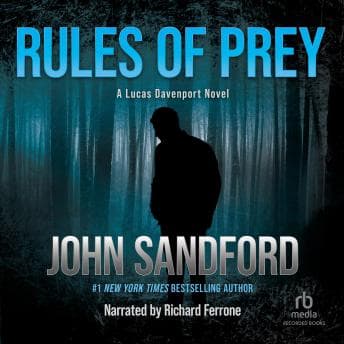
Richard Ferrone's narration adds something interesting here. His gravelly, calm delivery creates this sense of inevitability. Like you're listening to someone recount events that have already happened, that couldn't have gone any other way. For a thriller about a predator stalking women, that tone walks a fine line - but Ferrone keeps it on the right side of suspenseful rather than exploitative.
The Voice in My Head (And Those Pauses)
Okay, so here's the thing about Ferrone's performance. He's genuinely excellent at character differentiation. Lucas sounds different from Meagan sounds different from the various cops and witnesses. The banter between characters - and Sandford writes good banter, rough humor that doesn't feel forced - lands because Ferrone understands comedic timing.
But. Those pauses.
Some listeners have complained about long pauses in the narration, and honestly? I noticed them. There were moments during my jog through Cambridge where I'd check my phone to make sure the audiobook hadn't frozen. It didn't ruin the experience, but at twelve hours, every unnecessary beat adds up. I found myself wishing for slightly tighter editing. (Don't tell my dissertation committee I'm critiquing editing when my last paper draft was 40 pages too long.)
The thing is, Ferrone's been narrating this series for years, and you can tell he knows these characters. His Lucas Davenport has matured across the books - there's a weariness in the voice that fits a cop who's seen too much and taken a mental health break. That kind of consistency across a long series is rare, and it matters.
Why the Pattern Recognition Worked
I found myself asking: why does this particular entry in a 30+ book series feel so effective? Part of it is Meagan Connell. She's not a love interest (though there's tension with Lucas, because of course there is). She's a professional with a theory that everyone dismisses, and watching her be proven right - while knowing it might cost her everything - is genuinely compelling. That same kind of institutional dismissal shows up in World War Z, where experts are ignored until it's catastrophically too late.
The protagonist exhibits classic obsessive dedication, but Sandford makes it sympathetic rather than pathological. Meagan isn't crazy. She's just the only one who looked at the data without bias. That's... honestly kind of rare in thriller fiction, where female investigators are often written as either superhuman or damaged goods.
The violence is brutal - content warning for that, plus language and sexual content - but it serves the story rather than existing for shock value. Sandford's been doing this long enough to know the difference.
Would I Listen Again?
Probably not immediately - twelve hours is a commitment, and those pauses tested my patience. But I'd recommend it to anyone who likes their thrillers character-driven and their investigators psychologically realistic. Ferrone's narration elevates what could be a standard serial killer hunt into something more atmospheric.
The book works best for commutes or long walks. Something about forward motion matches the investigation's momentum. Just... maybe bump the speed to 1.25x if you're impatient like me. Those pauses become much more bearable.
Meagan Connell deserved better from her colleagues. At least she got a good narrator.